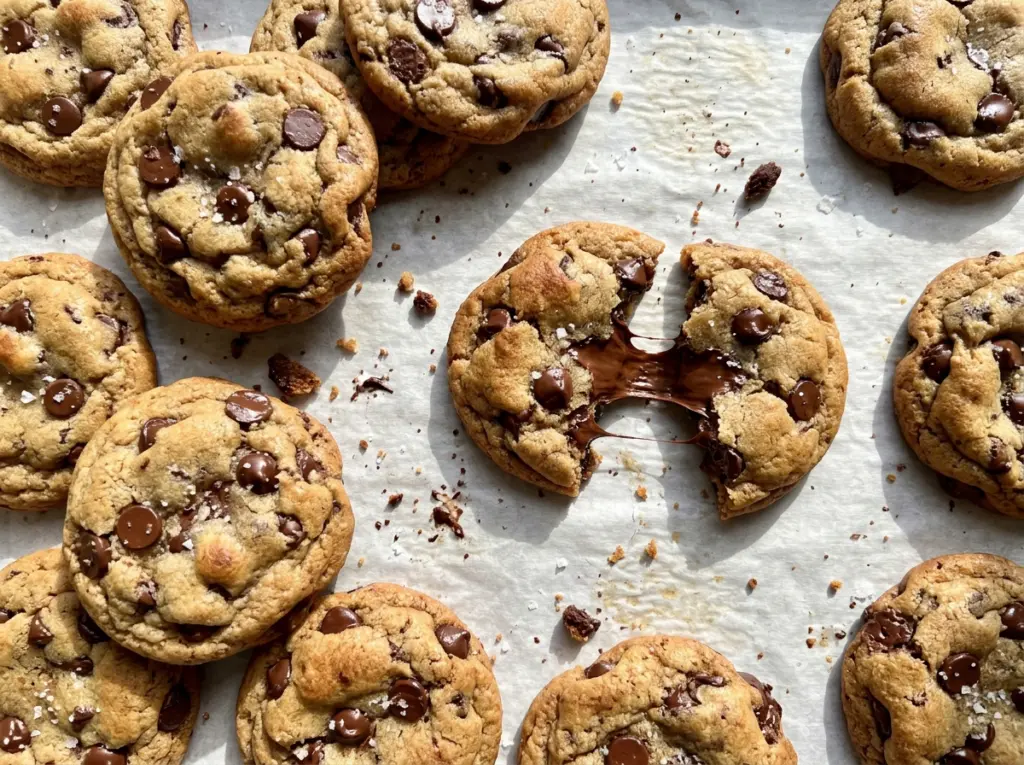
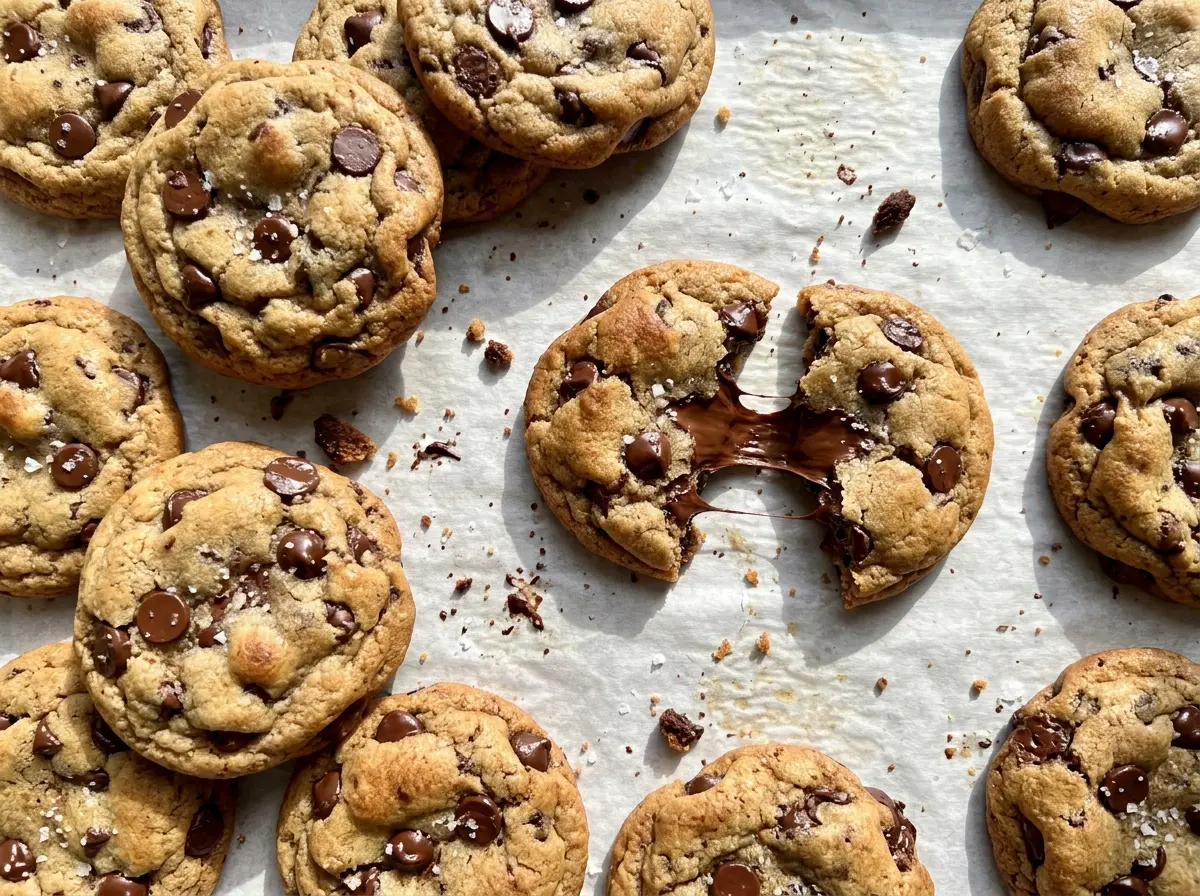
The edges turn golden while the centers still look a little too soft, and that’s the moment these cookies are easiest to overbake. I used to leave the tray in until the middle looked set; the cookies kept cooking on the hot pan and lost the gooey centers I wanted. Now I pull them when the edges are lightly golden and let the baking sheet do the rest. These Gooey Chocolate Chip Cookies have a buttery, chewy middle and plenty of semisweet chocolate in every bite.
Melted butter gives the dough a different feel from a creamed-butter cookie: it starts out soft and needs a short rest in the refrigerator before it’s ready for the oven. Brown sugar helps keep the centers tender, while the granulated sugar gives the edges enough structure to turn golden. The dough comes together with a whisk and a spatula, so there’s no mixer to haul out and no guesswork about when to stop mixing. Once cooled, each cookie has a soft middle and a thin, lightly crisp edge.
Kitchen Note
Give the cookies the full 10 minutes on the baking sheet before moving them. They’re fragile straight from the oven, but that short rest lets the soft centers settle so the cookies lift cleanly instead of bending or breaking.
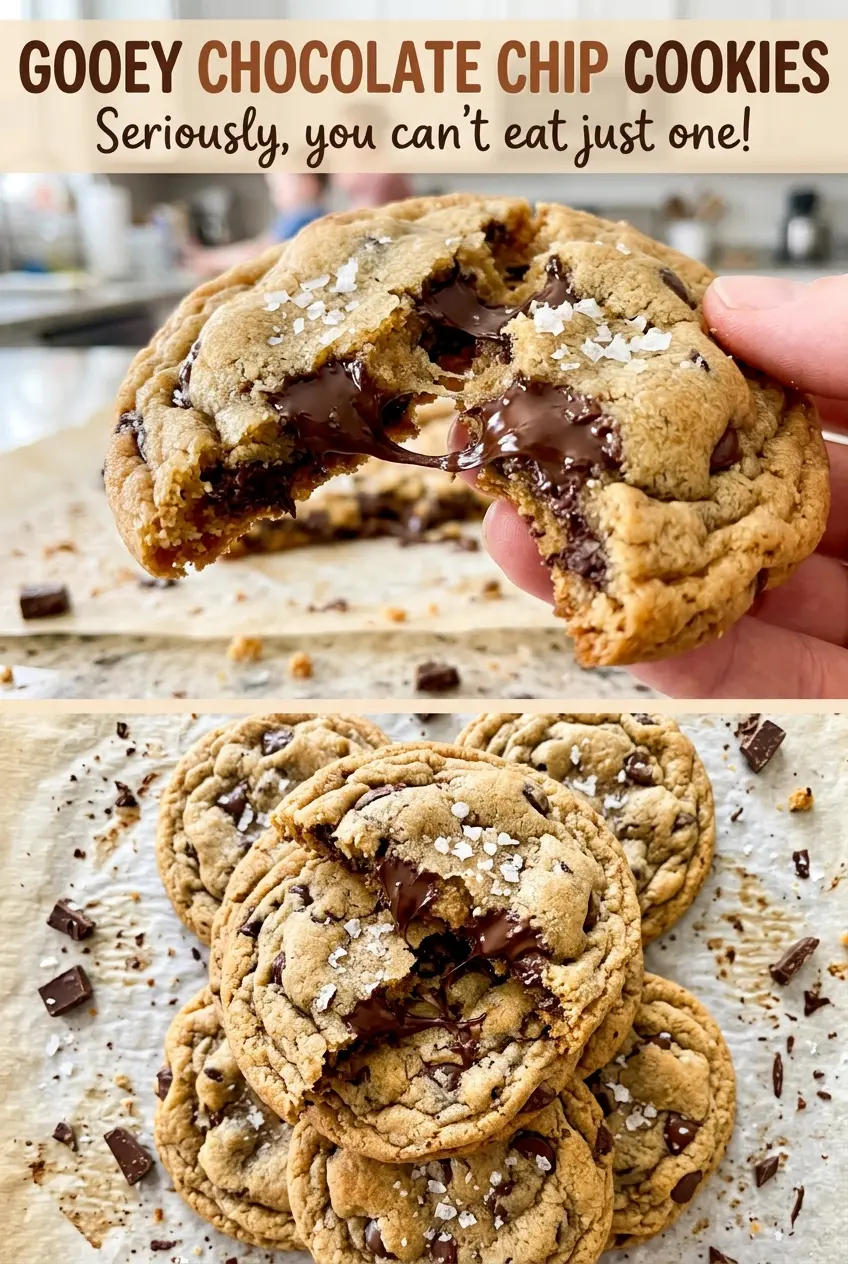
Save these Gooey Chocolate Chip Cookies for the next time you want soft centers, golden edges, and generous pockets of chocolate.
Why Melted-Butter Cookie Dough Needs a Chill Before Baking
Melted butter makes a soft, easy-to-stir dough, but it doesn’t have the same structure as butter that’s been creamed with sugar. If that loose dough goes straight into a hot oven, the cookies have less time to hold their shape before the butter melts and spreads. Refrigerating the covered bowl for 30 minutes firms the dough and gives the flour time to absorb some of its moisture. You’ll still get a tender cookie, but the dough is easier to portion and the cookies are less likely to bake into thin, wide puddles.
That rest also makes the dough feel more cohesive when you scoop it. Don’t expect it to become stiff like chilled pie dough; it should still be soft enough to portion with a tablespoon. Keep the chill time consistent from batch to batch, and start heating the oven while the dough rests. Since the cookies bake one sheet at a time, the next pan can wait while the first batch finishes without crowding the oven.
How Butter, Sugar, and Chocolate Shape Each Cookie
- All-purpose flour — It gives the cookies enough structure to hold their shape while keeping the middle tender. A cup-for-cup gluten-free baking blend designed for cookies is the most useful swap; choose one that includes xanthan gum, and expect a somewhat different crumb. Ordinary all-purpose flour is a good choice here, so there’s no need for a specialty brand.
- Unsalted butter — Melted butter is what makes this dough easy to mix and contributes to its chewy texture. Let it cool before whisking it with the sugars and eggs; the recipe depends on melted, cooled butter, not hot butter. Unsalted butter also lets the measured table salt stay in control of the seasoning.
- Light brown and granulated sugars — Brown sugar brings moisture and a mild molasses note, while granulated sugar balances it with a cleaner sweetness and helps the edges bake up lightly golden. If you want a deeper molasses flavor, dark brown sugar can replace light brown sugar in the same amount. Keep the granulated sugar in place so the balance doesn’t shift too far.
- Eggs and vanilla — The eggs bind the dough and help the cookies set, while vanilla rounds out the chocolate and brown sugar. Large eggs are the right size for this dough; smaller eggs can leave it drier, and extra-large eggs can make it looser. Standard grocery-store vanilla works well, so save pricier vanilla for recipes where it’s the main flavor.
- Semisweet chocolate chips — Chips hold their shape in the oven and give you distinct chocolate pockets throughout the cookie. Chopped semisweet chocolate works in the same quantity if you prefer irregular pools and flakes, though it will spread more unevenly through the dough. A fresh bag from any reliable brand is fine; there’s no need to splurge.
Mix and Bake the Dough Without Losing Its Soft Center
Whisk the dry ingredients evenly
Whisk the flour, baking soda, and table salt together in a medium bowl until the salt and leavener are distributed through the flour. This quick mix helps avoid a bite with a concentrated patch of baking soda. Break up any visible flour clumps with the whisk rather than pressing them into the bowl. Set the bowl aside while you make the butter mixture.
Make a smooth butter-and-sugar base
In a large bowl, whisk the melted, cooled butter with both sugars until the mixture looks smooth. Whisk in the eggs and vanilla until they’re incorporated; the mixture should look glossy rather than streaky. If the butter is still hot, give it more time to cool before adding the eggs. That pause keeps the wet ingredients easier to combine evenly.
Bring the dough together and chill it
Add the flour mixture to the butter mixture and stir just until no dry streaks remain. Stop there; working the dough longer can make the cookies tougher. Fold in the chocolate chips, cover the bowl, and refrigerate the dough for 30 minutes. The dough will still be soft, but it should feel less loose and be easier to scoop.
Portion, bake, and let the cookies settle
Heat the oven to 350°F and line two baking sheets with parchment paper. Scoop the dough into 2-tablespoon portions, arranging 12 on each sheet with about 2 inches between portions. Bake one sheet at a time for 10 to 12 minutes, watching for lightly golden edges and centers that still look slightly underdone. Leave the cookies on the baking sheet for 10 minutes, then move them to a wire rack to cool.
Three Simple Ways to Adapt the Dough
Make the batch gluten-free
Replace the all-purpose flour with the same amount of a cup-for-cup gluten-free baking blend made for cookies. A blend with xanthan gum gives the dough more structure than a single gluten-free flour would. The centers may have a slightly different texture, but you’ll keep the same chocolate-and-brown-sugar character.
Use chopped bittersweet chocolate
Swap the semisweet chips for the same amount of chopped bittersweet chocolate when you want a less-sweet cookie. The chopped pieces make broader, less uniform chocolate pockets, and small flakes will scatter through the dough. Keep the rest of the ingredients and method unchanged.
Make a dairy-free version
Use an equal amount of dairy-free baking sticks in place of the butter, and choose dairy-free semisweet chocolate chips. Baking sticks are a better fit than tub-style spread because they’re made for baking and contain less added water. The cookies may spread a little differently, so keep the dough chilled before scooping.
Storage and Reheating
- Refrigerator: Keep cookies in an airtight container for up to 1 week; chilling firms them and makes the centers less soft. Let them come to room temperature before serving.
- Freezer: Freeze fully cooled cookies in an airtight container for up to 2 months, separating layers with parchment so they don’t stick together.
- Reheating: Microwave one cookie for about 8 seconds to soften it. Longer heating can make the chocolate very hot and the cookie tough around the edges.
Questions That Come Up When Baking These Cookies
Gooey Chocolate Chip Cookies
Ingredients
Equipment
Method
- Whisk the flour, baking soda, and table salt together in a medium bowl.
- Whisk the melted and cooled butter, light brown sugar, and granulated sugar in a large bowl until smooth.
- Whisk in the eggs and vanilla extract.
- Add the flour mixture to the butter mixture and stir just until no dry streaks remain.
- Fold in the semisweet chocolate chips.
- Cover the bowl and refrigerate the dough for 30 minutes.
- Heat the oven to 350°F.
- Line two baking sheets with parchment paper.
- Scoop the dough into 2-tablespoon portions and arrange 12 portions on each baking sheet, spacing them about 2 inches apart.
- Bake one sheet at a time for 10 to 12 minutes, until the edges are lightly golden and the centers still look slightly underdone.
- Let the cookies rest on the baking sheet for 10 minutes.
- Transfer the cookies to a wire rack to cool.