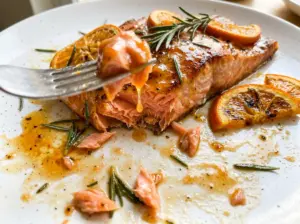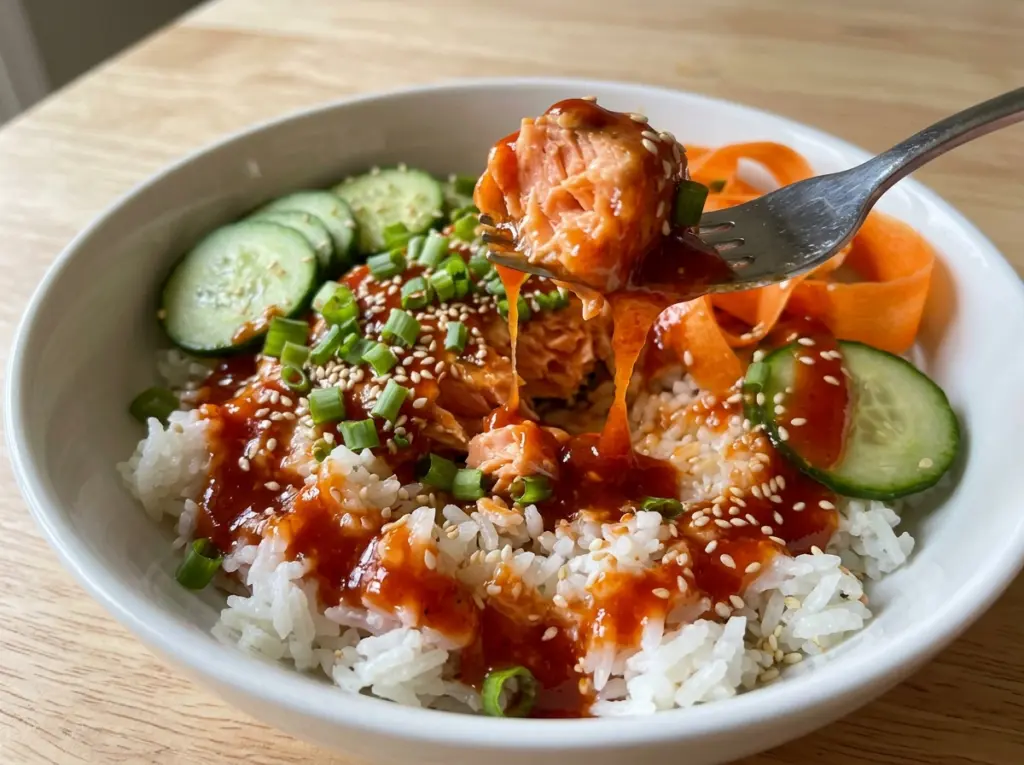
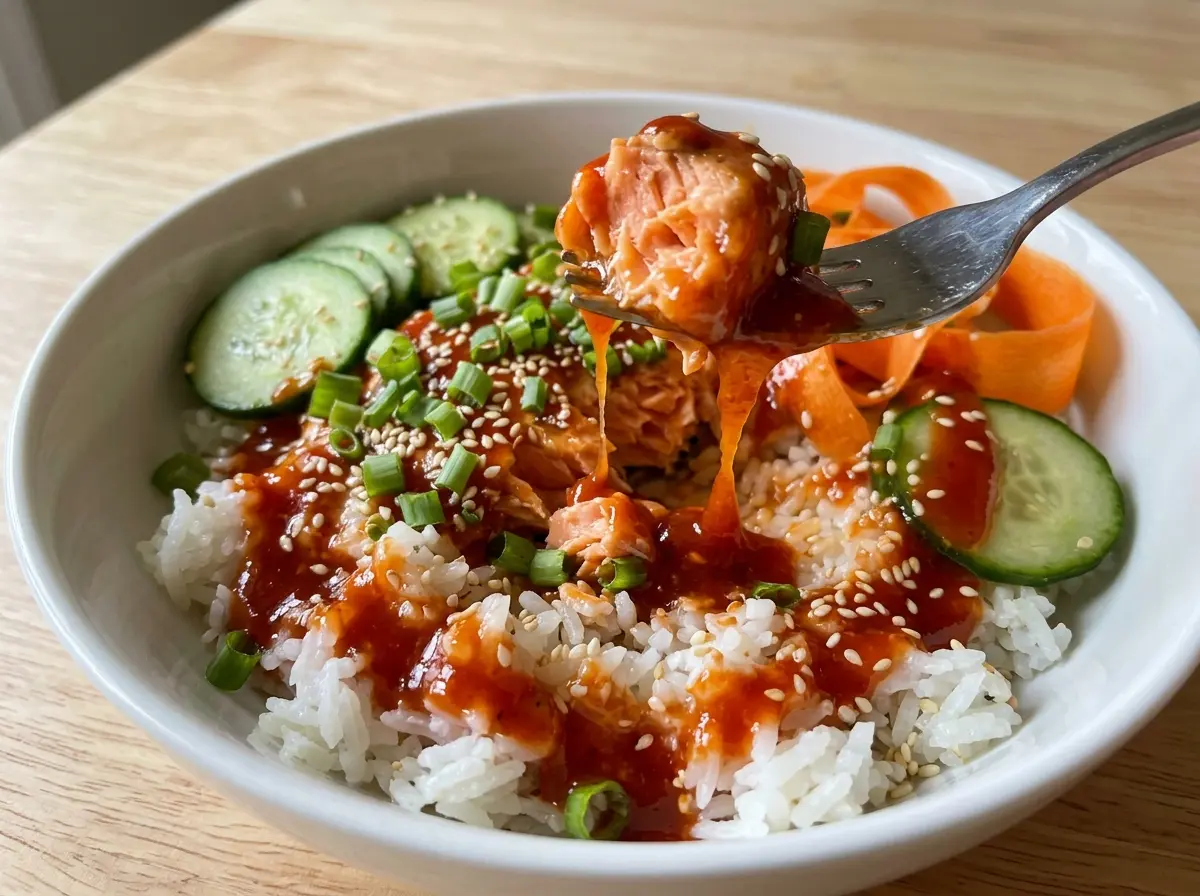
The honey-sriracha glaze turns shiny as it simmers, then clings to the salmon in the oven without needing a long ingredient list. I serve these Honey Sriracha Salmon Bowls over jasmine rice, with a sharp little cabbage slaw to balance the sweet heat. The cool cucumber and creamy avocado make each bite feel different, so the bowl doesn’t eat like a piece of glazed fish with rice on the side.
Rinsing the rice and giving it a covered rest makes a noticeable difference: the grains cook up tender instead of sticking together in a heavy layer. I also keep the glaze in two portions, one for the raw salmon and one untouched for drizzling at the table. That fresh sauce brings the honey, lime, and sriracha right back into focus over the warm rice and crisp vegetables.
Kitchen Note
Give the rice its full covered rest after it leaves the heat. That last bit of steaming helps the grains finish evenly, and fluffing too early can leave the bottom damp while the top still feels firm.
Save these Honey Sriracha Salmon Bowls for a weeknight dinner with sweet-heat glazed salmon, crisp slaw, and cool avocado.
Why the Slaw Is More Than a Crunchy Topping
The bowl works because the slaw does more than add crunch. Honey gives the salmon glaze a rounded sweetness, and the sriracha brings heat; cabbage tossed with rice vinegar gives your palate a tart, crisp reset between bites. Without that contrast, the rice and glazed fish can feel heavy together. The slaw is intentionally simple, so it brightens the bowl instead of competing with the salmon.
Think about the other pieces as their own kind of balance. Jasmine rice is a mild base that catches the reserved sauce, while cucumber stays cool and clean beside the warm fish. Avocado adds a soft, rich texture, and the green onion and sesame seeds add a little bite and toastiness at the finish. You get several textures without needing a second dressing or extra cooking steps. Keep the slaw’s vinegar taste distinct rather than trying to sweeten it until it matches the glaze; that contrast is what makes each forkful feel lively.
What Each Ingredient Brings to the Bowl

- Jasmine rice — Its gentle aroma and tender, slightly clingy grains make a good landing place for the sauce. Rinsing removes loose surface starch, which helps keep the cooked rice from turning gluey. Basmati works if that’s what you have, though the bowl will be less fragrant and the grains more separate.
- Honey and sriracha — Honey gives the glaze body and helps it coat the salmon; a mild, everyday honey works well here, so there’s no need for a specialty jar. Sriracha brings both chile heat and tang. Maple syrup can stand in for honey, but its flavor is more earthy and the glaze will be a little looser.
- Soy sauce, lime, garlic, and sesame oil — Soy sauce supplies salty depth, while lime keeps the sweet glaze from tasting flat. Finely grated garlic blends into the sauce instead of leaving large pieces on the fish. For a gluten-free bowl, replace the soy sauce with gluten-free tamari; it gives you a similarly savory base. Toasted sesame oil matters more for its aroma than its price, so a fresh bottle of a standard brand is enough.
- Salmon — Skinless fillets are easy to portion and glaze on the parchment-lined pan. Fresh or previously frozen salmon both work; if using frozen, thaw it fully before cooking. Similar-sized portions help them finish at about the same time, while a much thicker piece needs careful checking at its center.
- Red cabbage and carrot — Red cabbage keeps a crisp bite after its quick vinegar toss, and grated carrot adds a little sweetness. A bag of shredded cabbage is convenient, but cut it into shorter strands if they’re long and awkward to pick up. Green cabbage can replace red; the taste stays fresh, though you’ll lose the bright color.
- Cucumber, avocado, and finishing touches — English cucumber has fewer noticeable seeds and a mild taste, and ripe avocado gives the bowl its soft contrast. Look for an avocado that yields slightly when pressed, not one that feels mushy. Green onion and sesame seeds are best added at the end, where their freshness and toasted note stay clear.
Build the Bowls Without Losing the Contrast
Rinse and Steam the Jasmine Rice
Rinse the rice in a fine-mesh strainer until the water runs mostly clear, then combine it with the water and salt in a medium saucepan. Bring it to a boil, cover, and turn the heat to low for a 15-minute simmer. Take the pan off the heat and leave it covered for 10 minutes. If you lift the lid during cooking, steam escapes and the grains may cook unevenly.
Simmer and Divide the Glaze
Stir the honey, sriracha, soy sauce, lime juice, finely grated garlic, and toasted sesame oil together in a small saucepan. Simmer over medium-low heat for 2 minutes, stirring, until the sauce looks blended and glossy. Remove it from the heat and divide it evenly between two bowls before brushing any onto the fish. Keep the second portion separate so it stays clean for drizzling over the finished bowls.
Bake the Salmon to a Clear Doneness Cue
Heat the oven to 400°F and line a rimmed sheet pan with parchment paper. Set the four salmon portions on the pan and brush them with one portion of the sauce, covering the tops. Bake for 12–15 minutes, checking the thickest part of each fillet with a food thermometer; it should reach 145°F. Thicker portions may need the longer end of the range, so use the temperature rather than color alone to judge doneness.
Toss the Cabbage Slaw
Combine the shredded red cabbage and grated carrot with the rice vinegar, sugar, and salt. Toss until the strands are lightly coated, then let the slaw stand for 10 minutes. It should soften a little while keeping its crisp bite. If the vegetables sit in the dressing much longer, they’ll continue to release moisture and lose some of that fresh crunch.
Assemble While the Salmon Is Warm
Divide the rice among four bowls, then add the slaw, thinly sliced cucumber, avocado, and salmon. Drizzle the reserved sauce over the salmon and rice rather than pouring it all in one spot. Finish with the green onions and sesame seeds, and serve while the fish is warm and the vegetables are still crisp.
Three Smart Ways to Adapt These Salmon Bowls
Make the Sauce Gluten-Free
Use gluten-free tamari in place of the soy sauce, keeping the rest of the sauce the same. The glaze stays savory and balanced, with a slightly different depth depending on the tamari you choose.
Use Maple Syrup for a Different Sweetness
Swap the honey for maple syrup in the sauce. The result tastes less floral and a little more woodsy, and the glaze won’t cling quite as thickly to the salmon.
Leave Out the Sesame
For a sesame-free version, replace the toasted sesame oil with a neutral oil and omit the sesame seed topping. You’ll lose the toasted, nutty note, but the honey-sriracha glaze and fresh toppings still carry the bowl.
Storage and Reheating
- Refrigerator: Refrigerate leftovers within 2 hours, storing salmon, rice, slaw, and cucumber separately in airtight containers for 3–4 days at 40°F or colder. Avocado is best sliced fresh, and cucumber loses some crunch as it sits.
- Freezer: Freeze cooked salmon and rice separately in airtight freezer containers for up to 2 months for best quality; thaw them in the refrigerator. Cucumber, avocado, and dressed slaw don’t freeze well.
- Reheating: Cover the salmon and rice and warm them gently in the microwave; add a spoonful of water to the rice to loosen it. Reheat leftovers to 165°F, and avoid blasting the salmon with high heat, which can dry it out.
Questions That Come Up When Making Salmon Bowls
Honey Sriracha Salmon Bowls
Ingredients
Equipment
Method
- Rinse the rice in a fine-mesh strainer until the water runs mostly clear.
- Combine the rinsed rice with the water and salt in a medium saucepan and bring to a boil.
- Cover, reduce the heat to low, and simmer for 15 minutes.
- Remove from the heat and let stand, covered, for 10 minutes.
- Stir the honey, sriracha, soy sauce, lime juice, garlic, and sesame oil together in a small saucepan.
- Simmer over medium-low heat for 2 minutes, stirring.
- Remove from the heat and divide the sauce evenly between two bowls.
- Heat the oven to 400°F.
- Line a rimmed sheet pan with parchment paper.
- Place the salmon portions on the pan and brush them with one portion of the sauce.
- Bake for 12–15 minutes, until the thickest part of each fillet reaches 145°F.
- Toss the cabbage and carrot with the rice vinegar, sugar, and salt.
- Let stand for 10 minutes.
- Divide the rice among four bowls.
- Add the slaw, cucumber, avocado, and salmon.
- Drizzle with the reserved sauce.
- Finish with the green onions and sesame seeds.