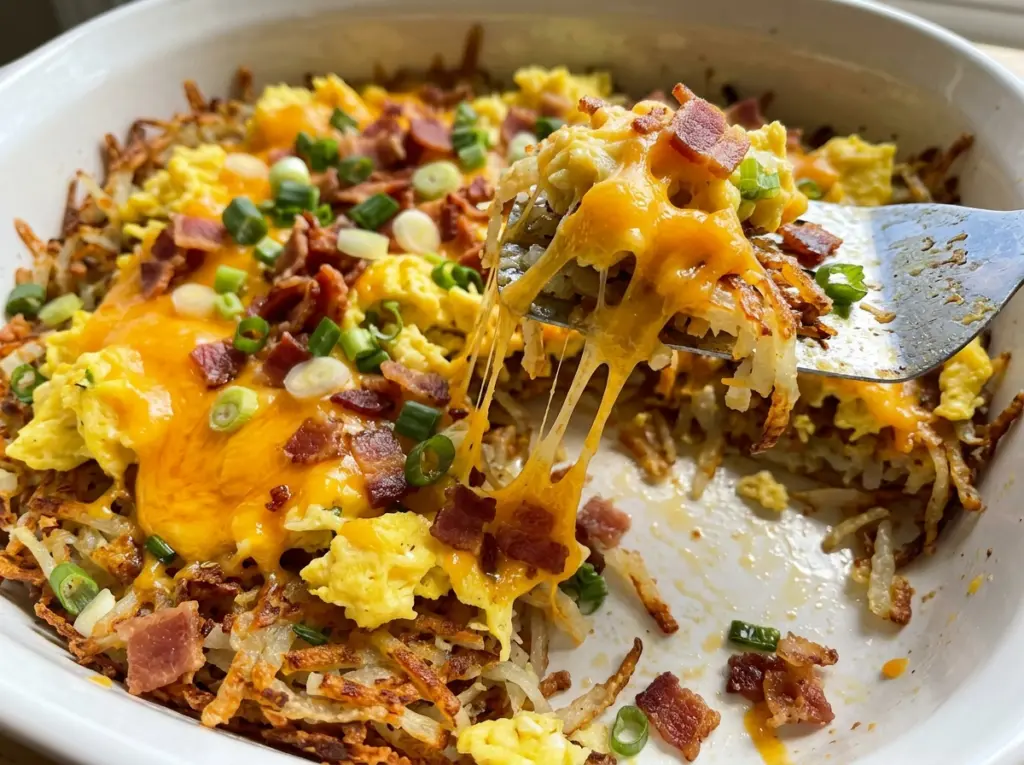
At the first turn, the hash browns have started to color underneath, but the top still looks pale and loose. That’s when I turn them in sections instead of stirring them into little shreds; the potatoes get another chance to crisp without losing the shape of the layer. It’s the difference between a sturdy base and a soft pile.
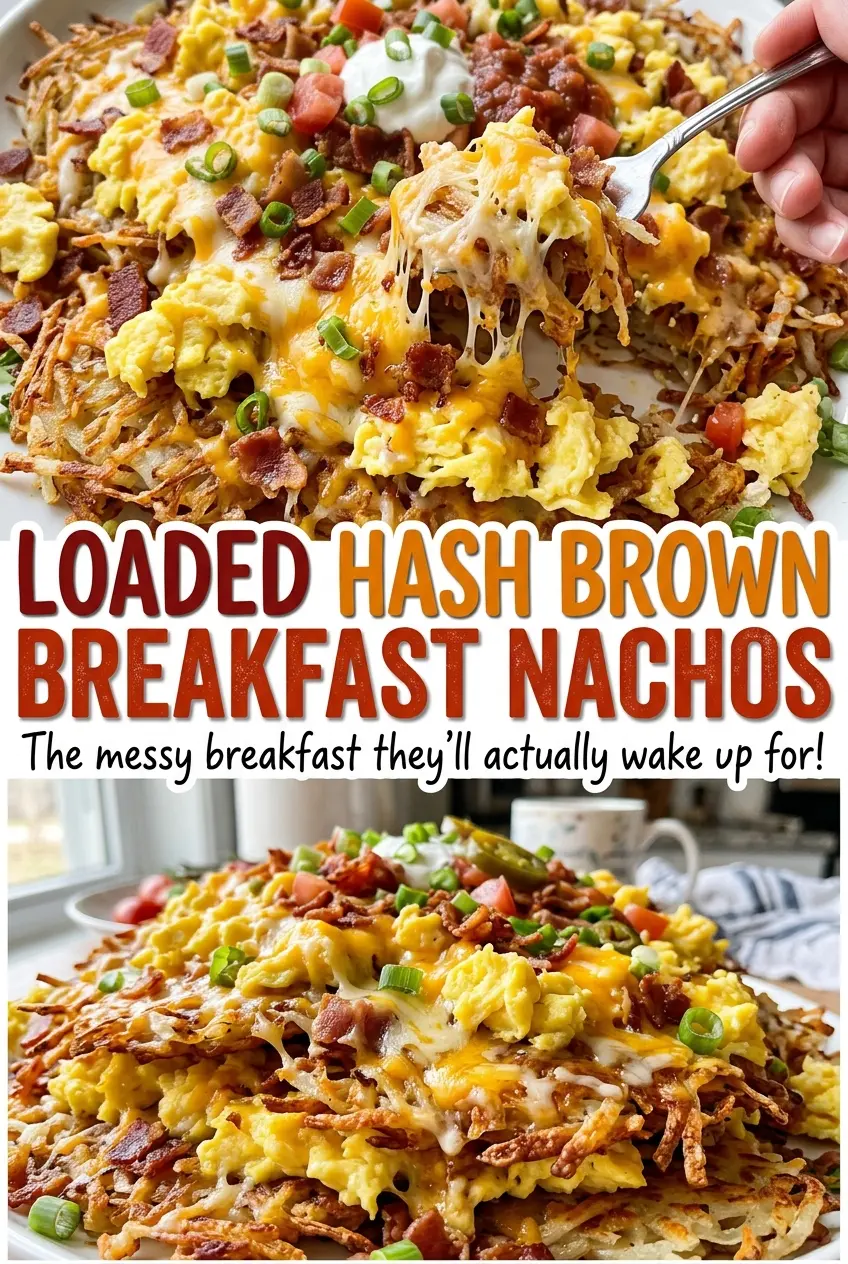
These loaded hash brown breakfast nachos bring that crisp-edged potato layer together with bacon, melted sharp cheddar, and gently scrambled eggs. I like that the toppings go on in stages, so the potatoes get their time in the oven before anything covers them.
Avocado and scallions go on after the cheese melts, while sour cream and salsa stay on the side. Each serving has a hot, cheesy center and fresh toppings that keep their texture, all on one pan of golden potatoes.
Kitchen Note
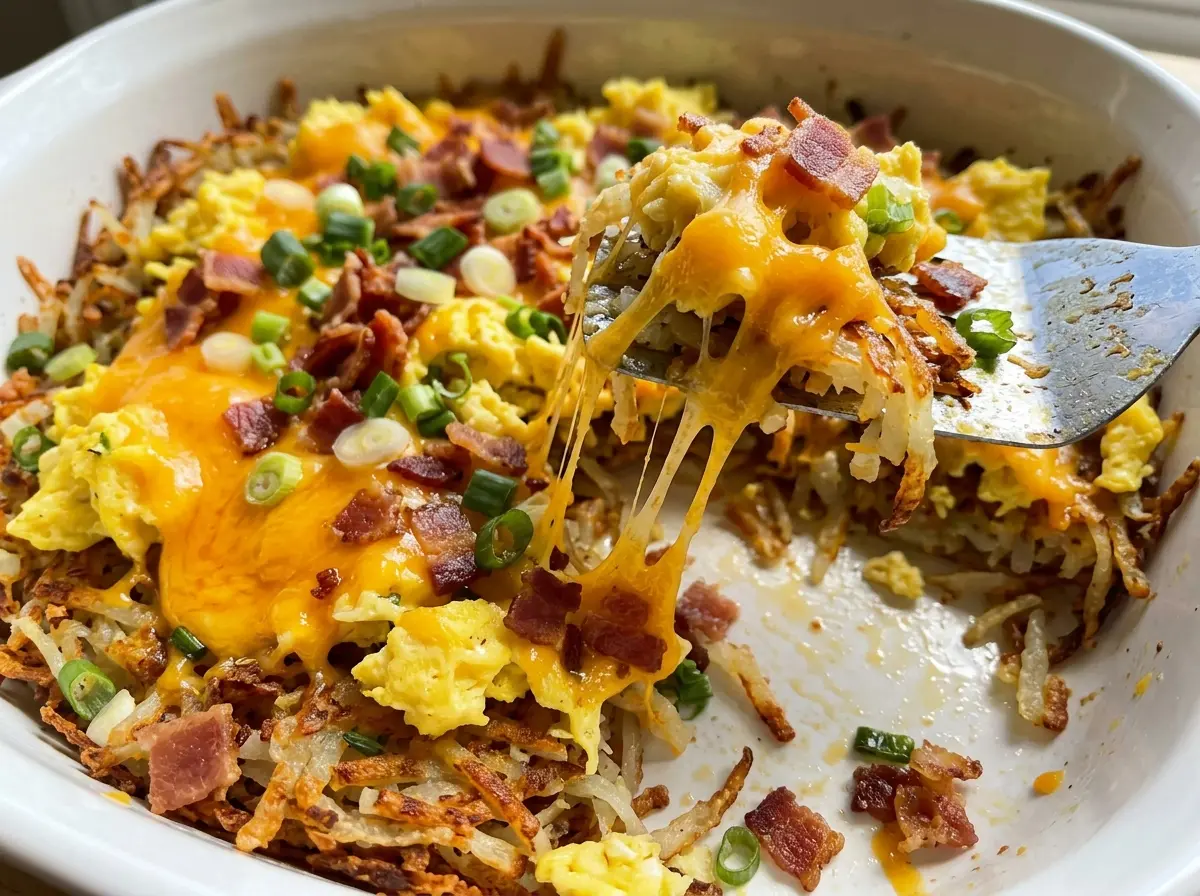
Scramble the eggs gently over medium-low heat, and stop as soon as no liquid egg remains. They’ll stay tender under the warm toppings instead of turning dry and firm.
Save these loaded hash brown breakfast nachos for a brunch spread with crisp potatoes, bacon, and melted sharp cheddar.
Why the Potatoes Need Their Own Crisping Time Before They Become Nachos
Hash browns are a different base from tortilla chips. They start with more moisture, and they need enough time uncovered in the oven to drive that moisture off and brown at the edges. Add cheese or other toppings too early and the potatoes underneath steam instead of crisping.
The layer matters just as much as the bake. Spread the shreds evenly, about a half inch thick, so the heat reaches the potatoes across the pan rather than leaving a deep, damp center. Turning the potatoes once gives the underside a chance to brown, too, while keeping enough connected pieces to hold the toppings. You’re looking for crisp spots and golden edges, not a uniformly hard potato crust. Once the base is ready, the cheese only needs a few minutes to melt; the eggs and fresh toppings can follow without sitting over the potatoes for another long bake.
Sharp Cheddar Has to Carry the Melt Across the Potato Base
- Shredded hash browns — Plain frozen shredded potatoes are the practical choice here: the strands spread into a broad, even layer and brown in the oven. Thaw them in the refrigerator before cooking so they’re ready to squeeze and season. A familiar store brand works; seasoned or diced potatoes won’t give you the same base or bake the same way.
- Sharp cheddar — Its more pronounced tang stands up to the potatoes and bacon, so the cheese still tastes like something once melted across the pan. Freshly shredded cheddar melts smoothly, while packaged shredded sharp cheddar is convenient and works well here. Mild cheddar will melt, but the finished nachos will taste less tangy.
- Bacon — Crisp bacon gives the soft eggs and avocado a salty, crunchy contrast. Choose the kind you like eating on its own; there’s no need for a specialty cut. Cook it until crisp enough to crumble so the pieces stay distinct across the cheesy layer.
- Eggs, milk, and butter — The milk loosens the eggs for a tender scramble, while butter coats the nonstick skillet and adds richness. Use fresh eggs, and whisk the mixture just before it goes into the pan. The eggs are cooked separately so their soft curds don’t disappear under the cheese.
- Scallions, avocado, sour cream, and salsa — These toppings bring fresh, cool contrast to the hot base. A ripe avocado should yield slightly when pressed, not feel mushy. Sour cream and salsa are served on the side, which lets everyone add them at the table without soaking the potatoes.
How to Build the Crisp Base Before Adding the Breakfast Toppings
Spread the seasoned potatoes in an even layer
Heat the oven to 425°F and line an 18×13-inch rimmed baking sheet with parchment paper. Squeeze excess moisture from the thawed hash browns, then toss them with olive oil, kosher salt, and black pepper. Spread the potatoes about a half inch thick across the sheet; thick mounds cook unevenly, so smooth out any high spots before baking.
Turn the potatoes once, then let the edges brown
Bake for 25 minutes, then use a thin spatula to turn the potatoes in sections and spread them back out. The first side should be set enough to lift rather than wet and loose. Bake another 15 to 20 minutes, until the edges are golden and you can see crisp spots. If the potatoes still look pale and soft, give them the full second bake rather than adding toppings early.
Cook the bacon and scramble the eggs separately
While the potatoes bake, cook the bacon in a 12-inch skillet over medium heat for 8 to 12 minutes, turning it occasionally, until crisp. Transfer it to a paper towel-lined plate and crumble it once cool enough to handle. Whisk the eggs with milk and kosher salt in a medium bowl, then melt the butter in a 10-inch nonstick skillet over medium-low heat. Add the eggs and stir gently for 3 to 5 minutes, until fully set with no liquid egg remaining.
Melt the cheddar, then finish with the fresh toppings
Scatter the cheddar and crumbled bacon over the baked potatoes, covering the base without packing the topping into a thick layer. Return the pan to the oven for 3 to 5 minutes, just until the cheese melts. Add the scrambled eggs, scallions, and diced avocado after the pan comes out. Serve with sour cream and salsa on the side.
Ways to Change the Toppings Without Losing the Hash Brown Base
A meat-free, avocado-rich tray
Leave out the bacon and use extra diced avocado in its place. You’ll lose the smoky, crisp pieces, but the added avocado brings richness to the potatoes and cheddar. The eggs and dairy remain, so this version suits an ovo-lacto vegetarian meal.
A dairy-free version with olive oil
For a dairy-free tray, omit the milk, cheddar, butter, and sour cream; use 1 tablespoon of the olive oil in place of the butter for the eggs. The eggs will be less creamy, and you’ll miss the melted cheese layer, but the hash brown base, bacon, avocado, scallions, and salsa still make a satisfying combination.
Storage and Reheating
- Refrigerator: Refrigerate leftovers within 2 hours and eat them within 3 to 4 days. The potatoes soften, and the avocado may darken.
- Freezer: Freezing assembled nachos isn’t recommended; the eggs and avocado lose their texture, and the potato layer won’t stay crisp.
- Reheating: Lift off any avocado and cold toppings you can, then reheat a portion in the microwave until hot throughout. Add the cold toppings back afterward; reheating the whole tray with sour cream or salsa makes the base soggier.
Questions That Come Up Before the First Tray Goes In
Loaded Hash Brown Breakfast Nachos
Ingredients
Equipment
Method
- Heat the oven to 425°F.
- Line an 18x13-inch rimmed baking sheet with parchment paper.
- Squeeze excess moisture from the hash browns.
- Toss the hash browns with the olive oil, 1 teaspoon kosher salt, and black pepper.
- Spread the hash browns evenly over the baking sheet in a layer about 1/2 inch thick.
- Bake at 425°F for 25 minutes.
- Turn the potatoes in sections with a thin spatula and spread them back into an even layer.
- Bake 15 to 20 minutes more, until golden at the edges and crisp in spots.
- While the potatoes bake, cook the bacon in a 12-inch skillet over medium heat for 8 to 12 minutes, turning occasionally, until crisp.
- Transfer the bacon to a paper towel-lined plate.
- Crumble the bacon.
- Whisk the eggs, milk, and 1/4 teaspoon kosher salt in a medium bowl.
- Melt the butter in a 10-inch nonstick skillet over medium-low heat.
- Add the egg mixture and cook, stirring gently, for 3 to 5 minutes, until fully set with no liquid egg remaining.
- Sprinkle the cheddar and crumbled bacon over the hash browns.
- Bake for 3 to 5 minutes, until the cheese is melted.
- Top with the scrambled eggs, scallions, and avocado.
- Serve with the sour cream and salsa.