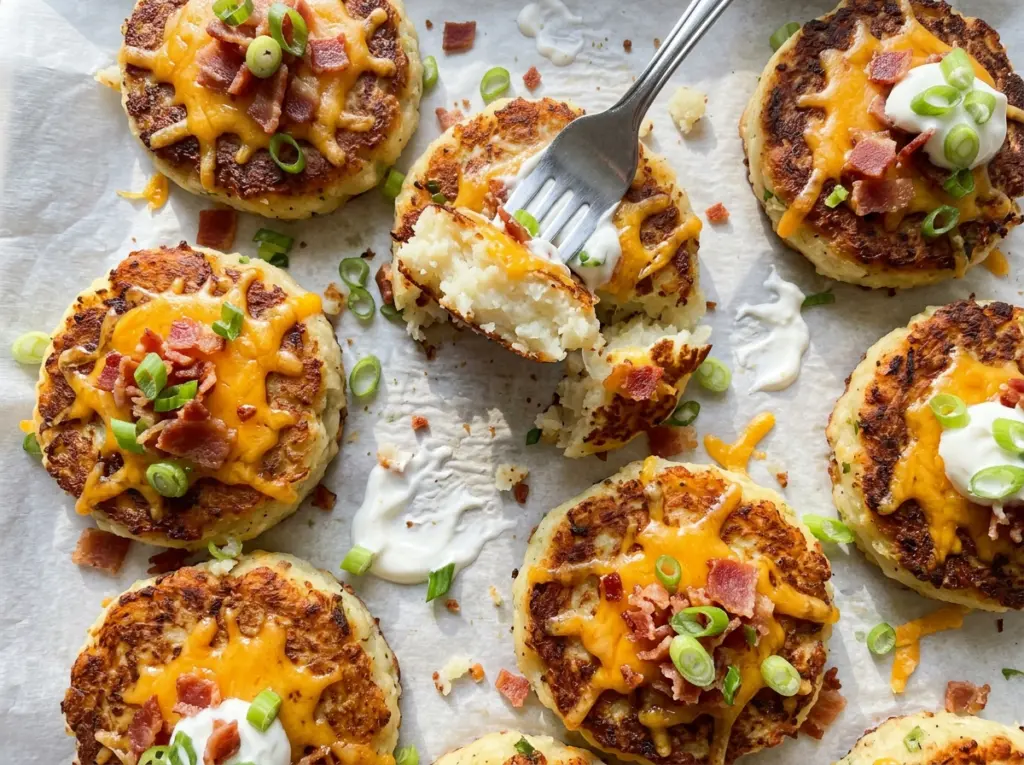
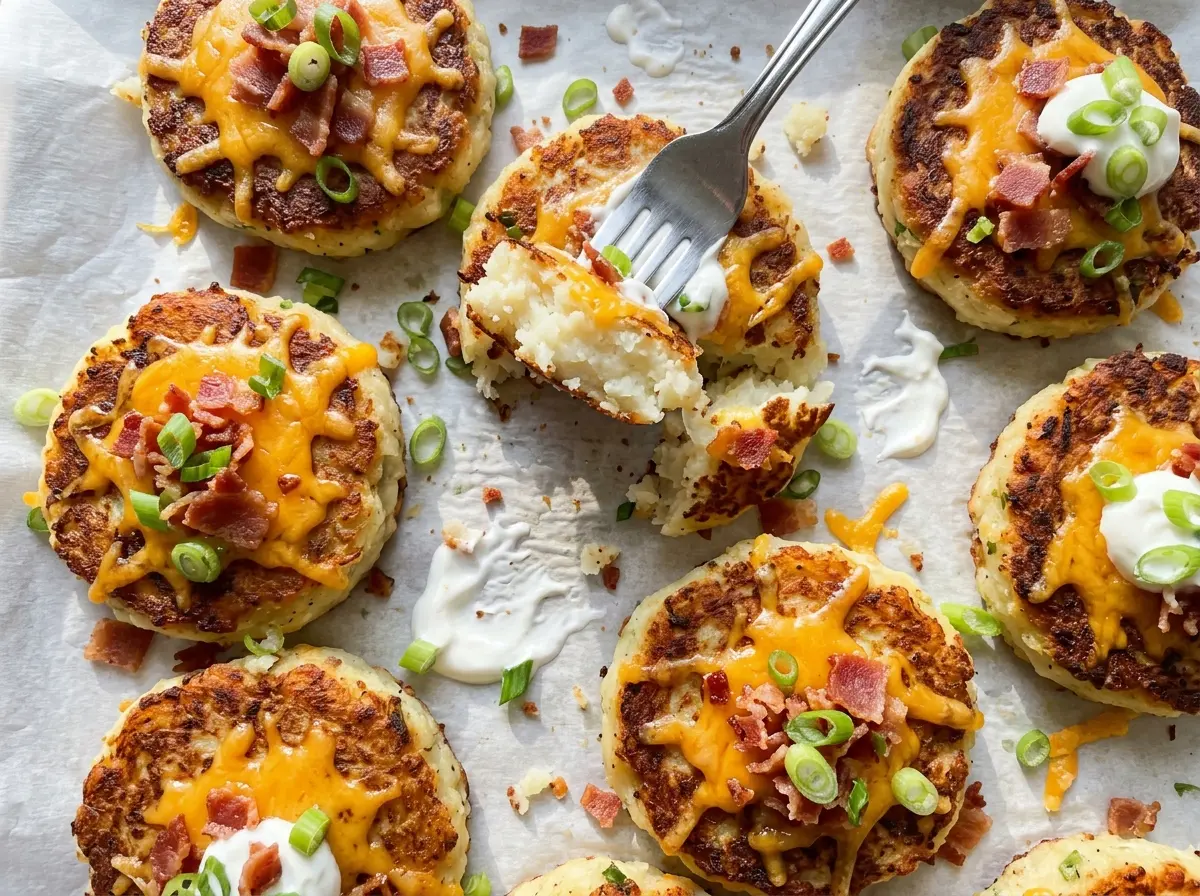
The first potato cake always tells you whether the mash is firm enough: it should hold its shape as it lands in the skillet, then turn golden without spreading into a puddle. These loaded mashed potato cakes are a good way to turn cold leftovers into a crisp-edged, cheesy meal with bacon and scallions mixed through every bite.
I keep the cakes fairly thin so the center heats through while the outside browns. The sharp cheddar melts into the potatoes, and the egg and flour help the patties stay together when you turn them. A spoonful of sour cream alongside each warm cake is the cool, tangy finish that makes this skillet supper feel complete.
Kitchen Note
Keep each patty about 1/2 inch thick. Thicker cakes can brown on the outside before the middle heats through during the short skillet cook.
Save these loaded mashed potato cakes for a crisp, cheesy way to use leftover potatoes, with bacon and scallions in every patty.
Why These Cakes Fry in Vegetable Oil Instead of Bacon Grease
After the bacon cooks, I pour off the rendered grease and wipe out the skillet before adding vegetable oil. That might seem like an extra cleanup step, but it gives the potato cakes a fresh, even frying surface instead of asking them to cook in whatever bacon fat and browned bits are left behind. The bacon still brings its smoky flavor and crisp pieces to the filling; it doesn’t need to be the frying fat, too.
Using vegetable oil also makes the two batches more consistent. Bacon grease can vary in quantity, and the skillet has already been heated while the bacon cooks. Starting the cakes with measured oil and a skillet over medium heat gives you a steadier path to a golden crust. Wiping out the pan isn’t about making it spotless; it’s about keeping loose bacon bits from scorching while the patties cook. The cakes should sizzle gently when they meet the pan, not spit or darken immediately.
Cold Mashed Potatoes Are the Structure, Not Just the Starting Point
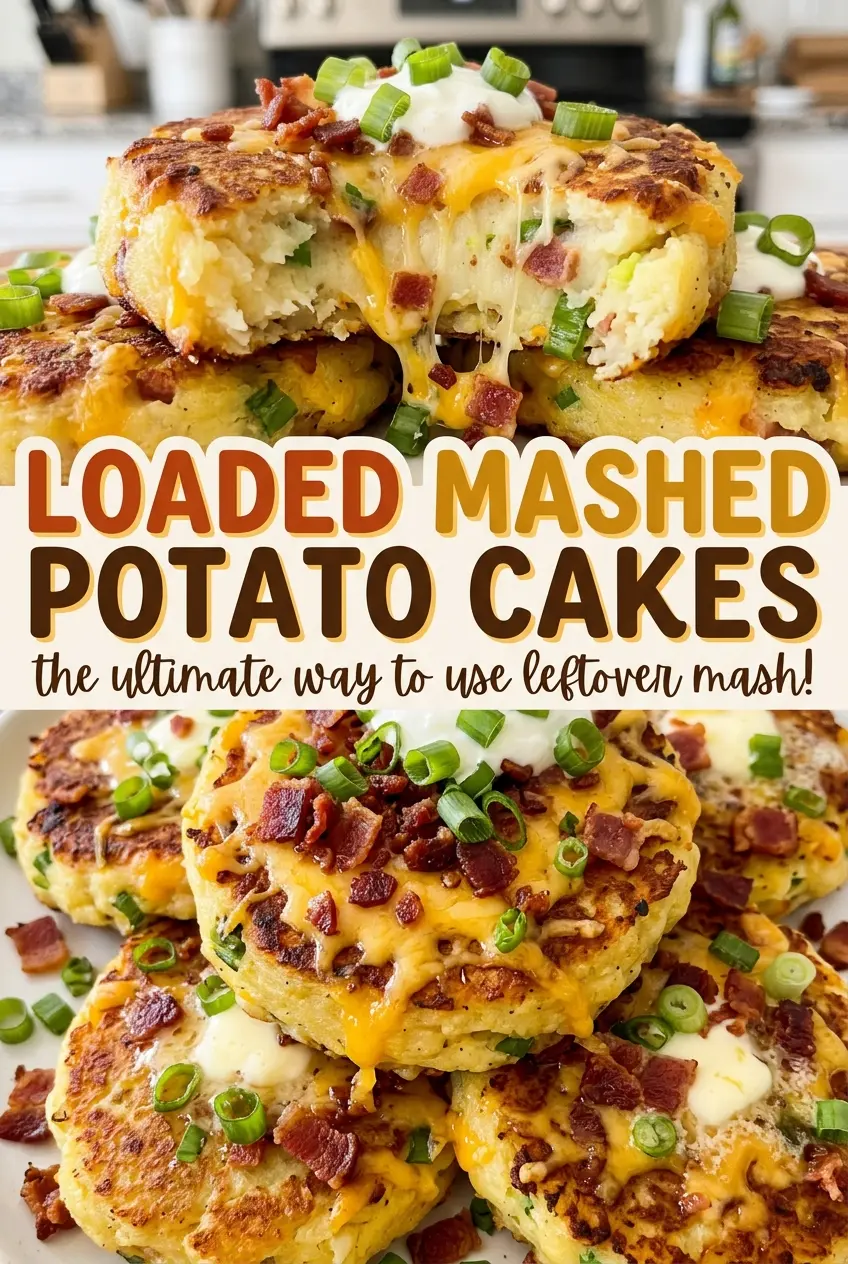
- Cold, firm mashed potatoes give the mixture enough body to shape into patties. Soft, loose mash makes a sticky mixture that is harder to turn, so use potatoes that have chilled and set rather than freshly made, warm mash.
- Egg and all-purpose flour do the binding work. The egg helps hold the ingredients together, while flour absorbs some moisture and supports the cakes as they fry. For a gluten-free version, use a measure-for-measure gluten-free flour blend in place of the all-purpose flour.
- Sharp cheddar gives the potato mixture a noticeable savory tang. Mild cheddar works if that’s what you have, though the cheese flavor will be gentler. Shred it yourself if you want it to melt smoothly into the mixture; packaged shredded cheese is convenient and works here, too.
- Bacon and scallions make these more than plain potato patties. Cook the bacon until crisp before crumbling it, so the pieces bring a little crunch rather than chewy bits. Thinly sliced scallions spread their mild onion flavor through the cakes; finely chopped chives are a close swap.
- Vegetable oil and sour cream have separate jobs: the neutral oil fries the cakes, and sour cream gives each bite a cool, tangy contrast. Plain Greek yogurt can stand in for the sour cream, with a thicker texture and a little more tang.
Cook the Bacon First, Then Fry the Cakes in Two Batches
Cook and crumble the bacon
Set a 12-inch nonstick skillet over medium heat and cook the bacon for 8 to 10 minutes, turning it as needed, until crisp. Transfer it to a paper towel-lined plate and let it cool before crumbling; hot bacon is harder to handle and can steam rather than stay crisp. Discard the grease and wipe out the skillet before moving on. Keep the crumbled bacon ready to fold into the potato mixture.
Mix the filling and shape even patties
In a large bowl, combine the cold mashed potatoes, egg, flour, shredded cheddar, scallions, pepper, and crumbled bacon. Mix until the ingredients are evenly distributed, checking the bottom of the bowl for pockets of flour or plain potato. Shape the mixture into 8 patties, each about 3 inches wide and 1/2 inch thick. If a patty cracks at the edge as you form it, press the mixture back together gently rather than packing it hard.
Brown the first four cakes
Heat 1 tablespoon of vegetable oil in the skillet over medium heat. Add 4 patties and cook them for 3 to 4 minutes per side, until both sides are golden brown and the centers are hot throughout. Give the cakes room to sit flat against the pan; pressing them down can squeeze out the soft potato mixture. Turn them carefully once the first side has developed a golden crust, then transfer the cooked cakes to a plate.
Finish the second batch and serve warm
Add the remaining 1 tablespoon of oil to the skillet and cook the other 4 patties the same way, for 3 to 4 minutes per side. If the first batch is waiting on the plate, keep the patties in a single layer so their crisp surfaces don’t steam against one another. Serve the cakes warm with sour cream. The contrast between the browned edges and the soft, cheesy middle is best straight from the skillet.
Three Swaps That Change the Cakes Without Losing Their Shape
Make them gluten-free with a measure-for-measure flour blend
Replace the all-purpose flour with the same amount of a gluten-free blend labeled for one-to-one baking. The cakes keep their familiar potato-and-cheese texture, though the blend may make the mixture feel slightly different as you shape it.
Trade sharp cheddar for pepper jack
Use the same amount of shredded pepper jack in place of the cheddar for a mild chile warmth and a softer cheese tang. Keep the scallions and bacon as they are; their savory flavor still fits the spicier cheese.
Skip the bacon for a vegetarian version
Leave out the bacon and keep the rest of the mixture the same. The cakes still have cheddar and scallions for savory flavor, but they’ll lose the smoky, crisp pieces that make the loaded version distinct.
Storage and Reheating
- Refrigerator: Cool and refrigerate leftovers within 2 hours in an airtight container. They’ll keep for 3 to 4 days; the crust softens as they sit.
- Freezer: Freeze the cooked cakes in a single layer until firm, then move them to an airtight freezer container. For best texture, use within 2 months.
- Reheating: Warm them in a skillet over medium heat until the centers reach 165°F. Avoid stacking or crowding the pan, which traps steam and softens the browned surfaces.
Questions That Come Up When the Cakes Hit the Skillet
Loaded Mashed Potato Cakes
Ingredients
Equipment
Method
- Cook the bacon in a 12-inch nonstick skillet over medium heat for 8 to 10 minutes, turning as needed, until crisp.
- Transfer the bacon to a paper towel-lined plate and crumble when cool.
- Discard the grease.
- Wipe out the skillet.
- In a large bowl, mix the mashed potatoes, egg, flour, cheddar, scallions, pepper, and crumbled bacon until evenly combined.
- Shape the mixture into 8 patties, about 3 inches wide and 1/2 inch thick.
- Heat 1 tablespoon of the oil in the skillet over medium heat.
- Cook 4 patties for 3 to 4 minutes per side, until golden brown and hot throughout, then transfer to a plate.
- Add the remaining 1 tablespoon oil to the skillet.
- Cook the remaining patties for 3 to 4 minutes per side, until golden brown and hot throughout.
- Serve warm with the sour cream.