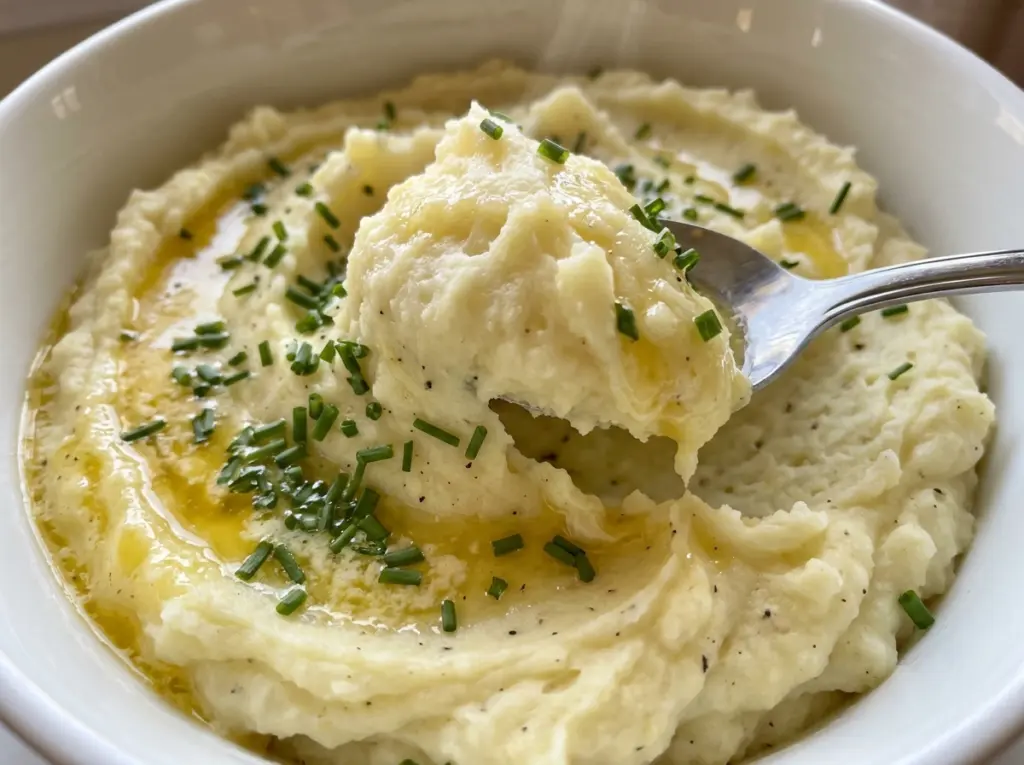
The water clinging to potatoes after draining can turn a make-ahead batch loose and heavy. I give the potatoes a short steam-dry in the pot before mashing, which keeps that extra moisture from following them into the baking dish. These make-ahead mashed potatoes have a rich, soft texture from butter, cream cheese, and sour cream, and they’re ready to bake when dinner gets busy.
Making them ahead also changes how I think about the final texture: they need to be soft enough to spread in the dish, then warm evenly after chilling. I heat the milk with the butter before stirring it into the potatoes, so the dairy blends in while everything is still warm. The finished potatoes bake covered, staying protected as the center heats through. What comes out is a creamy, scoopable dish with a gently browned edge where the potatoes meet the pan.
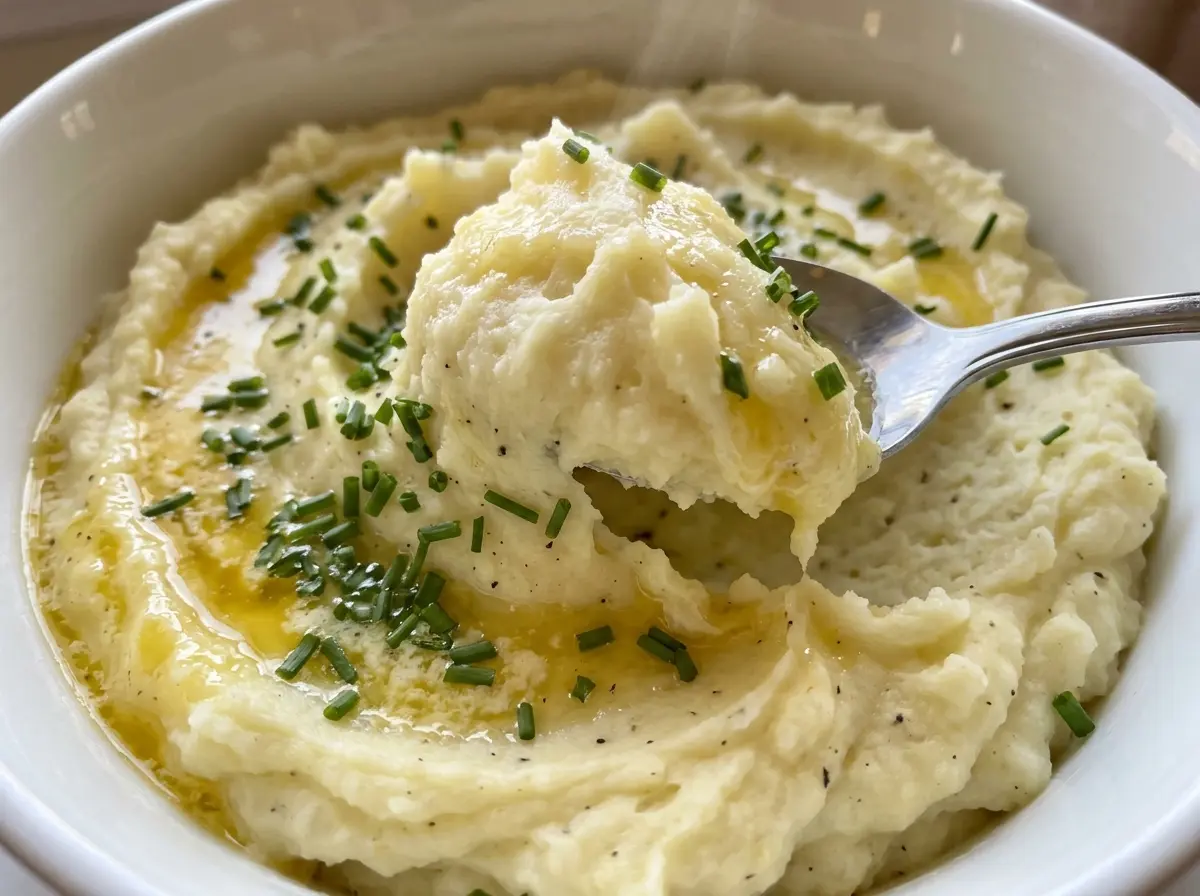
Kitchen Note
After draining, let the potatoes sit in the hot pot for 1 to 2 minutes before mashing. That brief steam-dry makes a noticeable difference; skip it and the mash can carry more water than you want.
Save these make-ahead mashed potatoes for a meal that needs one less last-minute job: creamy potatoes, ready to bake straight from the refrigerator.
Why a Covered Bake Makes These Mashed Potatoes Easier to Make Ahead
Mashed potatoes can seem like an awkward dish to prepare early: they’re lovely when freshly mashed, but chilling changes their texture and a bare, long bake can dry the surface. Here, the baking dish gives the potatoes a broad, even layer, and foil covers that layer while it reheats. The covered bake is part of the plan, not an afterthought.
That makes the handoff between cooking and serving straightforward. Spread the mash into the 9×13-inch dish while it’s fresh, chill it, then put the covered dish in the oven when it’s time to warm it. The center takes longer to heat than the edges, so use its temperature—not a warm-looking surface—as your doneness cue. Letting the dish stand briefly before serving gives the potatoes a moment to settle, making them easier to scoop without turning them stiff or crusty.
The make-ahead window is useful without asking the potatoes to wait indefinitely. You can prepare them in advance, keep them covered in the refrigerator, and finish them in the oven. That’s a particularly practical rhythm for a meal when the stovetop is already full.
Why Russets and Three Kinds of Dairy Shape the Texture

- Russet potatoes — Their fluffy, starchy texture makes a soft mash that spreads easily in the baking dish. Cut them into even 2-inch chunks so they cook at a similar pace; peeling them first gives the finished potatoes a smooth, tender feel. I use the russets listed here rather than changing potato varieties, because waxier potatoes make a denser mash.
- Whole milk and unsalted butter — Heating them together lets the butter melt and brings warm dairy into the potatoes rather than cooling the mash with a cold addition. Whole milk gives the mixture body without making it as heavy as using only butter. Unsalted butter also leaves the seasoning under your control, since kosher salt is added separately.
- Cream cheese — Softened cream cheese blends into the warm potatoes more readily than a cold block, helping the mash stay cohesive and rich. A standard package works here; there’s no need to seek out a specialty version.
- Sour cream — It adds a gentle tang that keeps the butter and cream cheese from making the potatoes taste one-note. Stir it in with the other dairy so it’s distributed throughout, rather than leaving pockets in the casserole.
- Kosher salt and black pepper — These season the potatoes themselves, not just the top layer. Add them when you combine the warm dairy and mash, then stir until no concentrated streaks of seasoning remain.
- Nonstick cooking spray — A light coating on the baking dish helps the potatoes release more cleanly when you serve them. Coat the dish before spreading in the mash.
From Fork-Tender Potatoes to a Hot, Creamy Center
Simmer the evenly cut potatoes
Put the peeled potato chunks in a 6-quart pot and cover them with cold water by 1 inch. Bring the pot to a boil over high heat, then lower the heat to maintain a steady simmer. Cook for 15 to 20 minutes, until a fork slips easily into the potatoes; if the centers still resist, they need more time before draining.
Drain, steam-dry, and mash
Drain the potatoes and return them to the hot pot. Let them steam dry for 1 to 2 minutes, then mash until mostly smooth. Mash while they’re hot, when they break down easily, and stop once the large lumps are gone rather than working them endlessly.
Stir in the warm dairy
While the potatoes cook, heat the milk and butter in a small saucepan over medium-low heat for 3 to 4 minutes. Watch for the butter to melt and the milk to become hot, but don’t let it boil. Stir the warm mixture into the potatoes with the softened cream cheese, sour cream, salt, and pepper until combined; scrape the bottom and sides so no pockets of dairy remain.
Chill in the dish, then bake covered
Coat a 9×13-inch baking dish with nonstick cooking spray and spread the potatoes into an even layer. Cool them uncovered, then cover and refrigerate. When you’re ready to serve, heat the oven to 350°F and bake the dish covered with foil for 45 to 60 minutes, until the center reaches 165°F. Let the potatoes stand for 5 minutes before serving.
Texture Choices That Stay Within the Same Creamy Potato Base
Leave a little more potato texture
For a more rustic spoonful, stop mashing when the potatoes are mostly smooth and a few small pieces remain. Keep the dairy amounts and the baking method the same; the small change is in how much texture you leave in the mash.
Aim for a more uniform mash
If you prefer a smoother scoop, mash until the potatoes look even before adding the warm dairy, then stir until the mixture is combined. Keep the potatoes mostly smooth rather than beating them aggressively; the goal is an even texture, not a dense paste.
Storage and Reheating
- Refrigerator: Keep the covered dish refrigerated for up to 2 days. Cool it uncovered, then cover and get it into the refrigerator within 2 hours of cooking.
- Freezer: I don’t recommend freezing this dairy-rich mash; thawing can leave the texture grainy or separated.
- Reheating: The covered 350°F oven method gives the chilled dish an even reheat; use the time and center-temperature cues in the process above. Don’t remove the foil early, since the exposed surface can dry before the center is hot.
Questions That Come Up With Make-Ahead Mashed Potatoes
Make Ahead Mashed Potatoes
Ingredients
Equipment
Method
- Put the potatoes in a 6-quart pot and cover with cold water by 1 inch.
- Bring to a boil over high heat, then reduce the heat to maintain a steady simmer and cook for 15 to 20 minutes, until the potatoes are easily pierced with a fork.
- Drain the potatoes and return them to the pot.
- Let them steam dry for 1 to 2 minutes, then mash until mostly smooth.
- Heat the milk and butter in a small saucepan over medium-low heat for 3 to 4 minutes, until the butter has melted and the milk is hot but not boiling.
- Stir the milk and butter into the potatoes with the cream cheese, sour cream, salt, and pepper until combined.
- Coat a 9x13-inch baking dish with nonstick cooking spray and spread the potatoes in the dish.
- Cool uncovered, then cover and refrigerate for up to 2 days, getting them into the refrigerator within 2 hours of cooking.
- Heat the oven to 350°F.
- Bake the potatoes covered with foil for 45 to 60 minutes, until the center reaches 165°F.
- Let stand for 5 minutes before serving.