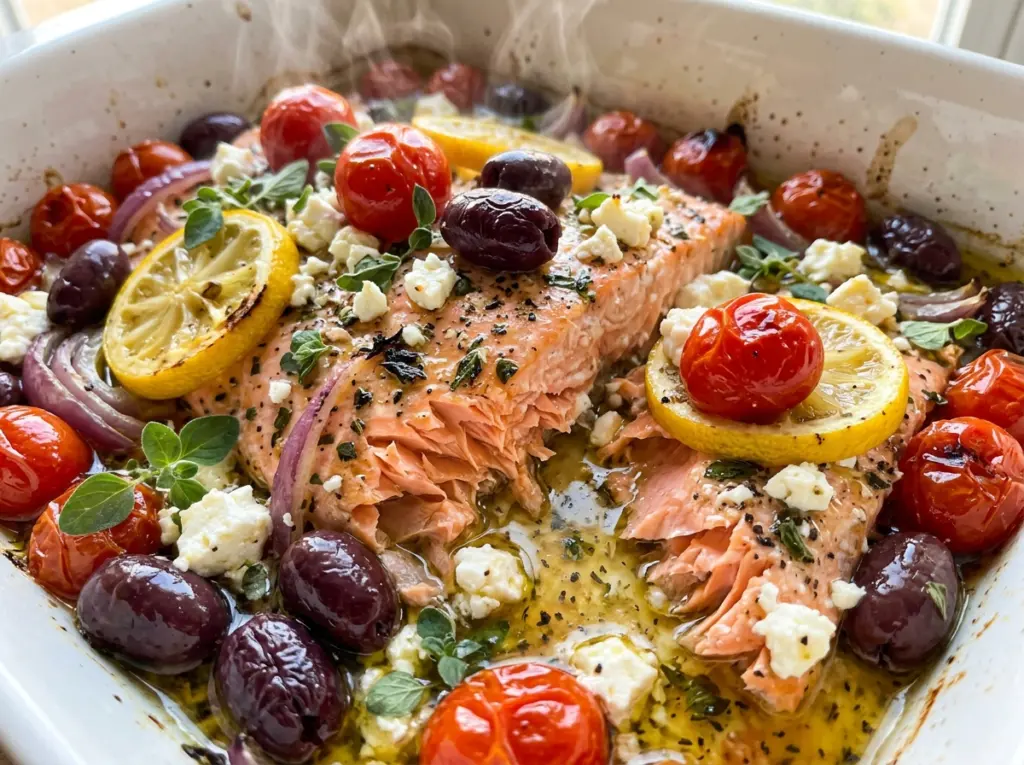
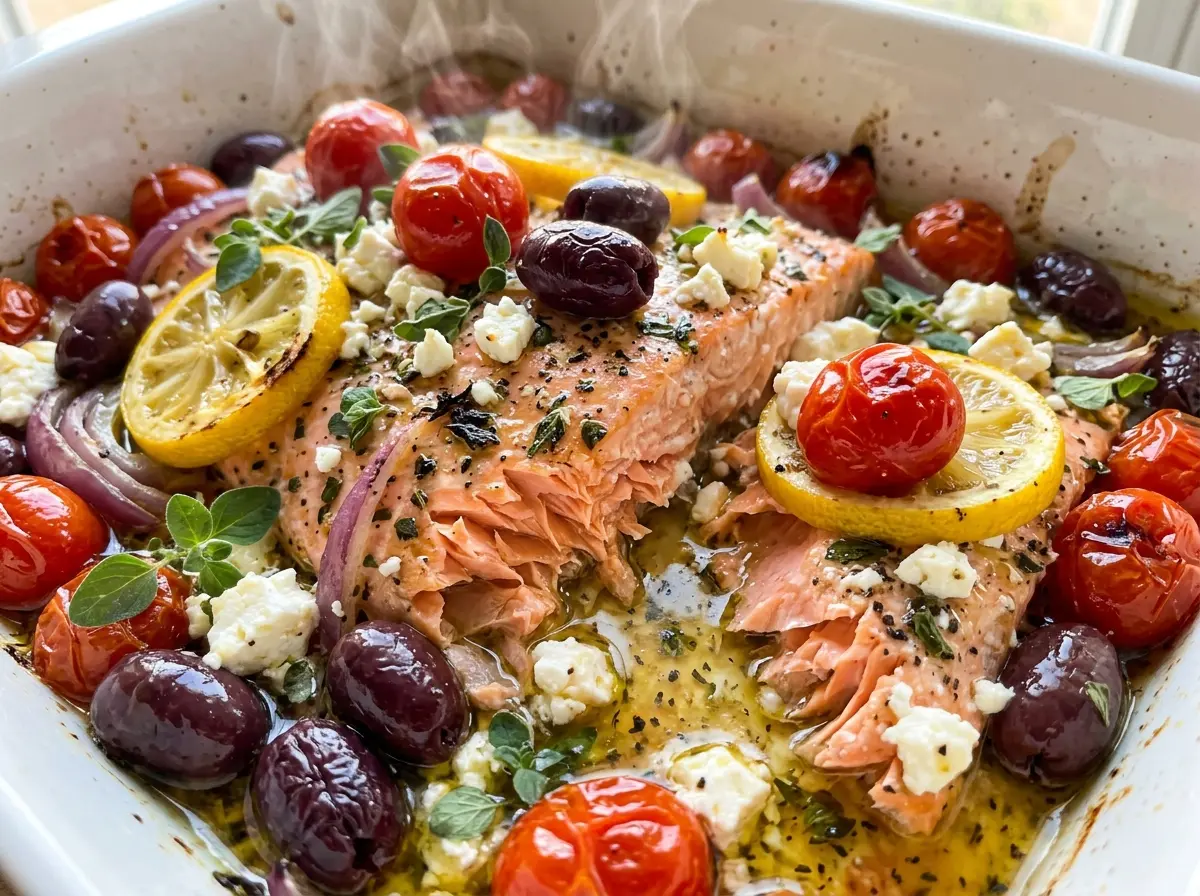
As the cherry tomatoes soften in the oven, they release just enough juice to mingle with the olive oil, garlic, and briny olives. That’s what makes Mediterranean salmon feel like a full meal from one baking dish, without a separate sauce to manage. I like how the feta and lemon go on at the end, when the fish is out of the oven and the vegetables are still warm.
This version keeps the salmon nestled skin-side down among the vegetables, so the topping seasons the fish as everything bakes together. The timing is short, though, which means the thickest part of each fillet—not the clock alone—tells you when it’s ready. When the tomatoes have softened and the salmon is cooked through, the pan is full of tender fish and bright, savory juices.
Kitchen Note
Keep the salmon skin-side down as you nestle the fillets into the vegetables. The skin helps shield the underside during baking and gives you a sturdier base when you lift each portion from the dish.
Save this Mediterranean salmon for a one-dish dinner with soft tomatoes, Kalamata olives, and a warm feta finish.
Why the Tomatoes Should Stay Juicy, Not Roast Until Dry
This is a baked salmon dinner, but the vegetables aren’t meant to turn into a dry, deeply browned sheet-pan topping. The cherry tomatoes soften and release juice as they cook; olive oil, garlic, and oregano season that liquid, while Kalamata olives add a salty, briny edge. You’ll have tender vegetables and flavorful juices in the bottom of the dish, ready to spoon over the fish.
That distinction helps set expectations. The tomatoes should look softened, with some beginning to slump, rather than shriveled and crisp at the edges. A 9×13-inch baking dish gives the vegetables room around the fillets without spreading them into a thin layer that dries quickly. If a few tomatoes remain whole, that’s fine—their skins can stay intact while the centers turn tender. The soft tomato juices and olive oil are part of the finish, not a sign that the vegetables have failed to roast.
What the Tomatoes, Olives, and Feta Each Bring
- Cherry tomatoes — Their small size lets them soften during the salmon’s short bake, and their juices make the vegetables feel like a topping and a light pan sauce at once. Choose tomatoes that are firm and ripe; there’s no need to seek out a specialty variety. Leave them whole so they hold their shape as they bake.
- Kalamata olives — Their concentrated, briny flavor gives the mild salmon a savory counterpoint. Pitted olives save prep time; halve them so a little of their flavor reaches the surrounding vegetables. If you leave them out, the dish will still bake well, but it’ll taste less salty and complex.
- Red onion and garlic — Thinly sliced onion softens in the oven while minced garlic spreads through the oil and tomato juices. Slice the onion evenly so larger pieces don’t stay firm when the fish is ready. Fresh garlic gives the topping its aromatic base; mince it finely enough that it distributes rather than clumping.
- Olive oil and dried oregano — The oil coats the vegetables and carries the oregano’s earthy flavor through the pan. A regular everyday olive oil works well here; save a pricier finishing oil for a dish where its flavor stays uncooked. Dried oregano is convenient and holds up during baking.
- Skin-on salmon — The four 6-ounce fillets bake quickly alongside the vegetables, and the skin helps protect the underside from direct contact with the dish. Choose fillets that are similar in thickness so they finish at roughly the same time. Check the thickest part of each one rather than judging by the thinnest end.
- Feta and lemon juice — Feta brings a creamy, salty finish, while fresh lemon juice cuts through the richness after baking. Crumbled feta is ready to scatter over the pan; add it at the end so it stays distinct instead of disappearing into the vegetable juices.
How to Bake the Salmon Without Losing the Tomato Juices
Coat the vegetables in the baking dish
Heat the oven to 400°F. Put the cherry tomatoes, halved Kalamata olives, thinly sliced red onion, minced garlic, olive oil, dried oregano, 1/2 teaspoon of the salt, and 1/8 teaspoon of the pepper into a 9×13-inch baking dish. Toss until the oil and seasonings coat the vegetables. Spread everything across the dish so the salmon fillets have spaces to nestle into.
Nestle in the fillets and season
Set the salmon among the vegetables with the skin facing down. Keep the fillets in a single layer, with vegetables tucked around them rather than piled on top. Season the salmon with the remaining 1/4 teaspoon salt and 1/8 teaspoon pepper. This split seasoning gives the vegetables and fish their own measured share.
Bake until the thickest part is cooked through
Bake for 12 to 16 minutes, until the tomatoes have softened and the thickest part of the salmon reaches 145°F. Insert an instant-read thermometer into the thickest part of a fillet, avoiding the baking dish. Fillets vary in thickness, so start checking toward the beginning of the time range rather than waiting for the final minute. The fish should look opaque and separate into moist flakes when gently tested.
Add the bright finish
Drizzle the fresh lemon juice over the salmon and vegetables as soon as the dish comes out of the oven. Sprinkle the crumbled feta over the top so it lands on both fish and vegetables. Let the dish rest for 2 minutes before serving; the brief pause gives the lemon and feta time to settle into the warm topping.
Two Easy Ways to Change the Mediterranean Topping
Make it dairy-free by leaving off the feta
Skip the feta and keep the rest of the topping unchanged. The tomatoes, olives, garlic, and lemon still bring plenty of savory and bright flavor, though you’ll lose the creamy, salty finish the cheese adds.
Go olive-free for a milder topping
Omit the Kalamata olives if you prefer a less briny bite. The softened tomatoes, onion, and garlic remain the backbone of the topping, but the finished dish will taste gentler and less salty.
Storage and Reheating
- Refrigerator: Refrigerate leftovers within 2 hours and use them within 3 to 4 days. The salmon will be firmer after chilling, and the vegetables will release more juice.
- Freezer: The cooked salmon and topping can be frozen, though the tomatoes soften further after thawing. Store portions airtight for up to 2 to 3 months and thaw overnight in the refrigerator.
- Reheating: Warm a portion, covered, in a 300°F oven until it reaches 165°F. Keep the topping over the fish as it reheats; uncovered high heat dries the salmon before the center warms through.
Questions That Come Up When Baking Mediterranean Salmon
Mediterranean Salmon
Ingredients
Equipment
Method
- Heat the oven to 400°F.
- Place the tomatoes, olives, onion, garlic, olive oil, oregano, 1/2 teaspoon salt, and 1/8 teaspoon pepper in a 9x13-inch baking dish; toss to coat.
- Nestle the salmon fillets among the vegetables, skin-side down.
- Season the fillets with the remaining 1/4 teaspoon salt and 1/8 teaspoon pepper.
- Bake for 12 to 16 minutes, until the salmon reaches 145°F in the thickest part and the tomatoes have softened.
- Drizzle the lemon juice over the salmon and vegetables.
- Sprinkle with feta, and let rest for 2 minutes before serving.