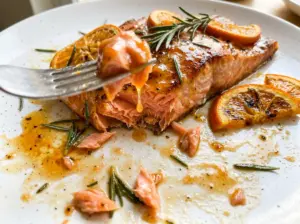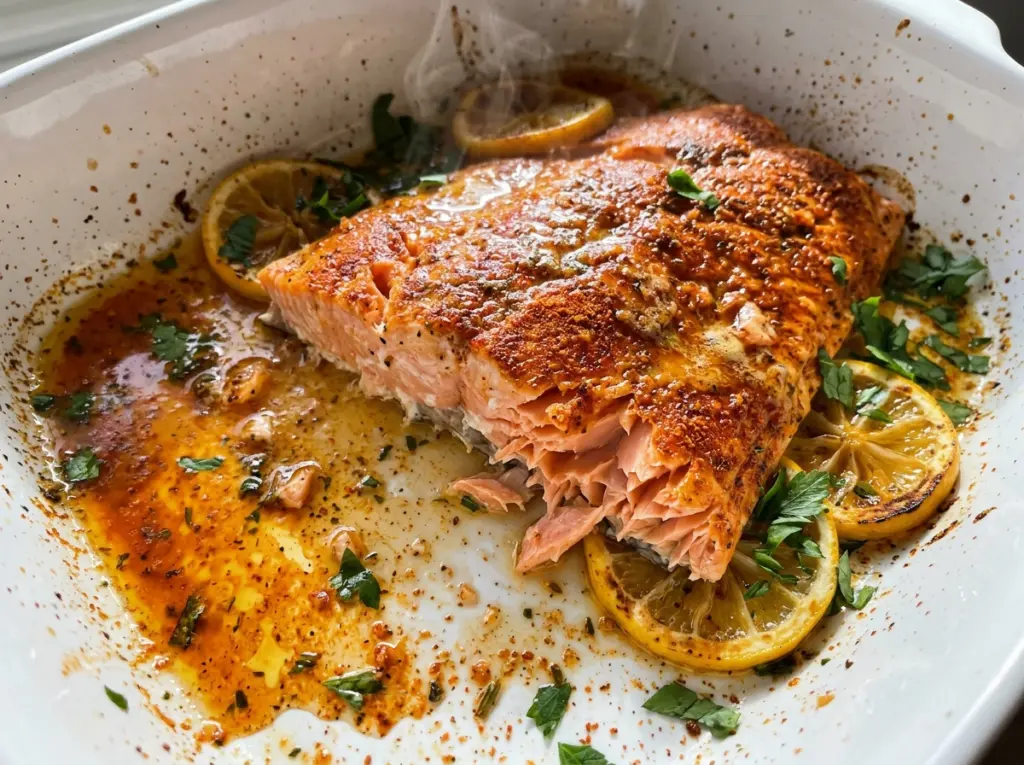
The edges of the salmon turn opaque first, while the thick center stays glossy and tender. That’s the moment I watch for when I roast these Old Bay salmon portions: the oven does the work, and there’s no pan to stand over or fish to flip. A little olive oil helps the seasoning cling, and the bright, briny smell of Old Bay gives the whole kitchen a head start on dinner.
I keep the salmon skin-side down and season the tops in an even layer. Then I let the oven take it to 145°F, checking the thickest portion rather than guessing from the edges. Lemon wedges go on the plate, not under the fish, so everyone can squeeze on fresh juice right before eating. The result is tender salmon with savory seasoning and a clean hit of lemon.
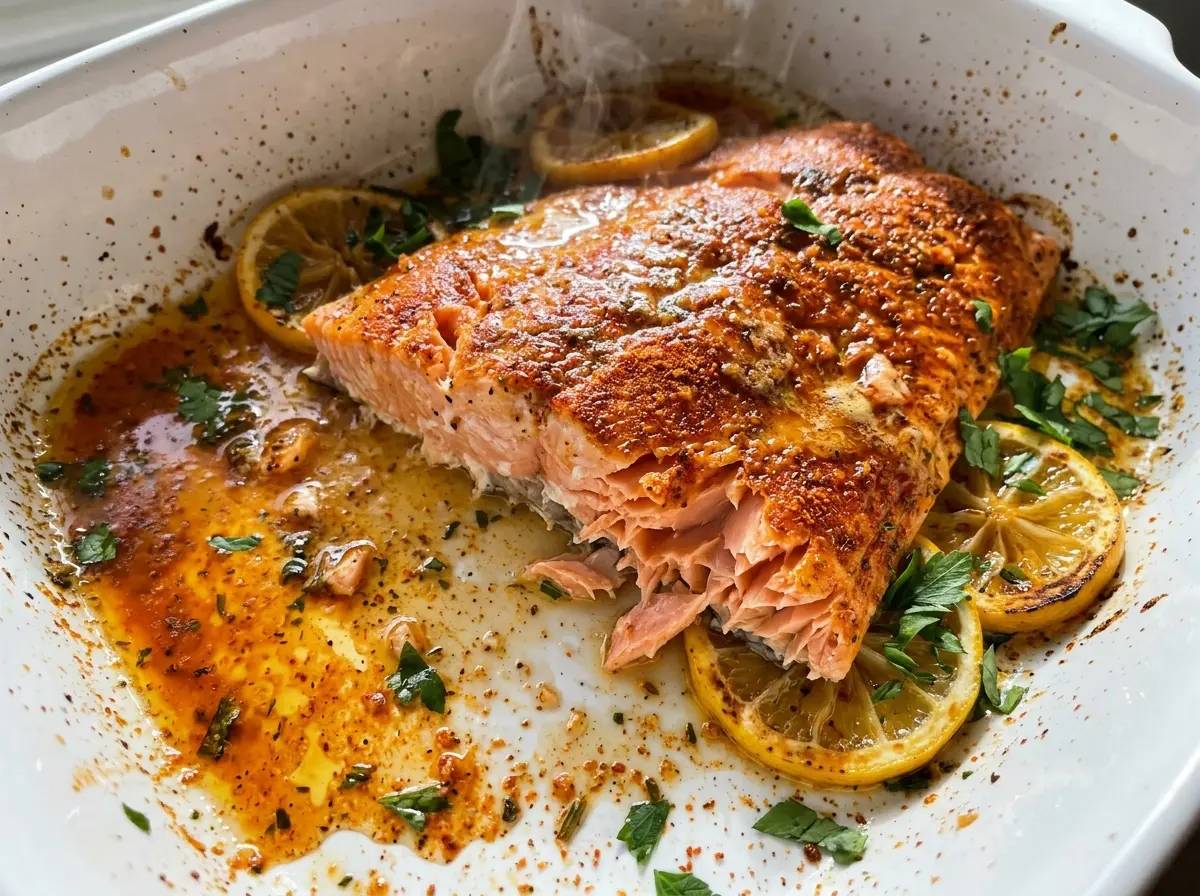
Kitchen Note
Old Bay is already salty and full of flavor, so I skip adding extra salt here. An even coating gives every portion a balanced bite without needing to shake on more seasoning at the table.
Save this Old Bay Roasted Salmon for a quick, savory dinner with tender flakes and lemon to squeeze over each serving.
Why Keeping the Skin On Makes Roasting More Forgiving
With the salmon skin-side down, the skin sits between the flesh and the foil-lined pan. That gives the delicate underside a little protection from the direct heat and helps the portions hold together as they roast. It’s one reason I like buying a skin-on fillet for this method, even if I don’t plan to eat the skin.
The skin also gives you a clear “bottom” when arranging the portions, so the seasoned side stays facing up and exposed to the oven. There’s no flipping halfway through, which means the Old Bay coating stays where you put it. If you usually roast salmon skinless, this small detail is worth trying; it makes the fish easier to handle without adding another step or another ingredient.
Keep the portions arranged skin-side down with a little space around them. They don’t need to be turned or moved while they roast. Once they’re cooked, you can lift the flesh away from the skin at the table if you’d rather not serve it.
What the Salmon, Old Bay, and Lemon Each Bring
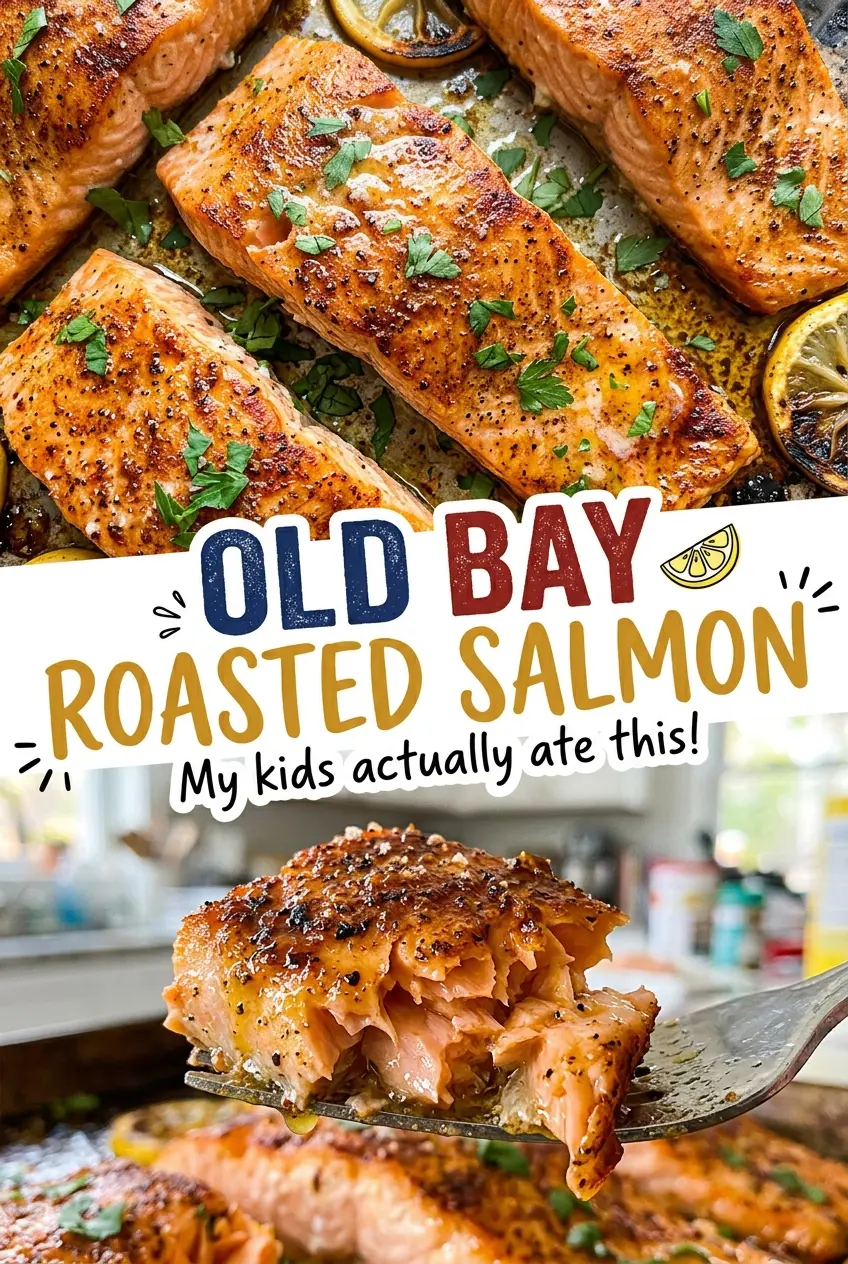
- Skin-on salmon — Choose a fresh-looking fillet with moist flesh and an even thickness where possible; evenly sized portions are easier to roast at the same pace. Ask for pin bones to be removed, or run your fingers gently over the flesh and pull out any you find with clean tweezers.
- Old Bay seasoning — This seasoning brings the distinctive savory, celery-seed-and-paprika character that defines the dish. It’s doing more than adding heat, so another seafood seasoning will change the flavor. A fresh tin gives a clearer aroma; there’s no need to add separate salt.
- Olive oil — A thin coating helps the seasoning adhere to the salmon instead of falling off onto the foil. A mild cooking oil works as a substitute if that’s what you have; the fish will taste less fruity, but the method stays the same.
- Lemon — Fresh wedges give you both juice and a fragrant citrus aroma at the table. Bottled juice can add acidity in a pinch, but it won’t have the same fresh scent. Keep the lemon for serving so the seasoning remains the main flavor on the roasted fish.
Roast the Portions Until the Center Turns Tender
Heat the Oven and Line the Pan
Heat the oven to 425°F and line a rimmed baking sheet with foil. Lining the pan keeps cleanup simple and gives the salmon a stable surface. Use a rimmed sheet so the portions stay contained as you move the pan. Have the fish ready before you start seasoning, since the next stage is quick.
Arrange and Season the Salmon
Set the four salmon portions on the baking sheet skin-side down. Brush the tops with olive oil, covering the exposed flesh so the seasoning has something to cling to. Sprinkle the Old Bay evenly over the top rather than leaving one heavily coated patch. Keep the skin underneath; the seasoned side should face up for roasting.
Roast to the Temperature Cue
Roast for 12 to 15 minutes, checking the thickest part of the salmon with a thermometer. The center should reach 145°F, and the flesh should flake easily when nudged with a fork. If the portions vary in thickness, the thinner ones may be ready sooner, so use the temperature and texture cues rather than relying on the clock alone. Avoid repeatedly opening the oven, which lets heat escape and makes timing less predictable.
Finish with Lemon at the Table
Serve the salmon with lemon wedges for squeezing over each portion. A gentle fork should separate the cooked flakes without crushing them. Let everyone add lemon to taste; its fresh acidity cuts through the savory seasoning. The fish is ready to serve straight from the pan.
Three Easy Ways to Change the Seasoning
Use Cajun seasoning for more heat
Replace the Old Bay with an equal amount of Cajun seasoning for a pepperier, often hotter result. Cajun blends differ in salt level and heat, so choose one you already enjoy and don’t add separate salt. The salmon, oil, oven temperature, and doneness cue stay the same.
Choose a salt-free seafood blend
For a lower-sodium version, use a salt-free seafood seasoning blend in place of Old Bay and apply it evenly over the oiled tops. The flavor will be less salty and may lean more on herbs or pepper, depending on the blend. This keeps the same simple roasting method while giving you more control over sodium.
Make a milder dill-and-garlic version
For a gentler herb flavor, replace the Old Bay with 1 teaspoon dried dill and 1 teaspoon garlic powder. Sprinkle both over the oiled salmon just as you would the seasoning. You’ll lose Old Bay’s briny, peppery character, but the dill pairs naturally with the lemon and keeps the fish savory.
Storage and Reheating
- Refrigerator: Store cooked salmon in a covered container at 40°F or below and eat it within 3 to 4 days. The flesh will firm up as it chills.
- Freezer: It freezes, though the texture is best when freshly cooked. Wrap cooled portions tightly or pack them in an airtight freezer container and use within 2 to 3 months for best quality.
- Reheating: Warm covered in a 275°F oven until the center reaches 165°F. High heat and uncovered reheating dry the flakes quickly, so avoid trying to rush it.
Questions That Come Up When Roasting Old Bay Salmon
Old Bay Roasted Salmon
Ingredients
Equipment
Method
- Heat the oven to 425°F.
- Line a rimmed baking sheet with foil.
- Arrange the salmon skin-side down on the baking sheet.
- Brush the tops with olive oil.
- Sprinkle evenly with Old Bay seasoning.
- Roast for 12 to 15 minutes, until the thickest part reaches 145°F and the salmon flakes easily with a fork.
- Serve with lemon wedges for squeezing over the salmon.