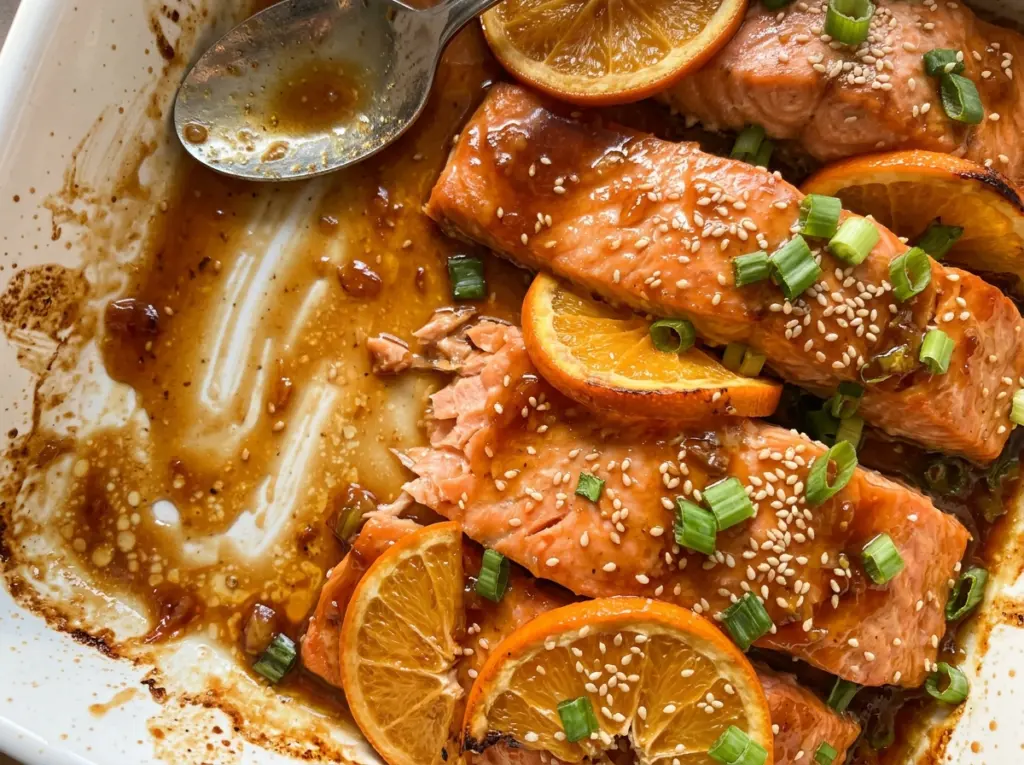
The orange juice and honey loosen into a thin, fragrant sauce as they warm, and that’s exactly where this baked salmon can go sideways: a watery glaze runs off the fish and pools on the parchment. I thicken the sauce on the stove first, so the Orange Teriyaki Baked Salmon gets a glossy coating that stays put through baking. The ginger and garlic bring a little warmth without getting in the way of the bright citrus.
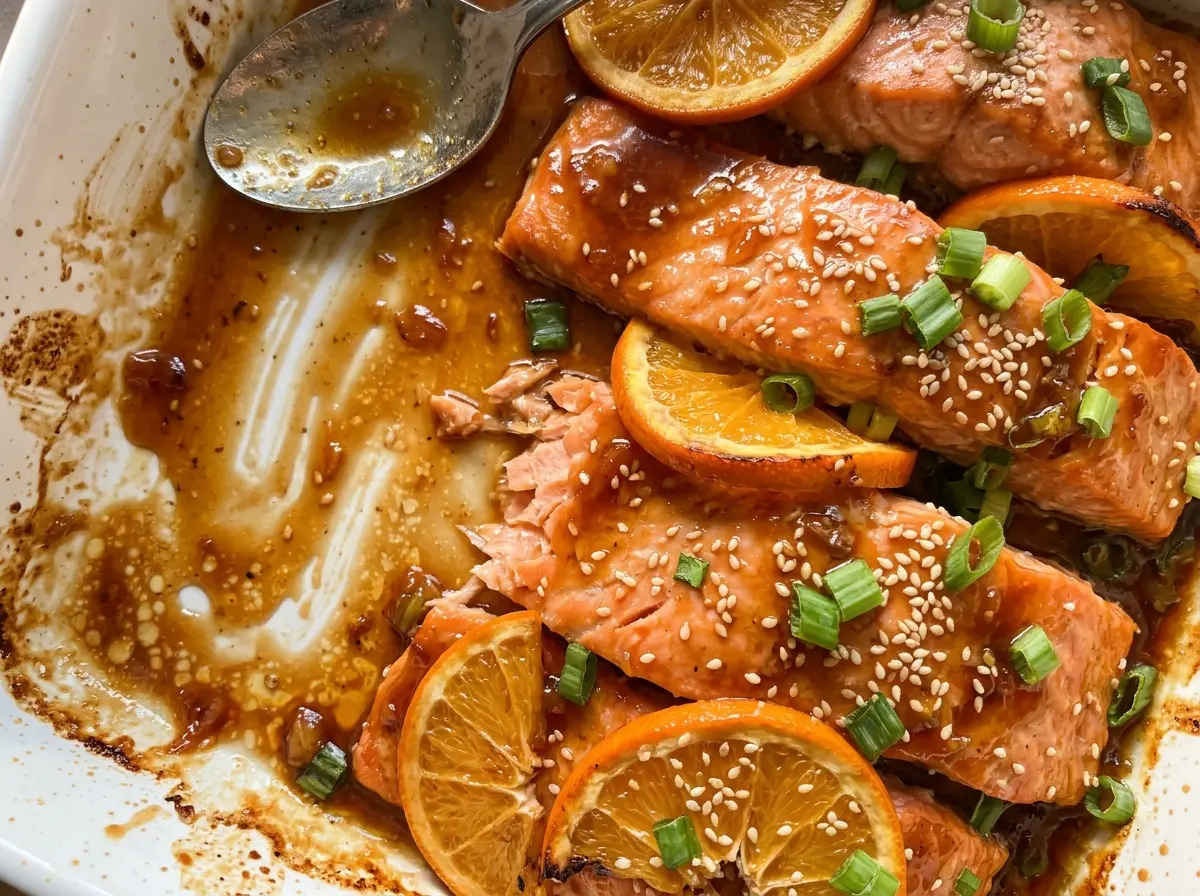
Whisking cornstarch with cold water before it meets the hot sauce keeps the glaze smooth. I brush some over the salmon and keep the rest separate for serving, which gives each piece a fresh hit of orange and soy at the table. The fish flakes easily under its shiny, sweet-tangy glaze.
Kitchen Note
I set out a clean bowl for the serving glaze before I start brushing the salmon. Once glaze touches raw fish, keeping that reserved portion separate means the sauce you put on the table stays uncontaminated.
Save this Orange Teriyaki Baked Salmon for a glossy citrus-soy glaze and tender, oven-baked fish.
Why the Glaze Gets Thickened Before the Salmon Goes Into the Oven
This isn’t a long braise where a thin sauce has time to reduce around the fish. The salmon bakes for a relatively short stretch, so the orange glaze needs to be ready to cling before it goes on. Thickening it first gives you a coating that stays on the top of the fillet instead of turning into a sweet puddle beneath it.
There’s also a practical advantage to making the glaze in a saucepan: you can judge its texture before it ever touches the salmon. The cornstarch slurry gives the sauce body, while the gentle simmer brings it to a glossy finish. If the glaze still looks watery, it hasn’t thickened enough to coat the fish well; give it the full cooking time and look for a sheen rather than a juice-like consistency. Then the oven can do its job—cooking the salmon—without asking the sauce to reduce at the same time.
The Ingredients That Keep Orange Teriyaki From Turning Too Sweet

- Orange juice — Plain orange juice gives the glaze its citrus flavor and liquid base. Fresh juice is lovely, but ordinary bottled juice works well; skip sweetened orange drinks, which can push the sauce toward candy-sweet.
- Low-sodium soy sauce — It brings the savory, salty backbone without overwhelming the orange. Regular soy sauce is saltier, so it won’t give quite the same balance; for a gluten-free version, use low-sodium gluten-free tamari in its place.
- Honey — Honey rounds out the citrus and helps the finished sauce taste smooth rather than sharp. Maple syrup works as a direct swap if you prefer a deeper, less floral sweetness; it shifts the glaze’s flavor but still thickens with the cornstarch.
- Rice vinegar — Its mild acidity keeps the honey and orange from tasting flat. Stronger vinegars can take over quickly, so rice vinegar is worth using here if you have it.
- Fresh ginger and garlic — Freshly grated ginger disperses into the sauce, and minced garlic gives it a savory edge. Grate the ginger finely so there aren’t woody chunks in the glaze, and mince the garlic small enough to soften during the simmer.
- Skin-on salmon — The skin helps protect the underside as the fish bakes and makes the fillet easier to handle. Choose a piece with an even thickness when you can; a tapered tail end cooks faster than the center.
Glaze First, Then a Short, Hot Bake
Bring the orange-soy base to a gentle simmer
Whisk the orange juice, soy sauce, honey, rice vinegar, ginger, and garlic together in a 1-quart saucepan. Set it over medium heat and bring it just to a gentle simmer, whisking as it warms. A quiet simmer is what you want, not a hard boil that splashes sauce up the sides of the pan. The mixture will still look loose at this point.
Thicken the sauce until it turns glossy
In a small cup, whisk the cornstarch and cold water together until smooth. Stir that slurry into the simmering sauce and cook for 1 to 2 minutes, whisking, until the glaze looks glossy and thickened. Take the saucepan off the heat, then transfer half the glaze to a clean bowl for serving. The glaze left in the pan is the portion to brush over the salmon.
Set up the salmon skin-side down
Heat the oven to 400°F and line a rimmed 13×18-inch baking sheet with parchment paper. Pat the salmon dry; a damp surface makes it harder for the glaze to cling evenly. Rub the fillet with the neutral oil, season it with kosher salt and black pepper, and place it skin-side down on the prepared sheet. Keeping the fish in one piece makes it easy to check the thickest part as it bakes.
Bake to temperature, then let the fish rest
Brush the remaining glaze over the salmon and bake for 12 to 16 minutes. Check the thickest part with an instant-read thermometer; it should reach 145°F. The precise timing depends on the fillet’s thickness, so use the temperature rather than the clock alone if the fish is unusually thick or thin. Rest the salmon for 3 minutes, then serve it with the clean reserved glaze.
Two Swaps That Change the Glaze Without Losing Its Balance
Make it gluten-free with tamari
Replace the low-sodium soy sauce with the same amount of low-sodium gluten-free tamari. The glaze keeps its savory depth, though tamari can taste a little rounder and less sharp than soy sauce; the orange and honey still balance it.
Trade honey for maple syrup
Use the same measure of pure maple syrup in place of the honey. The sauce takes on a warmer, more woodsy sweetness, and the cornstarch still gives it the body it needs to coat the salmon.
Storage and Reheating
- Refrigerator: Refrigerate cooked salmon within 2 hours in an airtight container and use it within 3 to 4 days. The chilled fish will be firmer than it was straight from the oven.
- Freezer: Freeze portions tightly wrapped or in an airtight freezer container for up to 2 to 3 months. Freeze the extra glaze separately if you have it; thaw both in the refrigerator before using.
- Reheating: Cover the salmon and warm it in a 275°F oven until the center reaches 165°F. Gentle, covered reheating helps limit drying; high heat can leave the edges tough before the middle is warm.
Questions That Come Up While Baking Orange Teriyaki Salmon
Orange Teriyaki Baked Salmon
Ingredients
Equipment
Method
- In a 1-quart saucepan, whisk together the orange juice, soy sauce, honey, rice vinegar, ginger, and garlic.
- Bring the mixture to a gentle simmer over medium heat.
- Whisk the cornstarch and cold water together.
- Stir the slurry into the pan.
- Cook for 1 to 2 minutes until glossy and thickened.
- Remove the pan from the heat.
- Reserve half the glaze in a clean bowl for serving.
- Heat the oven to 400°F.
- Line a rimmed 13x18-inch baking sheet with parchment paper.
- Pat the salmon dry.
- Rub the salmon with the oil.
- Season the salmon with the salt and pepper.
- Place it skin-side down on the sheet.
- Brush the remaining glaze over the salmon.
- Bake for 12 to 16 minutes, until the thickest part reaches 145°F.
- Rest the salmon for 3 minutes.
- Serve with the reserved glaze.