
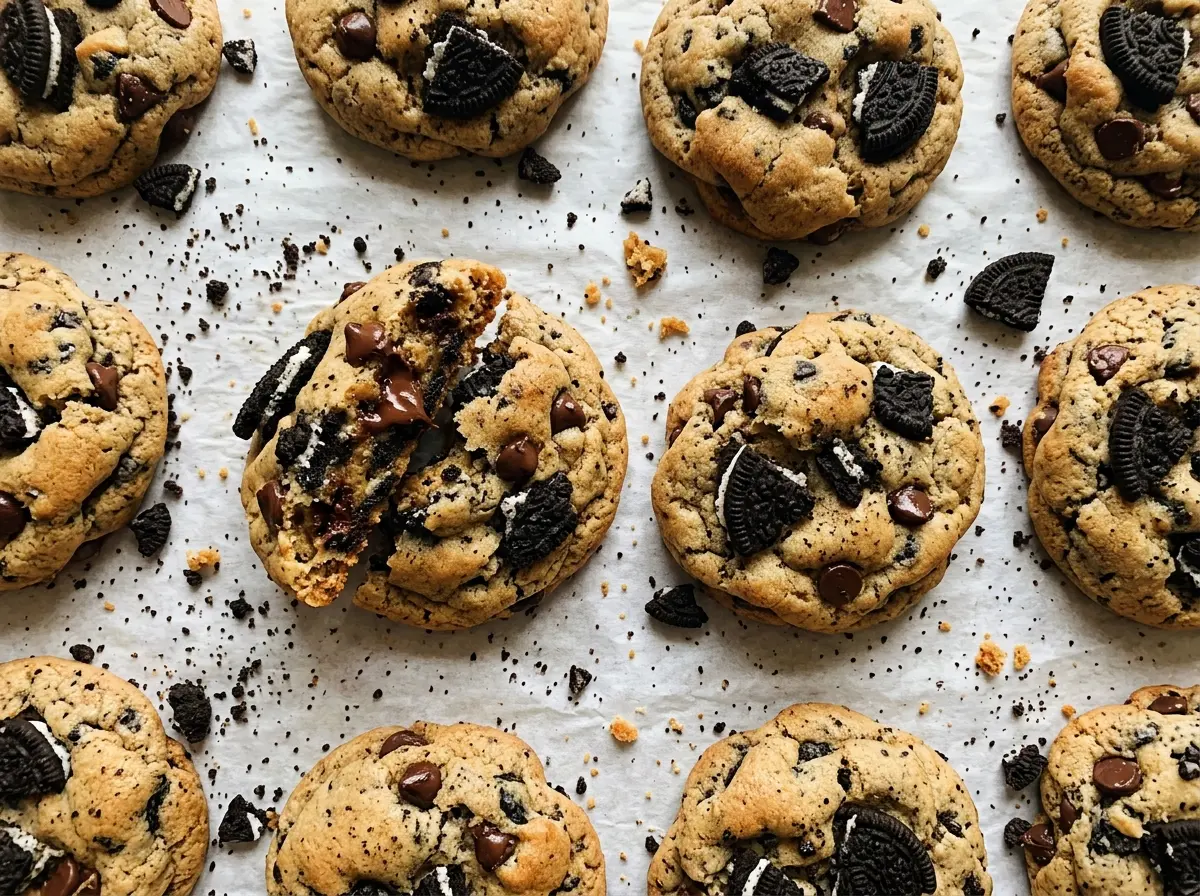
The first tray tells you exactly when to pull these from the oven: the edges have set and turned lightly golden, but the centers still look a little soft. That’s where I stop. They finish setting on the baking sheet, and the Oreo pieces stay tucked into a soft, buttery cookie instead of drying out around the edges. Oreo Chocolate Chip Cookies are a fun twist on a familiar chocolate chip cookie, with crunchy cookie bits and chocolate chips in every bite.
I cream the butter and sugars until they look light and fluffy, then take care not to overwork the flour once it goes in. That gives the dough structure without making the cookies tough. Coarsely chopped Oreos are the right size here: big enough to leave recognizable pieces, but small enough to fold through the dough. The result is a golden-edged cookie with a soft middle, chocolate in every bite, and plenty of Oreo crunch.
Kitchen Note
Room-temperature eggs blend into the creamed butter more smoothly than cold ones. Set them out while you gather the other ingredients, then beat them in one at a time.
Save these Oreo Chocolate Chip Cookies for a bake day when you want soft-centered cookies with crunchy Oreo pieces and chocolate chips.
Why the Second Batch Needs a Completely Cool Baking Sheet
This dough is baked in two rounds on the same parchment-lined sheet, and the pan temperature between rounds matters. A sheet that’s still warm starts softening the butter in the second batch before it reaches the oven. That can change how the cookies spread, leaving you with a flatter, less even tray than the first.
After the first round, move the cookies to a wire rack and let the baking sheet cool completely before placing the remaining dough on it. Don’t rush this part by swapping in a warm pan or sliding the parchment onto a hot surface. Keep the waiting dough covered at room temperature while the first tray bakes, then use the cooled sheet for the next twelve portions. The recipe makes two manageable batches, and that short pause helps both trays bake consistently.
The same pan also needs enough room for the cookies to spread without touching. An 18-by-13-inch baking sheet fits twelve portions with the required spacing. Loading all twenty-four onto it at once would crowd the dough and make the edges run together.
What the Oreos, Sugars, and Chips Each Bring to the Dough

- Oreo cookies — Coarse pieces give the finished cookies pockets of chocolate wafer and creme instead of turning into fine crumbs that disappear into the dough. A different creme-filled chocolate sandwich cookie can stand in; chop it to a similar size so the pieces stay evenly distributed.
- Unsalted butter and the two sugars — Softened butter traps air as it’s beaten with the sugars, while brown sugar brings moisture and a deeper, caramel-like note. A basic store-brand butter works well; unsalted butter lets you control the salt in the dough. If you use salted butter, leave out the added salt, keeping in mind that salt levels vary by brand.
- Eggs — Large eggs at room temperature combine more easily with the creamed butter mixture. The eggs provide structure as the cookies bake, so an egg-free swap would change the dough’s texture substantially; I’d keep them in this version.
- All-purpose flour and baking soda — All-purpose flour gives these cookies enough structure to hold the chocolate and Oreo pieces without making them cake-like. Baking soda helps them spread and brown; baking powder isn’t a direct replacement. A cup-for-cup gluten-free baking blend is the most practical flour swap, as described below.
- Semisweet chocolate chips — Their mild bitterness balances the sweeter cookie pieces. Any standard semisweet chips will do, or use chopped semisweet chocolate for less uniform, softer pockets as it melts.
Mixing and Baking the Dough Without Overworking It
Cream the Butter and Sugars Until Fluffy
Beat the softened butter with both sugars in a large bowl on medium speed for 2–3 minutes. The mixture should look lighter and fluffy, not dense or greasy. If the butter is still cold and firm, it won’t blend evenly; if it’s melted, it can’t hold the same air during creaming. Start with softened butter that yields when pressed but still holds its shape.
Add the Eggs, Then the Vanilla
Beat in the eggs one at a time, then mix in the vanilla. The mixture should look cohesive before you move on to the dry ingredients. If it looks slightly uneven after an egg goes in, keep mixing briefly until it comes together rather than adding the flour early. Room-temperature eggs help the mixture stay smooth as they’re incorporated.
Mix the Flour Just Until It Disappears
Whisk the flour, baking soda, and salt in a separate medium bowl so the leavening is spread throughout the flour. Add this mixture to the butter mixture in two additions, mixing on low speed. Stop as soon as no dry flour remains; continuing to beat develops more gluten and can make the cookies firm. The dough will be thick, which is what helps it hold the Oreo and chocolate pieces.
Fold, Portion, and Bake Until the Edges Set
Fold in the chocolate chips and coarsely chopped Oreos until they’re spread through the dough. Scoop rounded 2-tablespoon portions and place twelve on the parchment-lined baking sheet at least 2 inches apart. Bake on the center rack at 350°F for 10–12 minutes, looking for set, lightly golden edges and centers that still appear slightly soft. Let the cookies rest on the sheet for 5 minutes before moving them to a wire rack.
Three Easy Swaps for a Different Batch
Make Them Minty
Replace the chopped Oreo cookies with an equal volume of coarsely chopped mint creme sandwich cookies. You’ll get a cool mint note alongside the chocolate chips, while keeping the same chunky texture.
Choose a Sweeter or Darker Chocolate
Swap the semisweet chips for milk chocolate chips for a sweeter cookie, or bittersweet chips for a more pronounced cocoa taste. Keep the same volume so the balance of dough and mix-ins stays close to the original.
Use a Cup-for-Cup Gluten-Free Flour Blend
Replace the all-purpose flour with the same volume of a gluten-free baking blend labeled as a one-to-one substitute, ideally one that includes xanthan gum. The cookies may have a slightly more delicate crumb, so let them rest on the baking sheet before moving them.
Storage and Reheating
- Refrigerator: Store in an airtight container for up to 5 days. The cookies will firm up in the refrigerator, so bring them to room temperature before serving for a softer bite.
- Freezer: Baked cookies freeze well for up to 2 months. Cool them completely, then pack airtight with parchment between layers to keep them from sticking together.
- Reheating: Warm a cookie in the microwave for about 8–10 seconds to soften the chocolate. Longer heating can make the cookie hot and overly soft, so start with a short burst.
Questions That Come Up While Baking These Cookies
Oreo Chocolate Chip Cookies
Ingredients
Equipment
Method
- Heat the oven to 350°F with a rack in the center.
- Line an 18x13-inch baking sheet with parchment paper.
- Beat the softened butter, granulated sugar, and packed light brown sugar in a large bowl with a mixer on medium speed for 2–3 minutes, until light and fluffy.
- Beat in the eggs one at a time.
- Mix in the vanilla extract.
- Whisk the all-purpose flour, baking soda, and salt in a medium bowl.
- Add the flour mixture to the butter mixture in two additions, mixing on low just until no dry flour remains.
- Fold in the semisweet chocolate chips and coarsely chopped Oreo cookies until evenly distributed.
- Scoop the dough into 24 rounded 2-tablespoon portions.
- Place 12 portions on the prepared sheet at least 2 inches apart and keep the remaining dough covered at room temperature.
- Bake at 350°F for 10–12 minutes, until the edges are set and lightly golden and the centers still look slightly soft.
- Cool the cookies on the sheet for 5 minutes, then transfer them to a wire rack.
- Let the sheet cool completely before baking the remaining dough at 350°F for 10–12 minutes, until the edges are set and lightly golden.