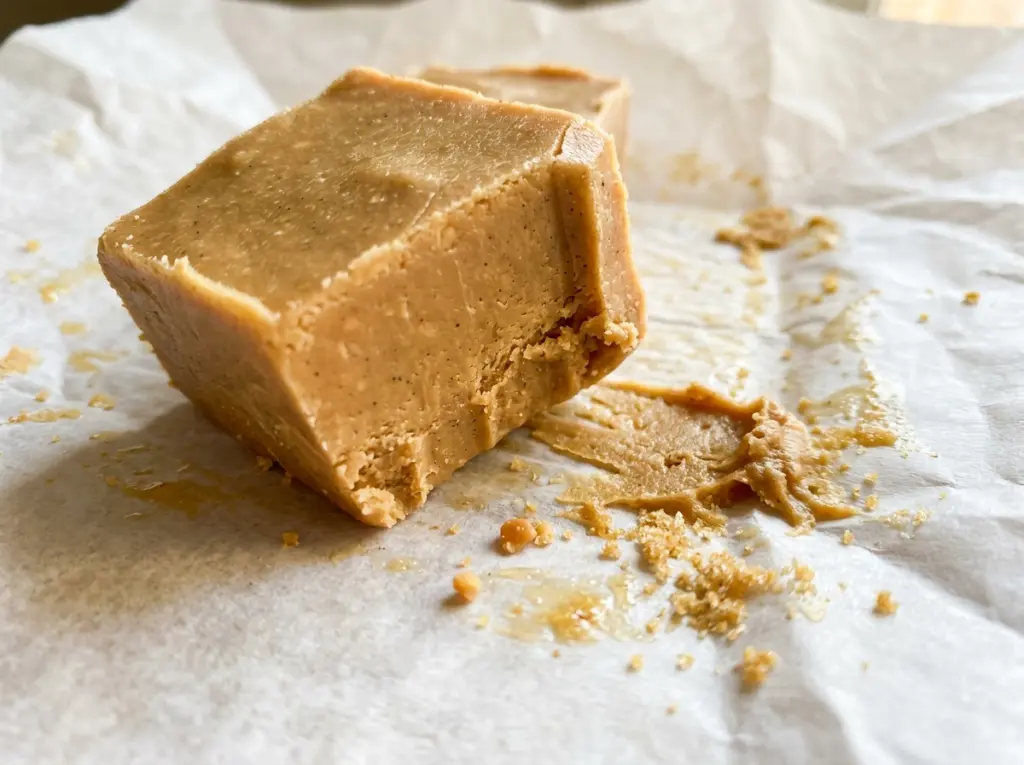
The butter disappears into the sugar and milk first; then the saucepan settles into a steady boil. That change is your cue to pay attention, because peanut butter fudge depends on taking the mixture to the right temperature before anything goes into the pan. I like this stovetop version because the steps are simple, but each one has a clear job: build the sugar base, stir in the peanut butter while it’s off the heat, then give the fudge time to set.
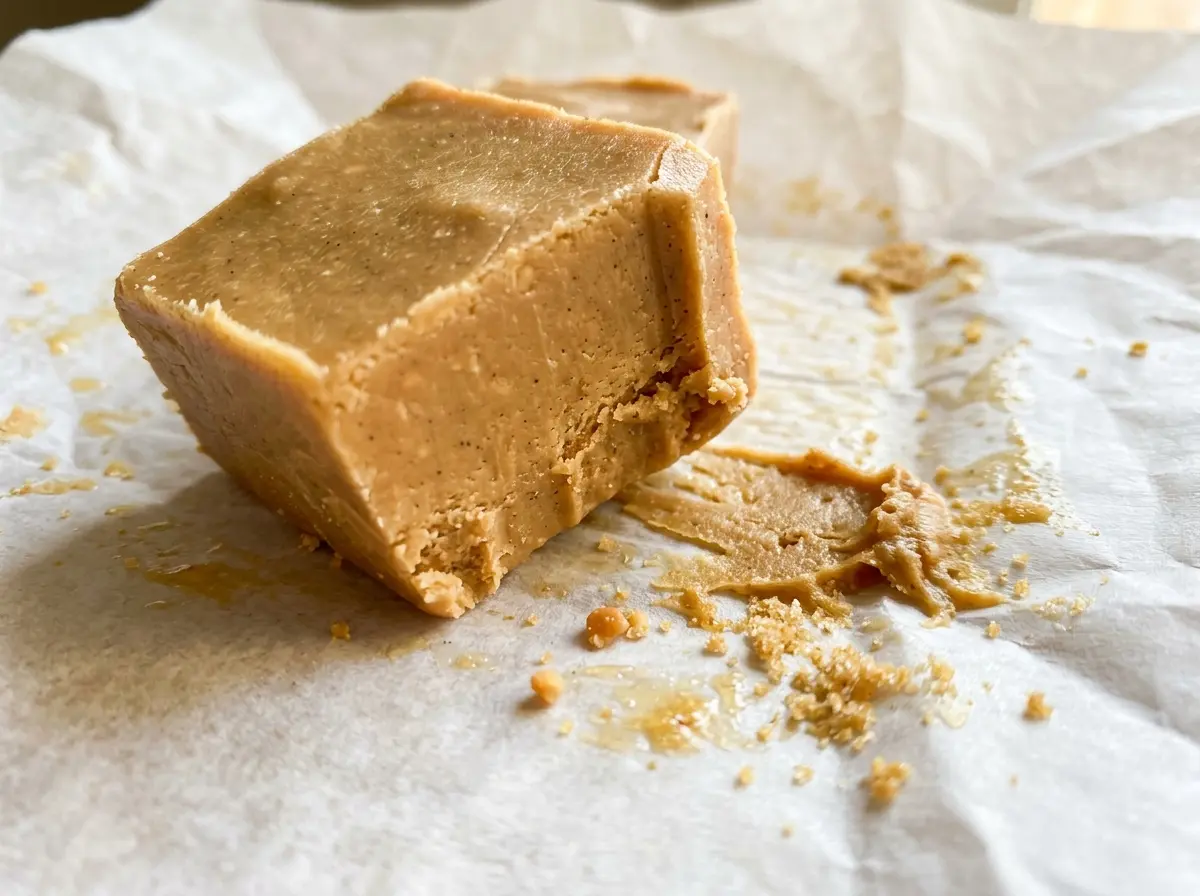
The finished squares are smooth, rich, and firm enough to hold their shape without turning crumbly. Marshmallow creme helps make the texture soft and even, while creamy peanut butter keeps the flavor familiar and full. Once the fudge has cooled completely, the parchment overhang makes it easy to lift from the pan and cut into neat pieces.
Kitchen Note
Clip the candy thermometer to the side of the saucepan so its tip sits in the mixture without touching the bottom. A thermometer resting against the pan reads the metal’s heat, not just the fudge.
Save this Peanut Butter Fudge for a homemade treat with smooth peanut flavor and tidy, easy-to-share squares.
Why the Marshmallow Creme Goes In After the Pan Leaves the Heat
The sugar mixture needs to reach its cooking point on its own before the marshmallow creme and peanut butter go in. Once it gets there, take the saucepan off the burner and stir in the remaining ingredients until the mixture is smooth. That order gives you a short, manageable window to blend everything without continuing to cook the sugar base while you work.
Marshmallow creme is doing more than adding sweetness. It helps give this fudge its soft, cohesive bite, while peanut butter brings fat and flavor that can make the mixture feel heavier as it comes together. Stir until you no longer see streaks of either ingredient, then move straight to spreading it in the lined pan. If you leave the mixture in the saucepan, it will keep thickening as it cools and become harder to spread evenly.
The distinction matters because fudge can look smooth in the saucepan and still end up uneven if it sits too long before being spread. I have the parchment-lined pan ready before I start cooking, so the thick mixture has somewhere to go as soon as it’s blended. A smooth, level layer now means the pieces will have consistent thickness after setting.
What Each Ingredient Does in This Peanut Butter Fudge

- Granulated sugar — It forms the structure of the fudge as the mixture cooks. Regular granulated sugar is the right choice here; a different sweetener can change how the candy sets.
- Evaporated milk — This supplies dairy without the extra sweetness of condensed milk. The two cans may sit near each other at the store, but sweetened condensed milk would throw off the balance and cooking behavior.
- Unsalted butter — Butter adds richness and helps the cooked mixture blend smoothly. Unsalted butter also lets the salt level stay controlled; if you use salted butter, leave out the added salt.
- Marshmallow creme — This is the soft, airy component that helps the fudge set with a tender rather than brittle texture. Use marshmallow creme from a jar, not marshmallows, which don’t blend in the same way.
- Creamy peanut butter — A smooth, conventional creamy peanut butter gives the mixture an even texture. Choose one you enjoy eating, since its flavor comes through clearly; a strongly separated natural style is more likely to make the finished fudge oily.
- Vanilla extract — Vanilla rounds out the peanut butter and sugar without taking over. A standard bottle from the baking aisle works well; there’s no need to use a specialty extract for this candy.
Cook the Sugar Base, Then Spread Before It Thickens
Line the Pan Before You Start
Line an 8-inch square baking pan with parchment, leaving enough overhang to lift the fudge out once it has set. Smooth the paper into the corners so the mixture can fill the pan evenly. Keep the prepared pan close to the stove; the finished mixture thickens as it cools, and you’ll want to spread it without delay.
Bring the Mixture to a Full Boil
Combine the sugar, evaporated milk, butter, and salt in a 3-quart saucepan over medium heat. Stir as the butter melts, then continue until the mixture comes to a full boil. Look for active bubbling across the surface rather than a few bubbles around the edge. A steady boil is the point to begin checking the temperature.
Cook to the Candy Temperature
Boil while stirring constantly until the mixture reaches 234°F; this takes about 4 to 6 minutes. Keep the stirring steady so the mixture cooks evenly as it bubbles. Follow the thermometer rather than relying on the clock alone, since the time can vary with the burner and pan. Take the saucepan off the heat as soon as it reaches the target.
Blend, Spread, and Let It Set
Stir in the marshmallow creme, peanut butter, and vanilla until the mixture looks uniform, with no visible streaks. Transfer it to the prepared pan and spread it evenly into the corners. Leave the pan at room temperature until the fudge is fully set, about 2 hours. Lift it out by the parchment and cut it into 36 pieces.
Two Small Changes That Give the Fudge a Different Finish
Use Crunchy Peanut Butter for a Little Texture
Swap the creamy peanut butter for the same amount of crunchy peanut butter. The fudge keeps its peanut-forward flavor, but small peanut pieces interrupt the smooth texture. Stir until the mixture is evenly combined so those pieces are distributed through the pan.
Use Salted Butter Instead
If salted butter is what you have, use it in place of the unsalted butter and omit the added salt. The fudge will still have a balanced sweet-and-salty finish, though the exact saltiness varies by butter brand. Don’t use salted butter and keep the full amount of added salt, or the result may taste too salty.
Storing and Serving
- Room temperature: Keep the cut fudge in an airtight container in a cool, dry place for up to 1 week.
- Freezer: It freezes well for up to 2 months when the pieces are wrapped and kept in a freezer-safe container. Thaw them while wrapped at room temperature to limit condensation on the fudge.
- Serving: Serve at room temperature; reheating isn’t needed. Microwaving can soften the edges before the centers loosen.
Questions That Come Up When Making Peanut Butter Fudge
Peanut Butter Fudge
Ingredients
Equipment
Method
- Line an 8-inch square baking pan with parchment paper, leaving enough overhang to lift out the fudge.
- Combine the sugar, evaporated milk, butter, and salt in a 3-quart saucepan; cook over medium heat, stirring, until the butter melts and the mixture comes to a full boil.
- Clip a candy thermometer to the saucepan, making sure it does not touch the bottom, and boil while stirring constantly until the mixture reaches 234°F, about 4 to 6 minutes.
- Remove the pan from the heat and stir in the marshmallow creme, peanut butter, and vanilla until smooth.
- Spread the mixture evenly in the prepared pan.
- Let it cool at room temperature until fully set, about 2 hours.
- Lift it out by the parchment.
- Cut it into 36 pieces.