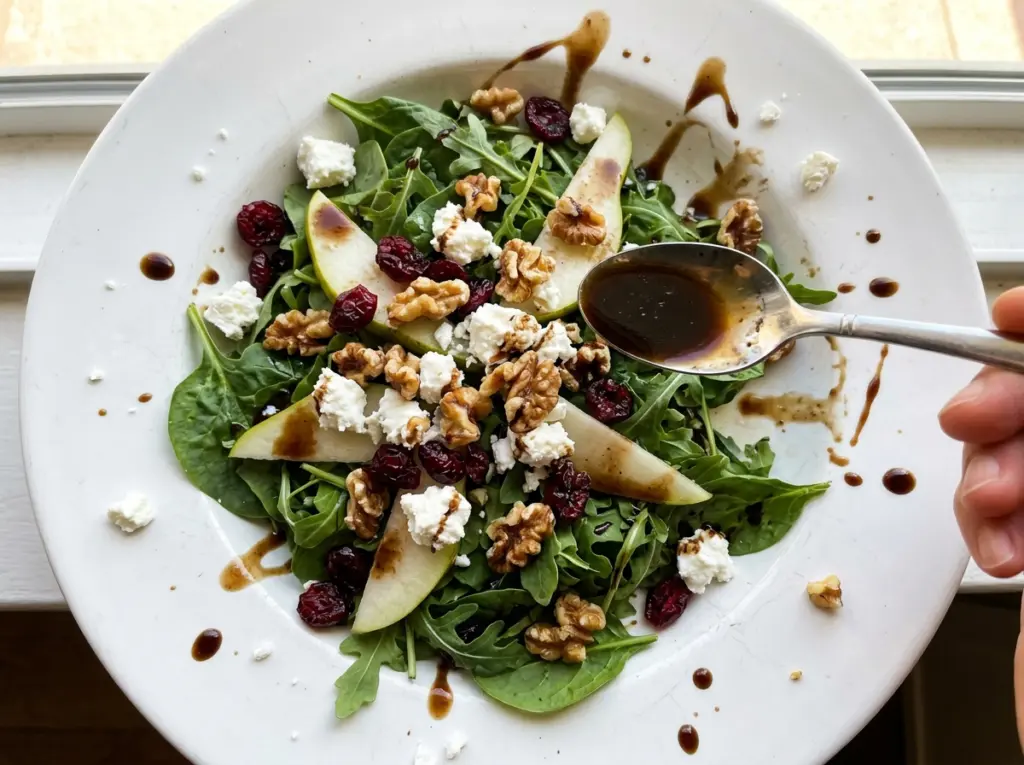
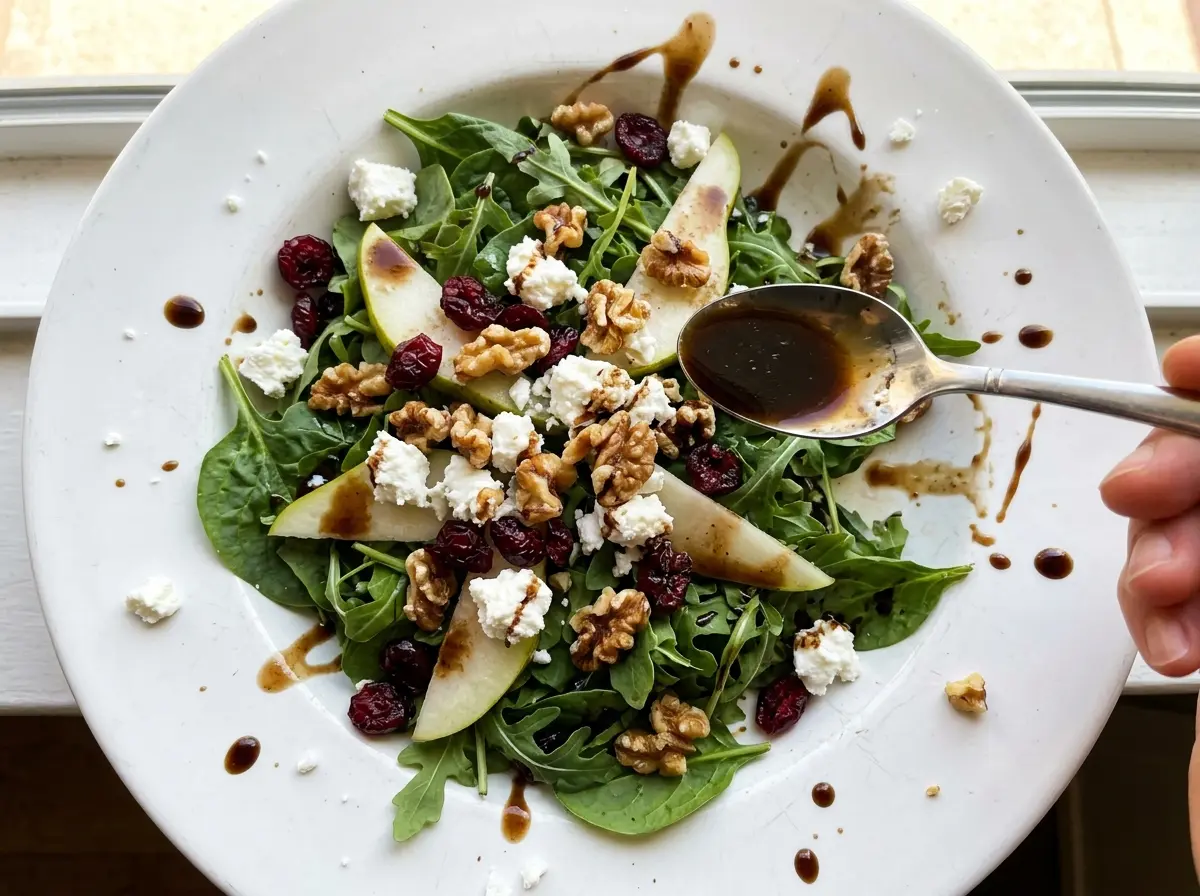
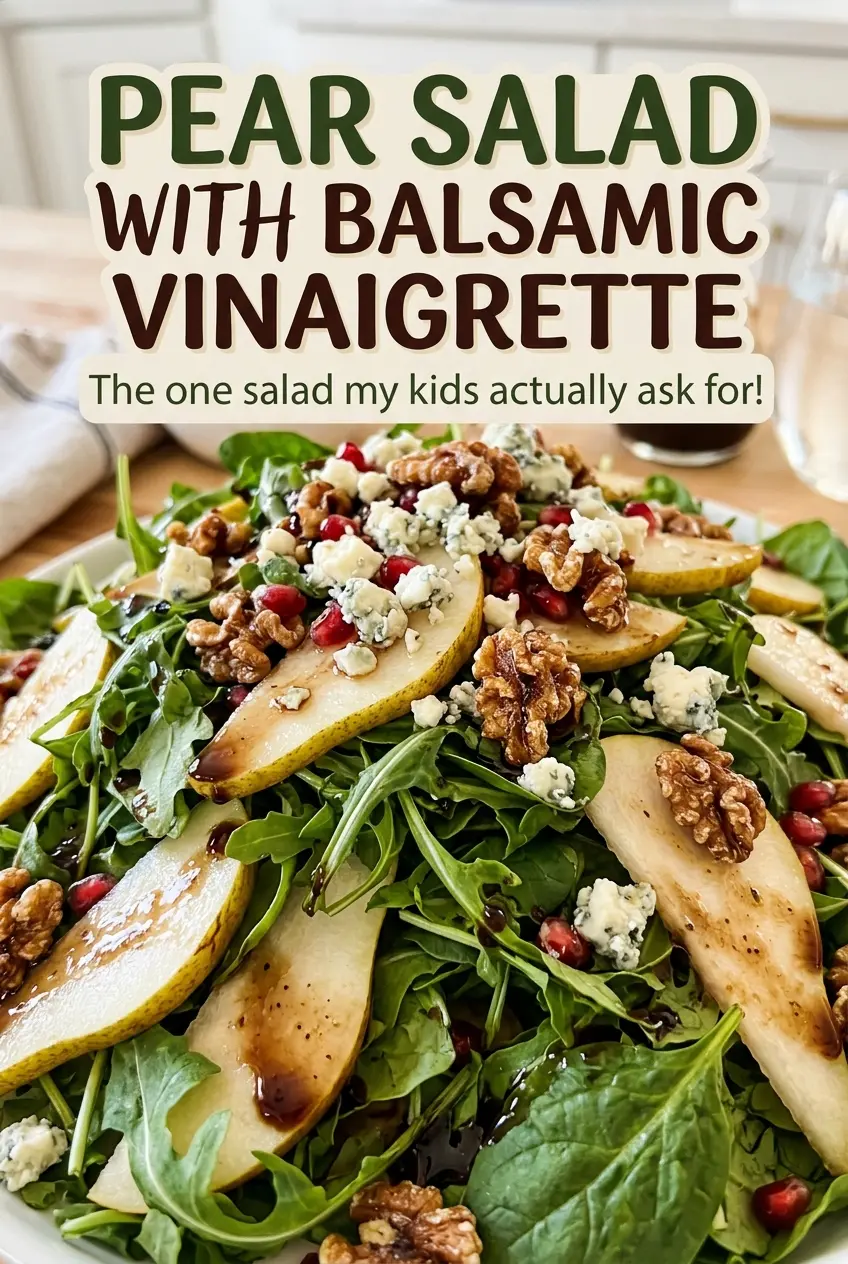
The pears need to be ripe enough to taste sweet, but still firm enough to slice without turning soft in the bowl. I learned that a pear salad can go from crisp and balanced to heavy in a hurry if the fruit is too ripe or the greens are dressed too early. These thin slices, toasted walnuts, and blue cheese make a pear salad with balsamic vinaigrette that feels special without asking much of you.
The vinaigrette is whisked together before it meets the spring mix, so you can taste its balance and drizzle on just what the leaves need. Balsamic brings gentle sweetness and acidity, while Dijon helps the oil and vinegar stay together long enough to coat the salad. I keep the pears and walnuts easy to spot among the greens, then toss gently right before serving. Each forkful gets crisp fruit, a little crunch, and a tangy, creamy finish.
Kitchen Note
Whisk the olive oil in slowly, rather than pouring it all in at once. The dressing should look glossy and evenly blended; if the oil goes in too fast, it takes more whisking to bring everything together.
Save this pear salad with balsamic vinaigrette for a meal that needs crisp fruit, toasted walnuts, and a tangy blue cheese finish.
Why this pear salad should be dressed at the last possible minute
Spring mix is tender, and balsamic vinaigrette softens it quickly. Once the leaves are coated, they start to lose their springy texture, while the cut pears release a little juice into the bowl. Dress the salad just before serving, and you keep the greens light enough to balance the rich blue cheese and walnuts.
There’s a practical benefit to building the salad in a large serving bowl, too: the toppings stay distributed instead of sinking into a tight pile. Add the dressing in a light drizzle, then turn the ingredients over gently. You’re aiming for a thin sheen on the leaves, not a puddle at the bottom. If the salad looks a little underdressed before tossing, that’s easier to correct than a bowl where the greens are already heavy with vinaigrette.
This timing also protects the contrast that makes the salad work. The pears should feel cool and juicy, the walnuts should bring a firm crunch, and the leaves should still have some lift. Keep the dressing separate until the bowl is ready for the table, and let the ingredients do their own jobs.
What the pears, walnuts, and balsamic each bring to the bowl
- Balsamic vinegar — It gives the dressing its dark, sweet-tart backbone. A smooth, balanced bottle is worth choosing, but an everyday balsamic works well here; an aged, syrupy one can make the dressing taste sweeter and heavier. If you’re out, red wine vinegar works with a little extra honey whisked in to soften its sharper edge.
- Dijon mustard and honey — Dijon adds a mild savory bite and helps the dressing stay blended, while honey rounds off the vinegar. Smooth yellow mustard can stand in for Dijon, though the result is less pungent. Maple syrup can replace honey in the same amount for a subtly different sweetness.
- Extra-virgin olive oil — Its fruity, slightly peppery taste gives the vinaigrette more character than a neutral oil. A reasonably priced olive oil is fine; save a delicate finishing oil for another use. A neutral oil can work if needed, but you’ll lose some of that olive flavor.
- Spring mix — The tender leaves make a soft base that lets the fruit and cheese stand out. Choose greens that look fresh and dry rather than limp or wet. Baby spinach is a straightforward substitute, with a denser leaf and a mild earthy taste.
- Ripe but firm pears — Firm fruit is easier to core and slice thinly, and it holds its shape when tossed. Quality matters most in the pear’s ripeness: fragrant fruit that yields slightly when pressed is ready, while a hard pear tastes less sweet. A crisp apple can replace the pears for a tarter, firmer salad.
- Toasted walnuts — Their earthy flavor and crisp texture stand up to both the sweet fruit and tangy cheese. Use walnuts that taste fresh, not stale or bitter. Toasted pecans make a sweeter, buttery alternative.
- Blue cheese — Its salty tang gives the bowl a bold counterpoint to the fruit. Choose a blue cheese you enjoy eating on its own; the flavor is distinct here, so there’s no need to buy an expensive wedge if a familiar one suits you. Feta can replace it for a saltier, less creamy finish.
Whisking the dressing and assembling the salad without bruising the greens
Bring the vinaigrette together in a small bowl
Whisk the balsamic vinegar with the Dijon, honey, kosher salt, and black pepper until the honey is no longer sitting in a streak at the bottom. Add the olive oil slowly as you keep whisking. The dressing should look glossy and fairly even, with no large slick of oil separated on top. If it still looks streaky, keep whisking before adding more oil.
Layer the pears and toppings over the spring mix
Put the spring mix in a large serving bowl, then arrange the thinly sliced pears, toasted walnuts, and crumbled blue cheese over the leaves. Thin slices make the fruit easier to pick up with the greens and keep the pieces from weighing down one part of the bowl. Take care not to crush the leaves as you add the toppings. A broad bowl gives you room to toss without pressing everything together.
Drizzle, toss gently, and serve
Pour a little vinaigrette over the salad and turn the leaves and toppings gently to distribute it. Add more only if the greens still look dry; the goal is a light coating, not dressing collecting underneath. Stop as soon as the ingredients are evenly mixed, since repeated tossing can bruise the spring mix and break up the pear slices. Serve right away while the leaves and walnuts still have their texture.
Three ways to change the salad without losing its balance
Make it dairy-free with dairy-free blue cheese crumbles
Use a dairy-free blue cheese-style crumble in place of the blue cheese. It keeps the salad’s salty, tangy accent, though the flavor and creaminess vary by brand; taste the crumbles first so you know how assertive they are before adding them.
Add cooked chicken for a fuller meal
Top the salad with sliced, fully cooked chicken when you want something more substantial. The mild meat makes the bowl heartier without competing with the pears or balsamic; add it after arranging the other toppings so the leaves stay easy to toss.
Add thinly sliced red onion for a sharper bite
Scatter a small amount of thinly sliced red onion over the greens with the pears. Its crisp, savory sharpness cuts through the cheese and sweet fruit, so keep the slices fine and the amount restrained rather than letting onion dominate each bite.
Making Ahead and Storing
- Before serving: Whisk the vinaigrette ahead and keep it separate from the salad. Slice the pears close to serving so their cut surfaces stay fresh-looking.
- Refrigerator: Refrigerate leftover vinaigrette in a sealed container for up to one week. The oil may firm up when cold; let the container stand until pourable, then whisk or shake it.
- Freezer: The salad doesn’t freeze well. Spring mix and pears lose their fresh texture when thawed.
- Leftovers: Dressed greens wilt quickly, so the assembled salad is best eaten right away. There’s no reheating needed.
Questions that come up when making pear salad
Pear Salad with Balsamic Vinaigrette
Ingredients
Method
- In a small bowl, whisk together the balsamic vinegar, Dijon mustard, honey, kosher salt, and ground black pepper; slowly whisk in the olive oil until combined.
- Place the spring mix in a large serving bowl and top with the sliced pears, toasted walnuts, and crumbled blue cheese.
- Drizzle the salad with the vinaigrette and toss gently just before serving.