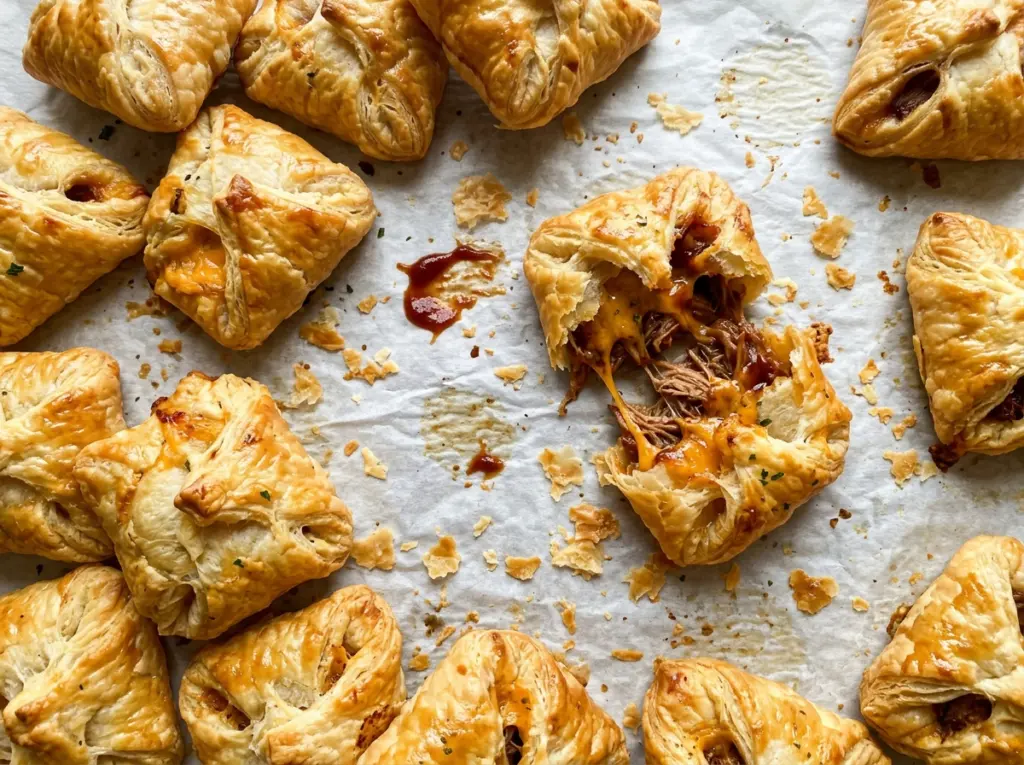
As puff pastry swells in the oven, the edges turn crisp while the filling gets hot and cheesy inside. The first time I made these pulled pork pastry puffs, I learned that the pork needs to be finely shredded: bigger pieces make it harder to fold the pastry neatly and get a little filling in every bite. These golden triangles turn cooked pulled pork into a hand-held meal or snack without asking you to make the pork from scratch.
The balance comes from using just enough barbecue sauce to coat the meat, then folding in sharp cheddar before filling the pastry. Draining away extra sauce matters because puff pastry needs a filling that’s moist, not swimming in liquid. A fork-pressed edge keeps each pocket closed, and the egg wash gives the tops their deep golden finish. Inside, the pork stays tender under the melted cheese, wrapped in crisp, flaky pastry.
Kitchen Note
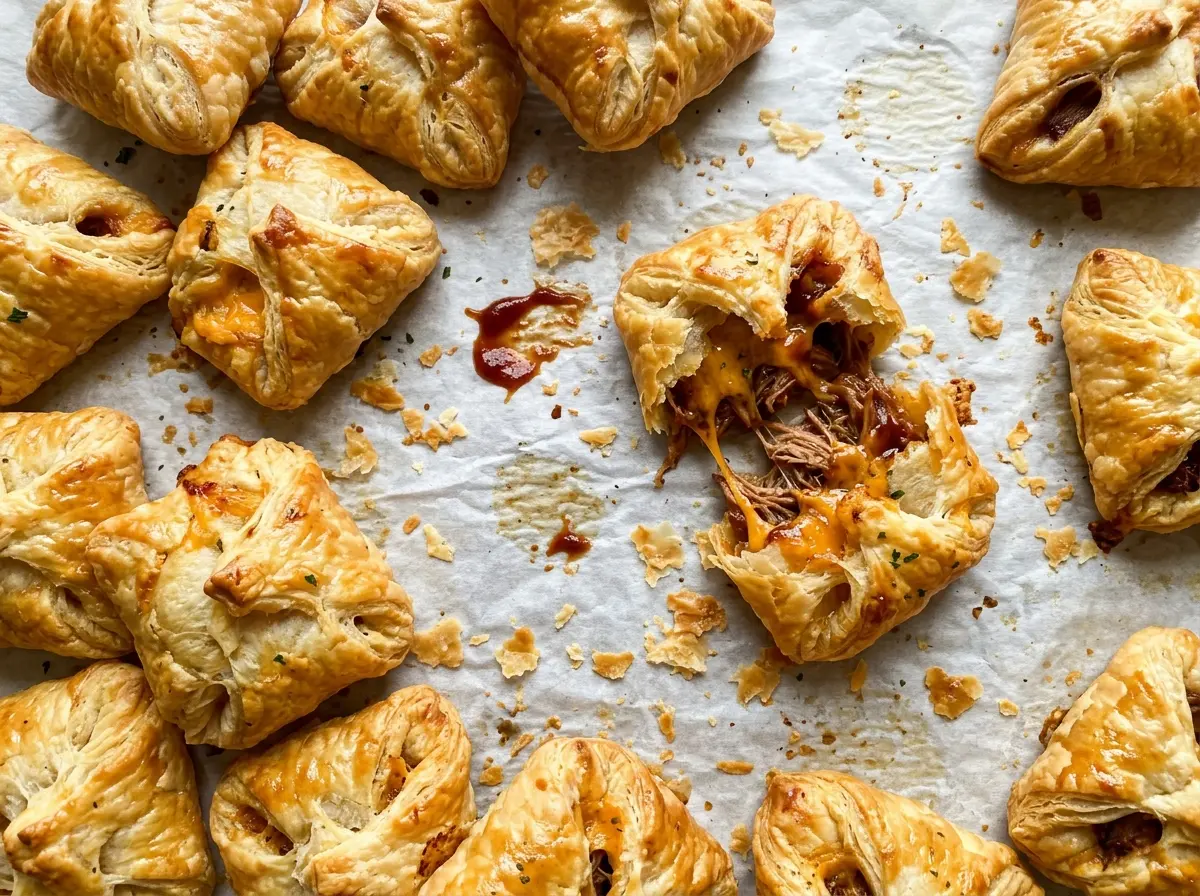
Give the puffs their full five-minute rest on the baking sheet before serving. The filling is extremely hot right out of the oven, and that short pause also lets the pastry settle enough to lift without squashing the layers.
Save these pulled pork pastry puffs for a crisp, cheesy way to turn cooked pulled pork into golden hand-held pockets.
Why These Puffs Need Drained Pork, Not More Sauce
Puff pastry gets its crisp, layered texture from the way it rises in the oven. A wet filling works against that: excess sauce can seep into the pastry, soften the bottom, and make the folded seam harder to keep closed. That’s why I drain excess sauce from the cooked pork before adding the measured barbecue sauce. The filling still tastes saucy, but it doesn’t leave a puddle in the middle of each square.
The cheddar helps make the filling feel cohesive once it melts, while the pork remains the main event. Keep the filling on one half of each pastry square and leave the border clear. That space gives you room to press the edges together without pushing meat into the seam. If you load the center until it’s heaped, the pastry has to stretch around it and is more likely to split. A modest, even mound gives you a better seal and a more balanced bite.
What Sharp Cheddar and Puff Pastry Bring to the Filling
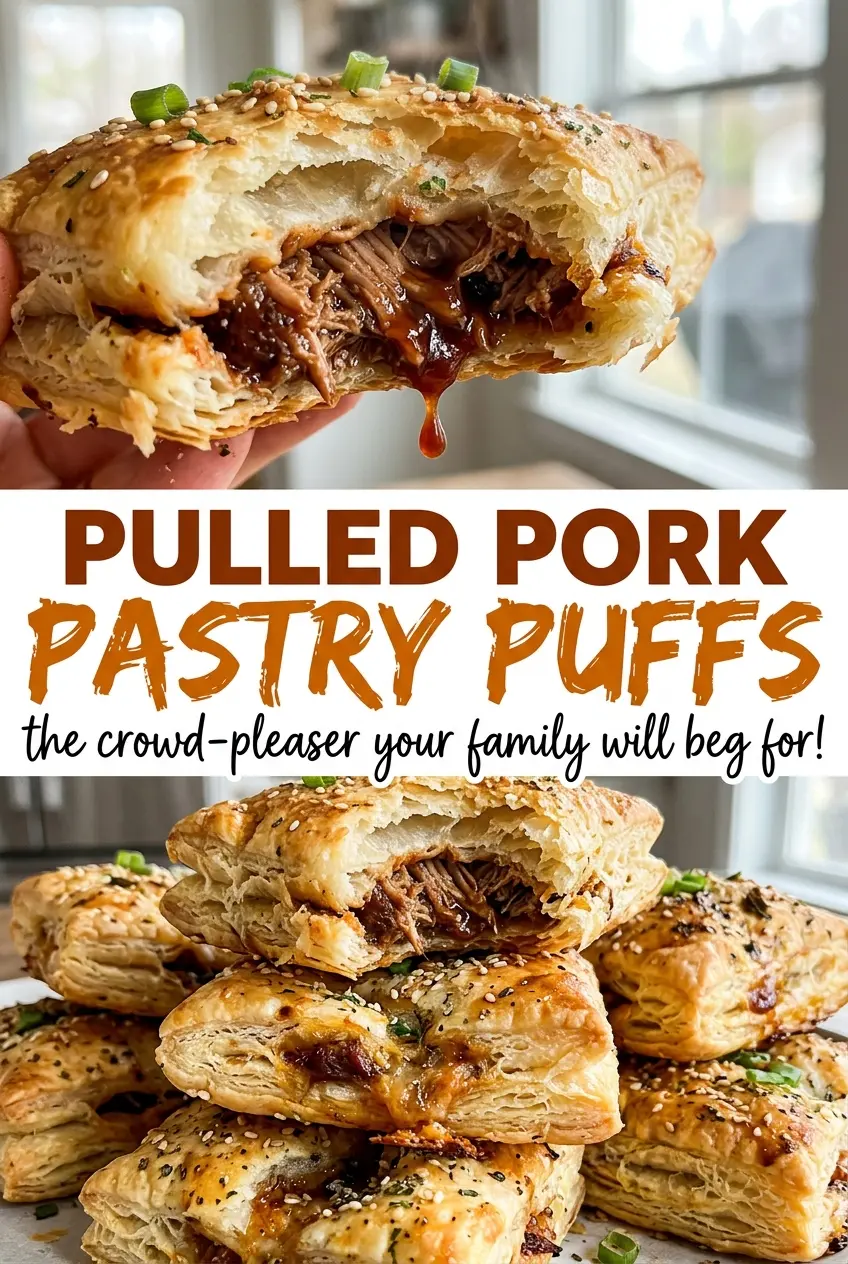
- Cooked pulled pork — Finely shredded meat distributes more evenly than chunky pieces, so the pockets fold without awkward lumps. Leftover pulled pork works well; if you don’t have pork, finely shredded cooked chicken is a mild-tasting replacement, though the result won’t have the same smoky pork flavor.
- Barbecue sauce — A thick sauce clings to the meat instead of running into the pastry. Use a style you already like, since its sweetness and tang come through in every bite. A thinner sauce won’t coat the pork as neatly, so avoid adding extra liquid to the filling.
- Sharp cheddar — Its stronger, tangy flavor stands up to barbecue sauce, and it melts through the pork. Pre-shredded cheddar is convenient; freshly shredded cheese usually melts more smoothly. Mild cheddar works if that’s what you have, but the filling will taste less tangy.
- Frozen puff pastry — The ready-made sheets bring the airy, flaky layers that make these pockets different from ordinary hand pies. Thaw the sheets before unfolding, and use them while they’re pliable enough to fold. There isn’t a direct substitute that gives the same layered rise; pie dough would make a denser, more pie-like pocket.
- Egg — Whisked with water, it brushes over the pastry for a glossy, browned top. If you’re out of eggs, brush the tops with milk instead; the finish will be less shiny, but the pastry can still brown.
How to Fill and Bake the Pastry Without Losing the Layers
Mix a filling that holds together
Stir the finely shredded pulled pork and barbecue sauce together in a medium bowl, then fold in the sharp cheddar. The meat should look coated, not wet, and the cheese should be distributed throughout rather than sitting in one clump. If you see excess liquid collecting at the bottom, drain the pork more thoroughly before mixing. A filling that stays together is easier to portion onto the pastry.
Cut the pastry into even squares
Heat the oven to 400°F and line a rimmed baking sheet with parchment paper. On a lightly floured surface, unfold both thawed pastry sheets and cut each into four equal squares. Keep the squares as even as you can so they bake at a similar rate. If a sheet cracks as you unfold it, it may still be too firm to handle; give it a little more time to thaw before continuing.
Fold, crimp, and brush the pockets
Divide the filling among the squares, placing it on one half and leaving a 1/2-inch border around the edges. Fold each square over into a triangle and press the edges firmly together with a fork. Check that there aren’t gaps along the seam, where filling could escape in the oven. Whisk the egg with the water, brush it over the tops, and arrange the pastries on the prepared baking sheet.
Bake until the pastry is deep golden
Bake the puffs for 20 to 25 minutes, until the pastry is deep golden brown and the filling reaches 165°F. Don’t pull them while the tops are still pale; that deep color is a useful sign that the layers have had time to crisp. If the pastries look browned but you’re unsure the centers are hot enough, check the filling with an instant-read thermometer. Let them rest on the baking sheet for five minutes before serving.
Three Flavor Swaps That Keep the Pastry Puffs Practical
Use pepper jack for a little heat
Replace the sharp cheddar with shredded pepper jack. It melts into the pork but adds a gentle chile kick, so the filling tastes livelier without changing how you assemble the pockets.
Choose a spicy barbecue sauce
Swap the regular barbecue sauce for a thick, spicy version. The pork gets a warmer, more peppery flavor, while the pastry and cheese soften the heat. Keep the sauce portion the same so the filling doesn’t become too loose.
Make the filling dairy-free
Use dairy-free shredded cheddar and dairy-free puff pastry in place of the regular cheese and pastry. The filling will lose some of cheddar’s familiar richness, and different dairy-free pastries may brown or puff a little differently, but the barbecue pork still makes a savory center. The egg wash is still part of this version.
Storage and Reheating
- Refrigerator: Store cooled leftovers in a covered container for 3 to 4 days. The pastry will soften as it sits.
- Freezer: Freeze baked, cooled puffs in an airtight container for up to 2 months. Thaw them overnight in the refrigerator before reheating for the best texture.
- Reheating: Warm refrigerated puffs in a 350°F oven for 10 to 15 minutes, until hot throughout. The microwave heats them quickly but makes the pastry soft rather than flaky.
Questions That Come Up While Making Pulled Pork Pastry Puffs
Pulled Pork Pastry Puffs
Ingredients
Equipment
Method
- Stir the pulled pork and barbecue sauce together in a medium bowl, then fold in the cheddar cheese.
- Heat the oven to 400°F and line a rimmed baking sheet with parchment paper.
- Unfold the puff pastry sheets on a lightly floured surface and cut each into 4 equal squares.
- Divide the filling among the pastry squares, placing it on one half of each square and leaving a 1/2-inch border; fold the pastry over to form triangles and press the edges firmly together with a fork.
- Whisk the egg and water in a small bowl, brush it over the tops of the pastries, and arrange them on the prepared baking sheet.
- Bake for 20 to 25 minutes, until the pastry is deep golden brown and the filling reaches 165°F.
- Rest the puffs on the baking sheet for 5 minutes before serving.