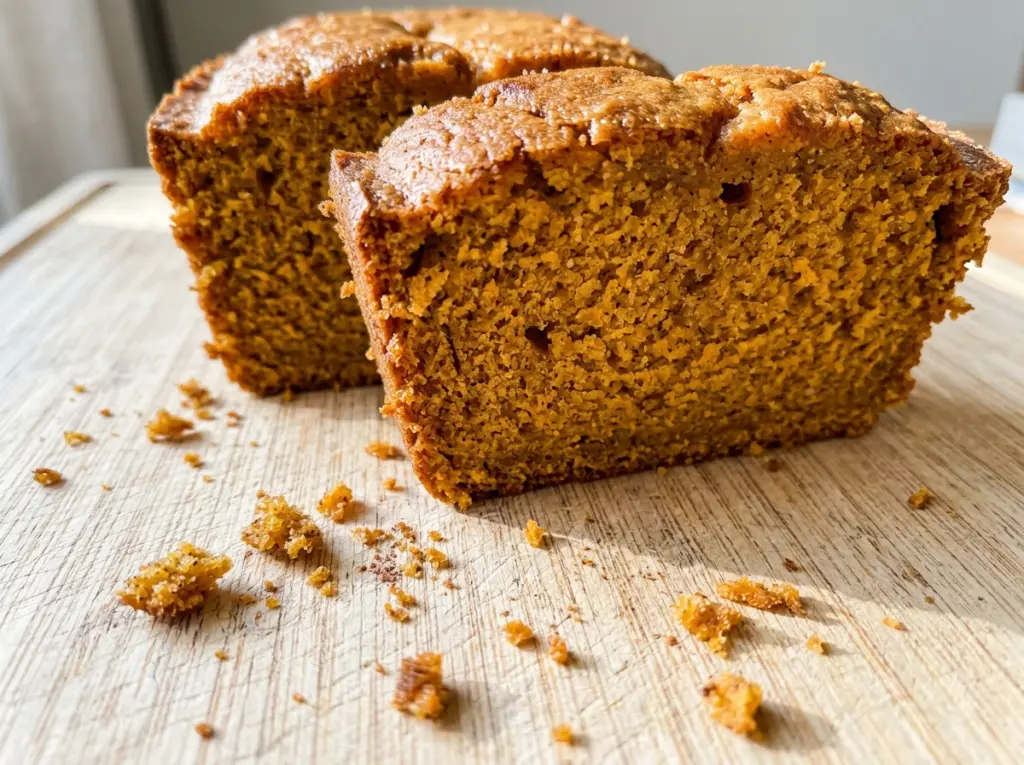
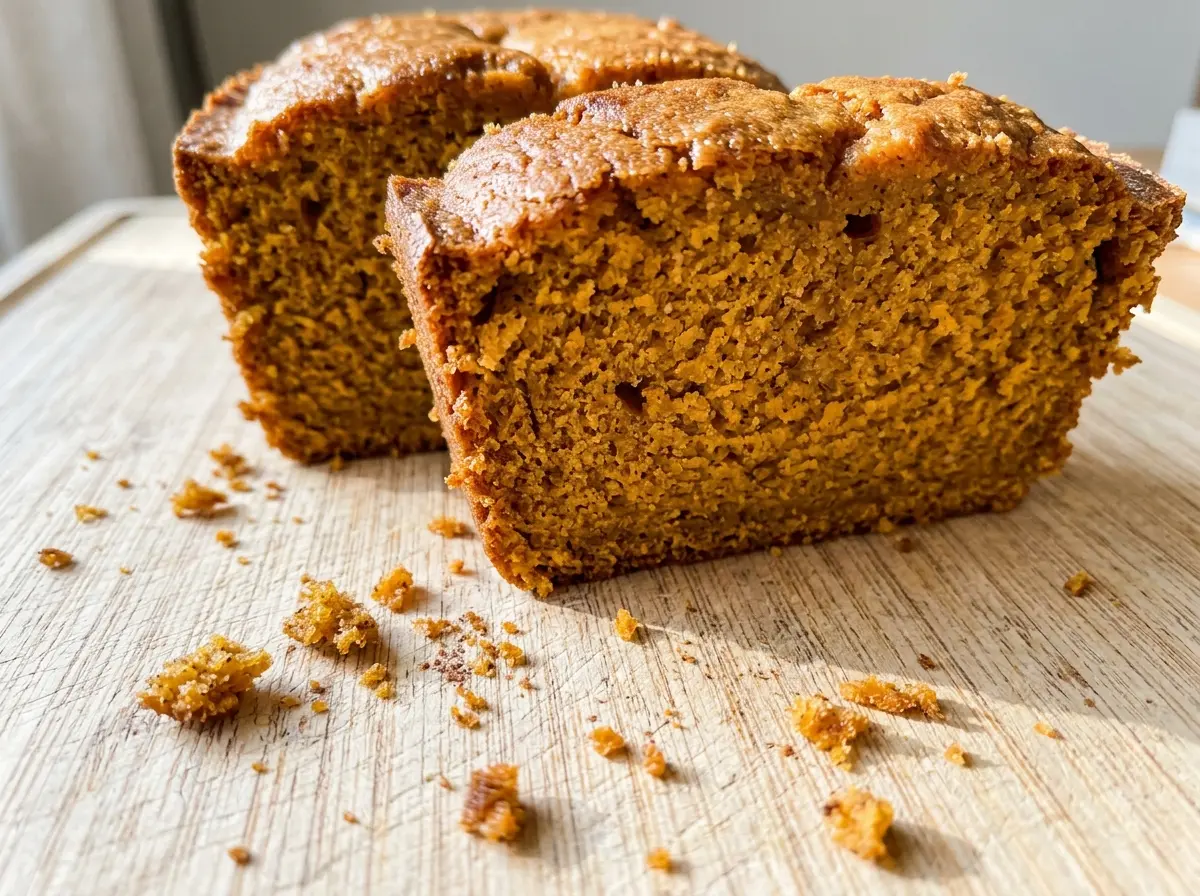
When the loaf starts to rise, the top often splits into a rugged little ridge while the kitchen fills with cinnamon and nutmeg. That crack is part of the charm, not a sign that anything went wrong. The batter for this pumpkin bread comes together in two bowls, and the oven does the patient work of turning canned pumpkin and warm spices into a soft, sliceable loaf.
I like this version because its flavor comes from a short list of familiar spices rather than a premixed blend, so the pumpkin still comes through. Vegetable oil keeps the crumb tender, and the batter needs only a brief stir once the flour goes in. Let the baked loaf cool completely before cutting; the slices hold together neatly and show off that softly spiced orange crumb.
Kitchen Note
A toothpick with a few moist crumbs is the right cue here, not one that comes out bone-dry. Start checking at 55 minutes so the loaf stays tender instead of baking past that point.
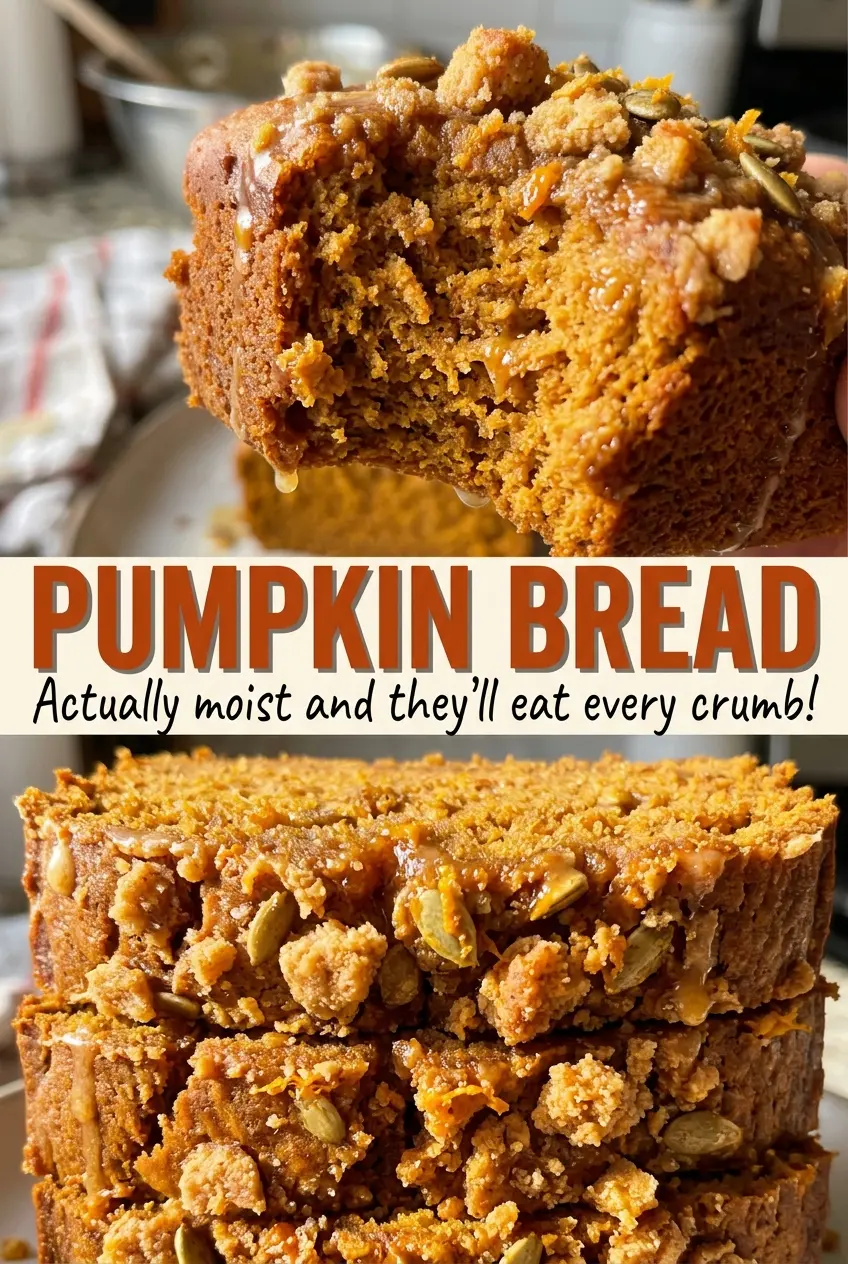
Save this Pumpkin Bread for a tender, cinnamon-scented loaf with a gently cracked top and a soft pumpkin crumb.
Why the Dry Streaks Are Your Stop Sign
Quick breads don’t need the extended mixing that gives yeast dough its structure. Once flour gets wet, stirring develops gluten; keep going and the loaf can turn tight or rubbery instead of tender. Pumpkin batter is thick enough that it may look as if it needs more mixing, but that appearance can fool you.
Whisk the dry ingredients together first so the baking soda, baking powder, salt, and spices are distributed before they meet the wet mixture. When you stir the two bowls together, stop as soon as no dry streaks remain. A few small lumps are less troublesome than a smooth batter that has been worked too hard. Scrape the sides and bottom of the bowl once, then give the batter one or two final folds if you find a pocket of flour. That small check catches unmixed flour without turning the batter into a long mixing session.
This is also why I don’t use an electric mixer for the final combination. A spoon gives you a better feel for when the flour has just disappeared, and it makes it easier to stop at the right moment. The loaf can still bake up with a neat, even crumb without a perfectly glossy batter.
Why Canned Pumpkin Keeps the Crumb Predictable
- Canned pumpkin puree — Choose plain puree, not pumpkin pie filling, which already contains sweetener and spices. A can labeled pumpkin puree gives this batter a consistent pumpkin base without asking you to adjust the recipe. Stir it smooth before measuring if it has settled in the can.
- All-purpose flour — It gives the loaf enough structure to hold its shape while keeping the crumb soft. Measure it without packing it into the cup; excess flour is one of the easiest ways to get a dry, heavy slice. A standard all-purpose flour is fine, so there’s no need to seek out a specialty brand.
- Vegetable oil — Oil stays fluid in the finished loaf, helping it feel moist even after it cools. A neutral vegetable oil works well here; a strongly flavored oil would compete with the spices. The recipe uses oil in the batter and softened butter to grease the pan.
- Large eggs — Eggs help bind the pumpkin and oil with the dry ingredients and support the loaf as it rises. Use large eggs for the intended balance; changing egg size changes the amount of liquid in the batter.
- Cinnamon, nutmeg, ginger, and cloves — The separate spices let the pumpkin stay in front while adding warmth in layers. Ground spices that still smell fragrant when you open the jar will give the clearest flavor. If a jar smells faint or dusty, replacing it matters more than buying a premium label.
- Baking soda and baking powder — Both are included as leaveners, and they aren’t interchangeable one-for-one. Keep each in the batter; leaving one out changes how the loaf rises and can leave the crumb heavier.
From Smooth Pumpkin Batter to a Cleanly Sliced Loaf
Prepare the Pan and Dry Mixture
Heat the oven to 350°F and grease a 9×5-inch loaf pan with softened butter, reaching the corners as well as the flat sides. In a medium bowl, whisk the flour, baking soda, baking powder, salt, cinnamon, nutmeg, ginger, and cloves. Whisk until the spices are no longer sitting in visible patches. Even distribution gives each slice a balanced, warm spice flavor.
Whisk the Pumpkin Base
In a large bowl, whisk the sugar, pumpkin puree, vegetable oil, and eggs until the mixture looks smooth. Scrape along the bottom of the bowl where thicker pumpkin can hide, then whisk again until it is incorporated. The mixture should look evenly orange, without streaks of egg or oil. Getting this base smooth first makes the brief flour-mixing stage easier.
Bring the Batter Together Gently
Add the flour mixture to the pumpkin mixture and stir just until no dry streaks remain. Work around the bowl and across the bottom, where flour can collect, but don’t keep stirring to chase every small lump. The batter should be thick and evenly colored. Scrape it into the greased loaf pan once the dry ingredients are incorporated.
Bake, Then Let the Loaf Set
Bake for 55 to 65 minutes, until a toothpick inserted in the center comes out with a few moist crumbs. If the toothpick shows wet batter, give the loaf more time and check again; the center needs to finish baking before it comes out of the oven. Cool the bread in the pan for 15 minutes, then turn it onto a wire rack. Let it cool completely before slicing so the crumb has time to settle and the slices don’t compress.
How to Adjust the Spice Without Losing the Pumpkin
A gentler, clove-free loaf
Leave out the ground cloves and keep the other spices unchanged. The loaf still has cinnamon, nutmeg, and ginger warmth, but the sharper, more assertive edge of clove won’t lead the first bite.
A cinnamon-led version
For a simpler, more familiar spice flavor, omit the nutmeg, ginger, and cloves and keep the cinnamon. That leaves the loaf with a cleaner cinnamon note and less complexity, while the pumpkin remains the base of the flavor.
A dairy-free pan option
For a dairy-free version, grease the 9×5-inch pan with vegetable oil instead of the softened butter. The batter itself contains no butter, so this changes only the pan coating and keeps the loaf’s texture the same.
Storage and Reheating
- Refrigerator: Wrap the completely cooled loaf airtight and refrigerate for up to 5 days. Chilling firms the crumb, so let slices come to room temperature before serving.
- Freezer: Freeze the cooled loaf whole or in slices, wrapped airtight, for up to 3 months. Thaw it while still wrapped at room temperature to keep the surface from drying out.
- Reheating: Warm an individual slice in the microwave in short bursts, checking after 10 seconds. Long heating dries the crumb quickly, so don’t leave a slice in until it feels hot throughout.
Questions That Come Up Before the First Slice
Pumpkin Bread
Ingredients
Equipment
Method
- Heat the oven to 350°F and grease a 9x5-inch loaf pan with the softened butter.
- In a medium bowl, whisk together the flour, baking soda, baking powder, salt, cinnamon, nutmeg, ginger, and cloves.
- In a large bowl, whisk the sugar, pumpkin puree, vegetable oil, and eggs until smooth.
- Add the flour mixture to the pumpkin mixture and stir just until no dry streaks remain; do not overmix.
- Scrape the batter into the prepared pan and bake for 55 to 65 minutes, until a toothpick inserted in the center comes out with a few moist crumbs.
- Cool the bread in the pan for 15 minutes, then turn it out onto a wire rack and cool completely before slicing.