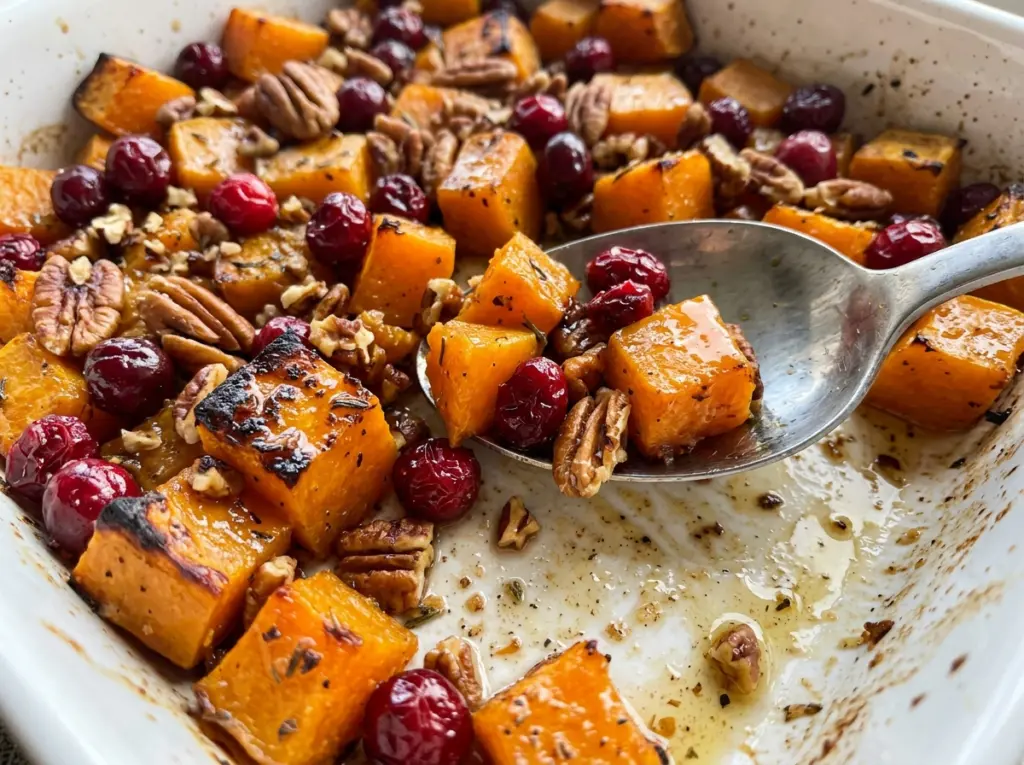
When the sheet pan comes out for its first stir, the squash edges are just beginning to color and the kitchen smells faintly sweet from the maple. That’s the point when I know this roasted butternut squash with cranberries and pecans is on track: the cubes have had time to start browning, but there’s still room for the fruit and nuts to join without getting overdone.
I like this side because it balances soft, browned squash with bright cranberries and pecans that toast at the end. The maple syrup adds a gentle sweetness, not a thick glaze, and the fresh cranberries keep each bite from tasting heavy. Cut the squash into even cubes and the timing takes care of the rest. This recipe makes six servings, with enough contrast in every forkful to hold its own next to a main dish.
Kitchen Note
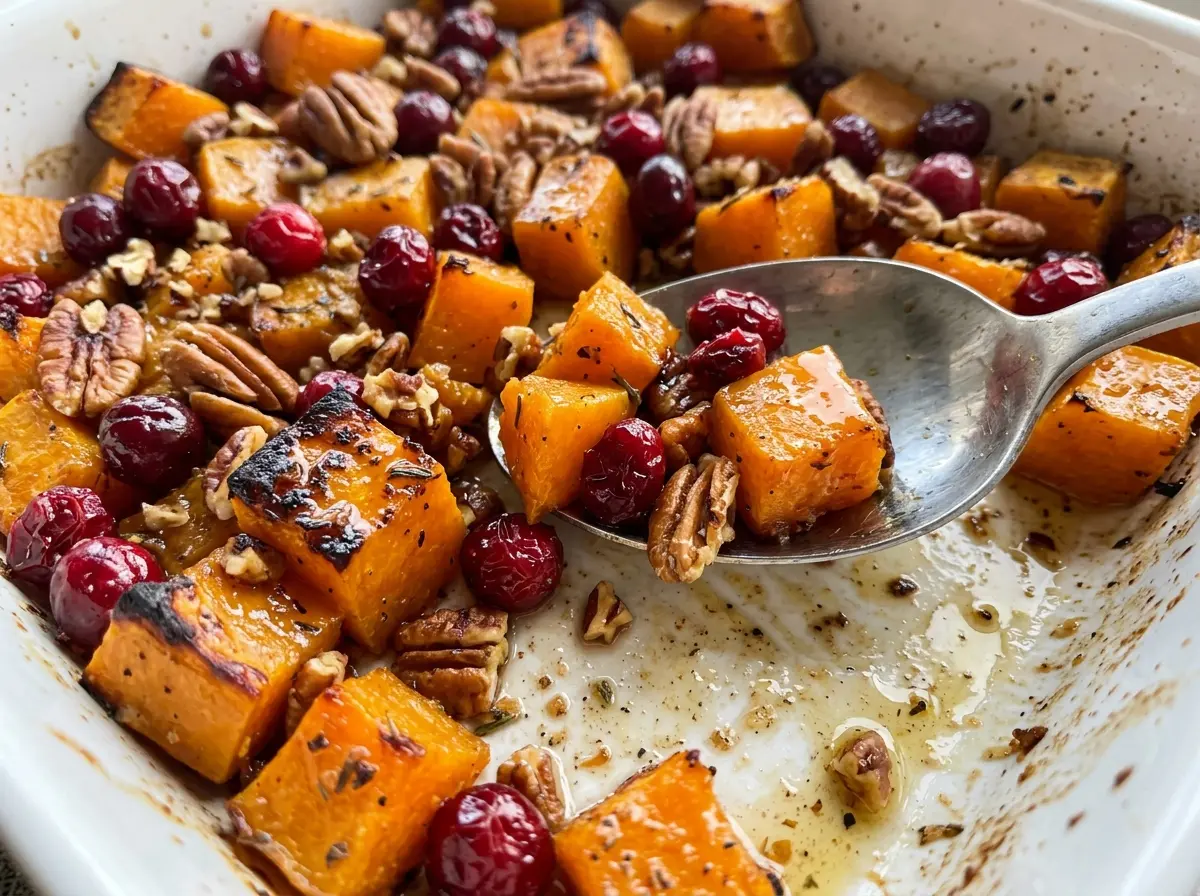
Give the pecans only their short turn at the end. Five to seven minutes in the oven toasts them while the squash finishes; pull the pan when the squash is fork-tender and browned, rather than waiting for the nuts to get dark.
Save this roasted butternut squash with cranberries and pecans for browned squash, tart berries, and pecans toasted right at the end.
Why the 3/4-inch cut matters more than adding oven time
Butternut squash doesn’t roast evenly if the pieces vary widely in size. Small cubes can turn soft before larger ones are tender, and adding extra time to cook the big pieces risks drying out the little ones. Cutting the squash into consistent 3/4-inch cubes gives the whole pan a better chance of finishing together.
That size also suits the staggered roasting. The squash gets its first stretch in the oven before the cranberries and pecans go on, so the pieces need enough time to brown and soften without becoming fragile. If you’re cutting a whole squash, aim for cubes that look alike rather than trying to make every edge mathematically perfect. A few slightly uneven pieces are fine; a mix of tiny dice and large chunks is where the timing gets frustrating.
When the squash is cut evenly, use tenderness and browned edges—not the clock alone—to judge the finish. The cubes should yield to a fork, and some cranberries should have burst. That gives you soft centers and browned surfaces without turning the whole pan to mush.
What each ingredient brings to the squash, berries, and pecans
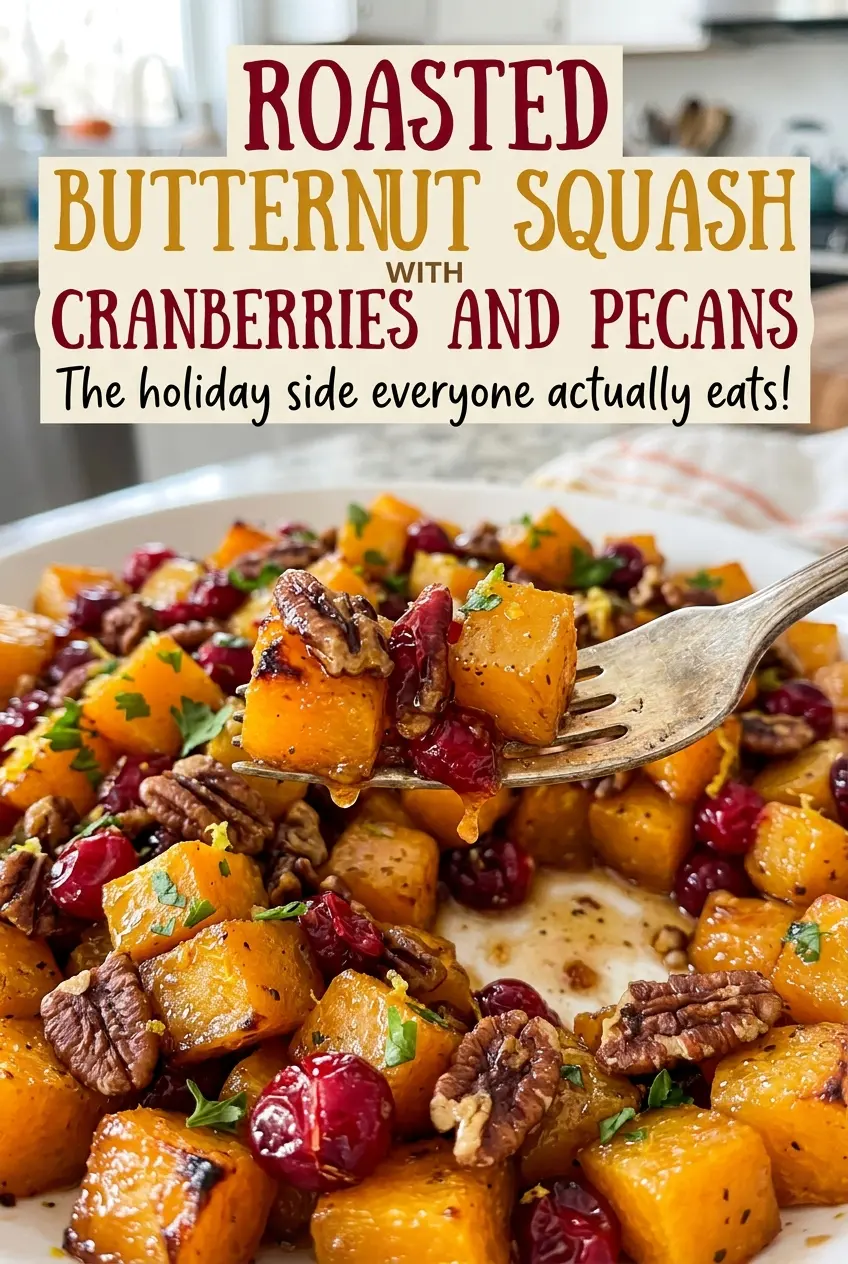
- Butternut squash — Choose a firm squash with no soft spots. The squash itself is the heart of the dish, so fresh is worth choosing over pieces that look dry or have been sitting cut for a while. Peel and seed it before cutting; even cubes are more useful here than a perfect-looking whole squash. Pre-cut squash is convenient if the pieces are close to the specified size.
- Olive oil — It coats the squash so the maple syrup, salt, and pepper cling and the surfaces roast. A regular olive oil is fine; save a more delicate, expensive oil for a dish where its flavor won’t be baked. Skipping the oil leaves the squash without the same coating or browning.
- Maple syrup — The small amount used here gives the squash a subtle sweetness that suits its earthy flavor. Use real maple syrup if you have it; a premium bottle isn’t necessary for roasting. Leaving it out makes the finished side less sweet, but doesn’t change the basic roasting method.
- Fresh cranberries — Their tartness cuts through the sweet squash and maple. Firm, fresh berries are the right fit for this roasting schedule; softer berries may break down more. If fresh cranberries aren’t available, leaving them out is a better choice than expecting a dried fruit to roast the same way.
- Pecans — Chopped pieces spread their buttery, nutty flavor through the pan and toast quickly. Fresh-tasting pecans matter more than an expensive brand; if they smell stale or bitter, they won’t improve in the oven. For a nut-free version, omit them rather than replacing them with another ingredient.
Roast the squash first, then add the quicker-cooking toppings
Heat the oven and prepare the pan
Preheat the oven to 425°F and line an 18×13-inch rimmed baking sheet with parchment paper. Having the lined pan ready before you toss the squash keeps the coated cubes from sitting while you get set up. The rim helps contain the squash and its juices as everything roasts.
Coat the squash evenly
Toss the squash with the olive oil, maple syrup, kosher salt, and black pepper until the cubes are coated. Spread them in a single layer on the prepared pan. If several pieces are stacked on top of one another, separate them so the squash can roast across the pan instead of sitting in a pile.
Give the squash its first roast
Roast the squash for 20 minutes, then stir it. Bring pieces from the edges toward the middle as you turn the cubes so they roast more evenly. The squash will still need more time, but stirring gives another side contact with the hot pan.
Add the cranberries
Scatter the fresh cranberries over the squash after the first roast. Return the pan to the oven for 8 minutes. The cranberries soften during this stretch, and some will begin to burst as they roast.
Finish with pecans
Scatter the chopped pecans over the squash and cranberries, then roast for 5 to 7 minutes more. The squash is done when it’s fork-tender and browned, with some cranberries burst. Check the squash itself before taking the pan out; that’s the best cue that the full roast is complete.
Three simple ways to adapt the squash without changing its character
A nut-free pan
Leave out the pecans for a nut-free version. You’ll lose their toasted crunch and buttery flavor, but the squash and cranberries still make a balanced side. Keep the rest of the ingredient amounts and roasting sequence the same.
A less-sweet squash side
Omit the maple syrup if you’d rather keep the squash more savory. The result won’t have the same gentle sweetness, but the cranberries still bring a tart contrast. Toss the squash with the olive oil, salt, and pepper and follow the same roasting sequence.
A cranberry-free version
Leave out the cranberries for a milder, more squash-forward side. You’ll miss the berries’ tart pop and soft bursts, but the maple and pecans still pair well with the roasted squash. Add the pecans at their usual point in the roast.
Storage and Reheating
- Refrigerator: Refrigerate leftovers within 2 hours and keep them in an airtight container for 3 to 4 days. The squash softens as it sits, and the pecans lose some crunch.
- Freezer: Freeze in an airtight container for up to 2 months. The squash and cranberries will be softer after thawing, and the pecans won’t stay crisp.
- Reheating: Reheat a portion in the microwave until hot throughout, or warm it in the oven until heated through. Avoid repeated reheating; it softens the squash further and dulls the pecans’ texture.
Questions that come up when roasting squash with cranberries
Roasted Butternut Squash with Cranberries and Pecans
Ingredients
Equipment
Method
- Preheat the oven to 425°F.
- Line an 18x13-inch rimmed baking sheet with parchment paper.
- Toss the squash with the olive oil, maple syrup, salt, and pepper.
- Spread the squash in a single layer on the baking sheet.
- Roast for 20 minutes.
- Stir the squash.
- Scatter the cranberries over the squash.
- Roast for 8 minutes.
- Scatter the pecans over the squash.
- Roast for 5 to 7 minutes more, until the squash is fork-tender and browned and some cranberries have burst.