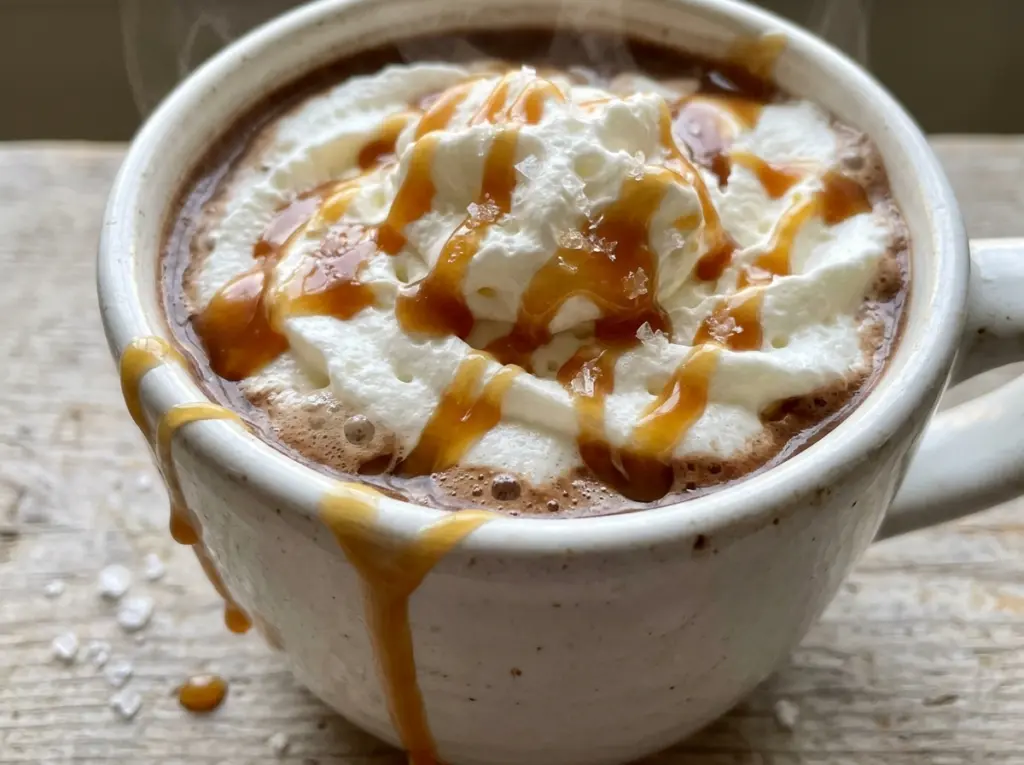
The sugar goes from clear syrup to deep amber faster than it seems possible, and that’s the moment I watch most closely when I make salted caramel hot chocolate. Stop too soon and the caramel tastes mostly sweet; wait too long and it turns bitter. Once you’ve got that color right, the rest comes together in one saucepan, with bittersweet chocolate melting into warm milk and cocoa for four cozy cups.
I make the caramel first, then whisk it into the milk and cocoa before adding the chopped chocolate. That order gives the caramel time to blend evenly and lets the chocolate melt gently into the hot mixture instead of sitting over heat for longer than it needs. Room-temperature cream also helps the caramel come back together smoothly after it bubbles up. The finished drink is rich without being cloying, with a clear salted-caramel note under the bittersweet chocolate.
Kitchen Note
When the cream hits the caramel, it bubbles hard and looks like it might seize. Take the pan off the heat first, whisk the cream in slowly, then return it to low heat until the caramel is smooth.
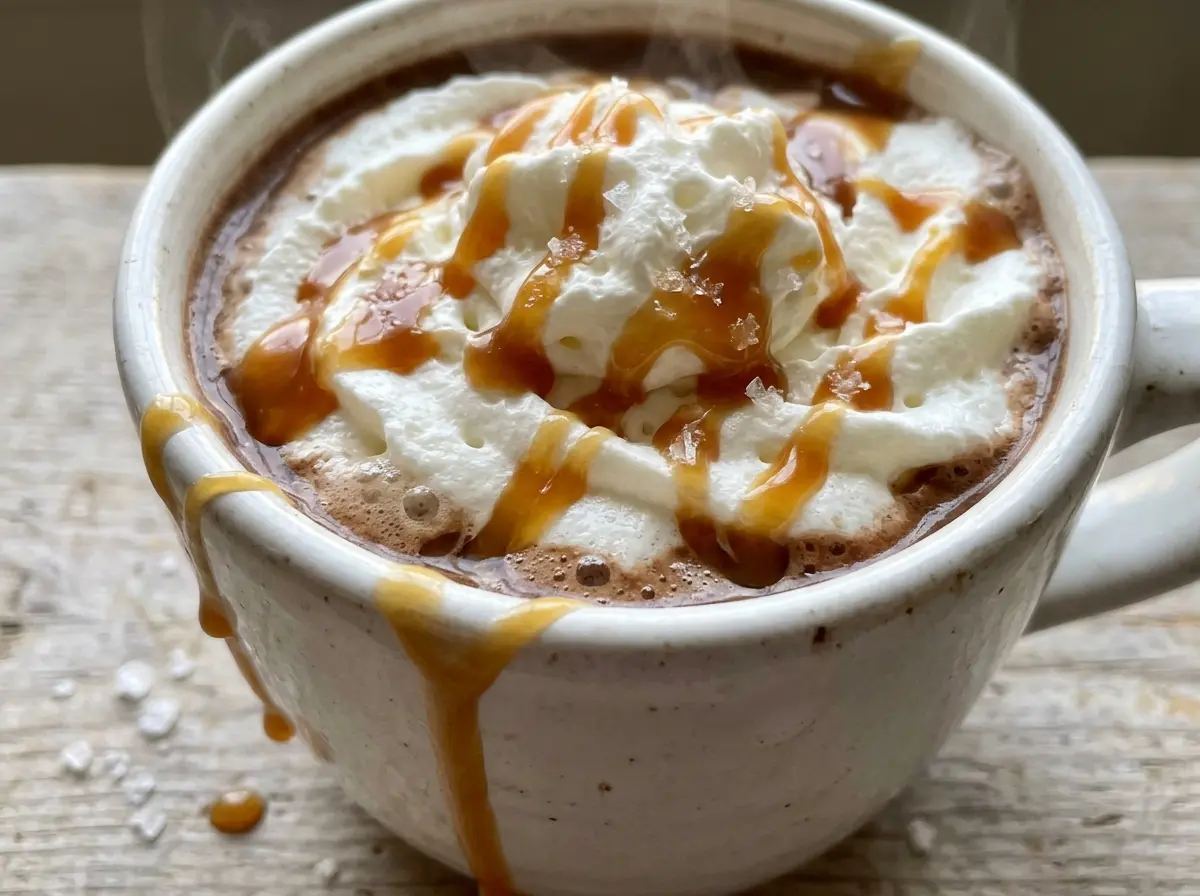
Save this salted caramel hot chocolate for a chilly evening when you want bittersweet chocolate, buttery caramel, and a little salt in every cup.
Why the Chocolate Goes in After the Caramel
There’s a reason I don’t melt the chopped chocolate into the milk at the start. First, the milk, cocoa, and salted caramel get several minutes together over medium-low heat. That gives the cocoa time to disperse and the caramel time to blend into the liquid, so the base is already smooth before the chocolate is added.
Bittersweet chocolate brings its own cocoa butter and body. Once it’s in the pan, it only needs a few minutes of gentle whisking to melt. Starting with a steaming—not boiling—base keeps the milk from scorching and gives you more control over the final texture. If you boil the mixture, you can lose that silky finish and end up with a skin or cooked-on milk at the bottom of the pan. Keep the heat modest and watch for steam; bubbles breaking across the surface mean the pan is too hot.
This sequence also makes the drink easier to judge. When the chocolate has melted, the mixture should look glossy and move smoothly around the whisk, with no cocoa streaks or hard chocolate flecks left behind.
What Makes the Caramel and Chocolate Work Together

- Granulated sugar — This is the base of the caramel and gives you a clean, direct sweetness. Watch the color rather than relying on smell alone; deep amber is the cue for a more complex caramel taste.
- Unsalted butter and room-temperature heavy cream — Butter rounds out the cooked sugar, while cream turns it into a pourable sauce. Room-temperature cream is easier to incorporate into hot caramel than cold cream, and unsalted butter lets the kosher salt stay in control.
- Kosher salt — Salt keeps the caramel from tasting one-note sweet and helps the chocolate stand out. Stick with the listed kosher salt rather than swapping in a different salt by volume, since crystal size changes how salty the same spoonful tastes.
- Whole milk — Whole milk gives the drink enough body to carry both the caramel and melted chocolate. Lower-fat milk would make a thinner cup, so whole milk is the best choice for the texture this version is meant to have.
- Unsweetened cocoa powder — Cocoa adds a deeper chocolate note before the chopped chocolate goes in. Whisk it into the milk while the mixture is still warming so it has time to blend instead of leaving dry pockets.
- Bittersweet chocolate — This gives the hot chocolate its richness without pushing the sweetness too far. Finely chopping it helps every piece melt in the short time it spends in the hot milk; choose a bar you enjoy eating on its own.
- Vanilla extract — Stir it in after the pan comes off the heat so its aroma stays distinct against the caramel and chocolate.
Build the Drink in Two Saucepans, One Smooth Finish
Cook the Sugar to Deep Amber
Combine the granulated sugar and water in a medium heavy-bottomed saucepan over medium heat, stirring just until the sugar dissolves. Once the mixture boils, stop stirring and swirl the pan occasionally as it cooks for 5 to 7 minutes. Look for a deep amber color across the syrup, not just at the edges. If you keep stirring after it boils, crystals can form along the sides and make the caramel grainy.
Whisk in the Butter, Cream, and Salt
Take the pan off the heat before adding the butter, and whisk it in carefully. Slowly whisk in the room-temperature cream and kosher salt; expect the mixture to bubble vigorously as the cream hits the hot caramel. Return the pan to low heat for 1 to 2 minutes, whisking until the sauce looks smooth. If it seems lumpy at first, keep whisking gently over low heat rather than raising the temperature.
Warm the Cocoa and Caramel Into the Milk
In a large saucepan, whisk together the whole milk, cocoa powder, and salted caramel over medium-low heat. Keep whisking for 5 to 7 minutes, until the mixture is hot and steaming but not boiling. Scrape the whisk around the bottom and corners of the pan so cocoa doesn’t settle there. If you see active bubbling, lower the heat and continue warming gently.
Melt the Chocolate and Finish With Vanilla
Add the finely chopped bittersweet chocolate and whisk for 2 to 3 minutes, until it has melted and the drink looks smooth. Take the pan off the heat before stirring in the vanilla extract. A few final strokes around the bottom help catch any chocolate that hasn’t fully blended. Serve while hot, when the texture is glossy and pourable.
Two Small Changes for a Different Caramel-to-Chocolate Balance
A Less-Sweet, More Chocolate-Forward Cup
Whisk the caramel into the warm milk mixture a little at a time, tasting as you go, and stop when the sweetness suits you. The drink will taste more directly of bittersweet chocolate, with less of the buttery caramel note; keep any remaining caramel covered in the refrigerator for another use.
Make the Caramel Before the Hot Chocolate
Prepare the salted caramel earlier in the day and refrigerate it in a covered container. It will firm up as it chills, so warm it gently until it loosens before whisking it into the milk and cocoa. This splits the work into two manageable parts without changing the caramel’s ingredients.
Storage and Reheating
- Refrigerator: Refrigerate leftover hot chocolate in a covered container within 2 hours and use it within 3 to 4 days. It may thicken as it chills.
- Freezer: Freezing isn’t recommended. The milk and melted chocolate can separate after thawing, leaving the drink grainy.
- Reheating: Warm it slowly in a saucepan over low heat, whisking until smooth and steaming. Avoid a hard boil, which can scorch the milk and make the texture less silky.
Questions That Come Up While Making Salted Caramel Hot Chocolate
Salted Caramel Hot Chocolate
Ingredients
Equipment
Method
- Combine the granulated sugar and water in a medium heavy-bottomed saucepan over medium heat, stirring just until the sugar dissolves.
- Bring to a boil and cook without stirring for 5 to 7 minutes, swirling the pan occasionally, until deep amber.
- Remove the pan from the heat and carefully whisk in the unsalted butter, then slowly whisk in the heavy cream and kosher salt; the mixture will bubble vigorously.
- Return to low heat for 1 to 2 minutes, whisking until smooth.
- Whisk the whole milk, unsweetened cocoa powder, and salted caramel in a large saucepan over medium-low heat for 5 to 7 minutes, until hot and steaming but not boiling.
- Add the chopped bittersweet chocolate and whisk for 2 to 3 minutes, until melted and smooth.
- Remove from the heat, stir in the vanilla extract, and serve.