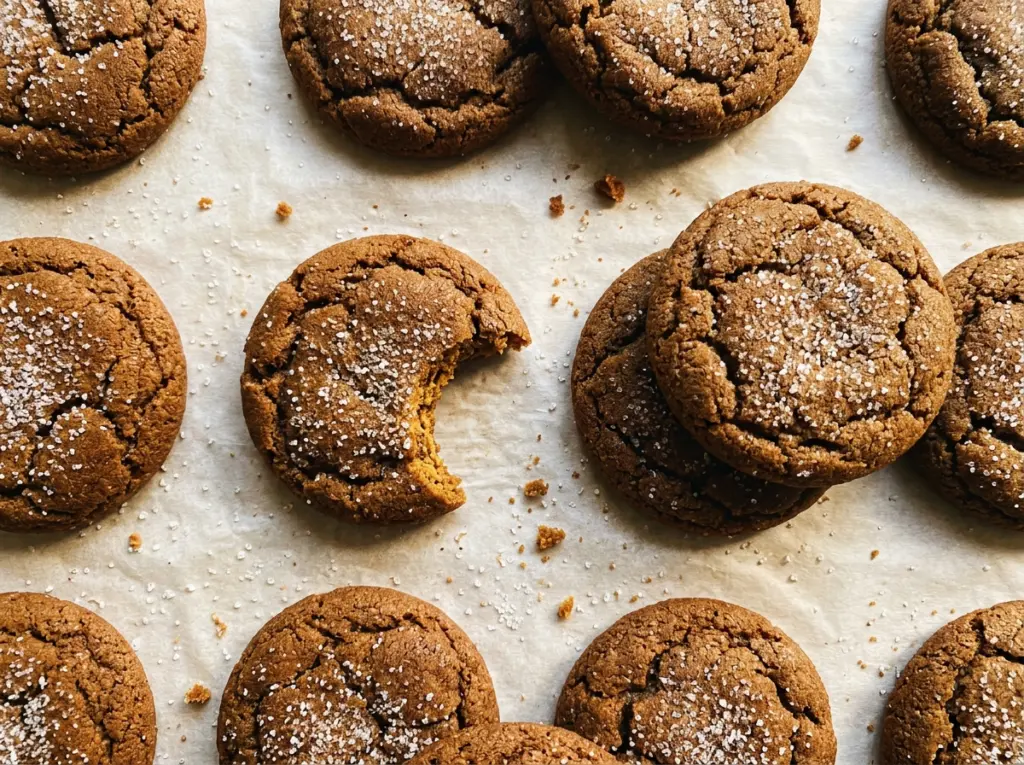
The first thing you notice is the molasses: it makes the dough darker and stickier than a plain sugar-cookie dough, and the kitchen starts to smell like ginger and cinnamon before the cookies are even in the oven. These soft gingerbread cookies bake up with crackled tops and tender centers, without needing to roll out and cut shapes.
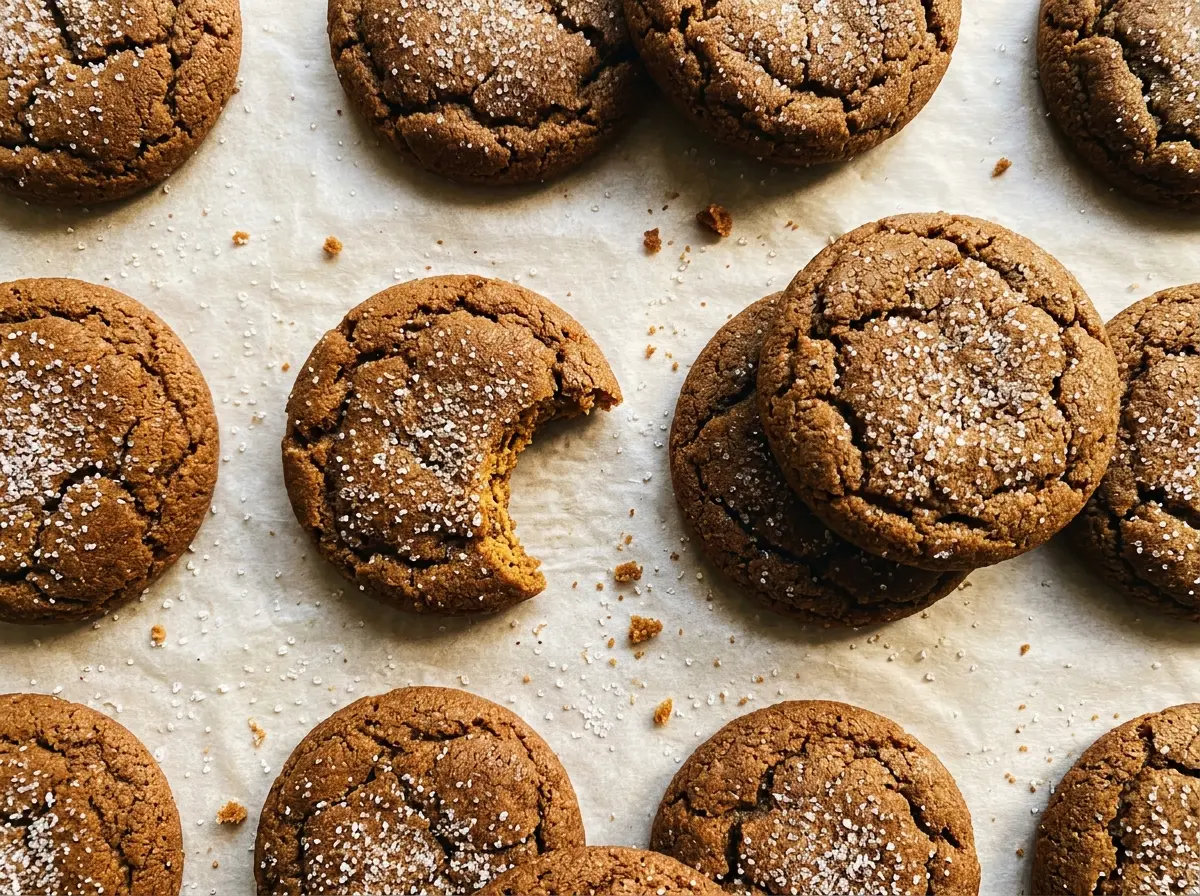
I like this style because each cookie gets a sugar-coated edge and a soft middle, while the dough is easy to portion once it’s chilled. The brown sugar and unsulphured molasses bring a deep, warm sweetness, and the measured spices keep ginger in the lead without letting cloves take over. When they come out, the edges are set and the centers still look soft; a few minutes on the hot baking sheet finishes the job. The result is a tender cookie with a little sparkle on top and plenty of gingerbread flavor.
Kitchen Note
Once the flour goes in, mix only until the last dry streak disappears. It’s easy to keep going because the dough feels soft, but extra mixing is what can make a tender cookie turn tough.
Save these soft gingerbread cookies for a batch with crackled tops, warm ginger, and a tender center in every bite.
Why Molasses Gives These Cookies Their Soft, Chewy Middle
Molasses does more here than bring that unmistakable gingerbread taste. Unlike granulated sugar, it’s a liquid sweetener, so it adds moisture to the dough along with a deep, slightly bittersweet note. Paired with packed light brown sugar, it helps these cookies stay tender instead of baking into the dry, crisp kind you might expect from a rolled gingerbread cookie.
That softer dough is part of the design, not a sign that it needs another handful of flour. Extra flour changes the balance and can leave the baked cookies dense. Chilling gives the dough time to firm up for scooping, while the molasses and brown sugar keep the finished centers soft. Unsulphured molasses has a mellow sweetness that works well with the warm spices; a harsher, more intense molasses can overwhelm them.
The other useful distinction is that these are drop-style cookies, not cutouts. There’s no need to roll the dough thin or worry about getting clean edges around a gingerbread person. Rounded portions keep the centers substantial, and the sugar coating gives each ball a lightly crisp outside as the tops crack during baking.
What Molasses, Brown Sugar, and the Spice Blend Each Bring

- Unsulphured molasses — It supplies the signature deep sweetness and keeps the dough moist. Choose unsulphured molasses for a balanced taste; blackstrap is much more intense and can make the cookies taste bitter. There isn’t a direct swap in this formula that keeps the same gingerbread character.
- Light brown sugar — Its molasses content supports a soft, chewy texture and rounds out the stronger molasses flavor. Keep it packed when measuring, as written in the ingredient list; granulated sugar won’t bring the same moisture or caramel-like depth.
- Unsalted butter — Softened butter creams smoothly with the brown sugar and gives the dough its structure and richness. It should yield when pressed but not look melted or greasy. Unsalted butter also lets the measured salt stay consistent.
- Ginger, cinnamon, and cloves — Ground ginger gives the cookies their defining warmth, cinnamon fills out the spice, and cloves add a small, earthy accent. Fresh, aromatic spices make a noticeable difference in a recipe where the spice blend is the main flavor.
- All-purpose flour and baking soda — Together they provide structure and lift. Baking soda is the leavener here, so don’t leave it out or replace it with baking powder; they don’t behave identically in this dough.
- Granulated sugar for rolling — The coating adds a delicate sugary finish and helps the crackled tops stand out. Keep it separate from the brown sugar, which is creamed into the dough.
Mixing, Chilling, and Baking the Dough Without Guesswork
Cream the Butter and Sugar Before Adding the Molasses
Beat the softened butter and packed light brown sugar with an electric mixer on medium speed for 2 to 3 minutes, until the mixture looks creamy. Add the molasses, egg, and vanilla, beating until combined and scraping down the bowl when needed. The mixture may look glossy and loose after the molasses goes in; that’s expected. In a separate bowl, whisk the flour, baking soda, salt, ginger, cinnamon, and cloves so the leavener and spices are distributed before they reach the wet ingredients.
Stop Mixing When the Flour Disappears, Then Chill
Add the dry mixture to the butter mixture and mix on low just until no dry streaks remain. Scrape the bottom of the bowl once to catch any flour hiding there, then stop rather than beating the dough smooth. Cover it and refrigerate for at least 1 hour and up to 24 hours. Chilling makes the soft dough easier to scoop and helps the portions hold their rounded shape on the baking sheet.
Space the Sugared Portions and Watch the Centers
Heat the oven to 350°F and line an 18×13-inch baking sheet with parchment paper. Put the granulated sugar in a small bowl, scoop rounded 1 1/2-tablespoon portions, roll them into balls, and coat them in sugar. Arrange 12 balls about 2 inches apart, keeping the remaining dough chilled while each batch bakes. Bake for 9 to 11 minutes, until the tops are crackled and the edges are set while the centers still look soft; leave them on the baking sheet for 5 minutes before moving them to a wire rack.
Two Small Changes for Different Baking Plans
Freeze dough portions for a later bake
Scoop and roll the dough into balls, coat them in the granulated sugar, and freeze them in a single layer until firm before transferring them to a freezer-safe container. Thaw the portions in the refrigerator before baking so they’re chilled and easy to handle. The result is the same soft cookie, with the prep split across two days.
Leave off the sugar coating for a simpler top
Shape the chilled dough into balls without rolling them in granulated sugar, then bake on the parchment-lined sheet. The cookies will have a less sparkly, less sweet exterior, while the molasses and spices still carry the flavor. This is a useful option if you prefer a plain cookie surface.
Storage and Reheating
- Room temperature: Store cooled cookies in an airtight container for up to 4 days. They’ll stay soft, though the sugared coating gradually loses its crispness.
- Freezer: Freeze baked, completely cooled cookies in a freezer-safe container for up to 2 months, separating layers with parchment. Thaw at room temperature before serving.
- Reheating: Warm cookies on a baking sheet in a 300°F oven for 3 to 4 minutes. Avoid the microwave, which can soften them unevenly.
Questions That Come Up When Baking Soft Gingerbread Cookies
Soft Gingerbread Cookies
Ingredients
Equipment
Method
- In a large bowl, beat the softened butter and brown sugar with an electric mixer on medium speed for 2 to 3 minutes, until creamy.
- Beat in the molasses, egg, and vanilla until combined, scraping down the bowl as needed.
- In a separate bowl, whisk together the flour, baking soda, salt, ginger, cinnamon, and cloves.
- Add the flour mixture to the butter mixture and mix on low just until no dry streaks remain.
- Cover the dough and refrigerate for at least 1 hour, or up to 24 hours.
- Heat the oven to 350°F and line an 18x13-inch baking sheet with parchment paper.
- Put the granulated sugar in a small bowl.
- Scoop rounded 1 1/2-tablespoon portions of dough and roll them into balls.
- Coat the dough balls in sugar and arrange 12 balls about 2 inches apart on the prepared baking sheet, keeping the remaining dough chilled.
- Bake for 9 to 11 minutes, until the tops are crackled and the edges are set but the centers still look soft; bake the remaining dough in batches.
- Let the cookies cool on the baking sheet for 5 minutes.
- Transfer the cookies to a wire rack to cool.