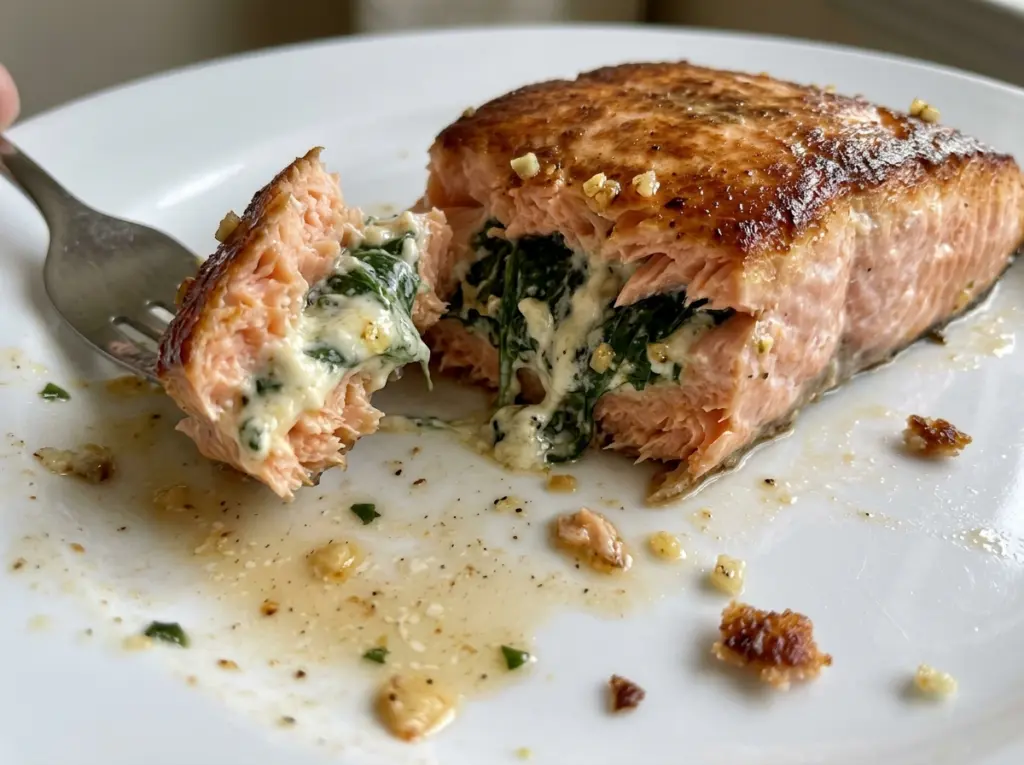
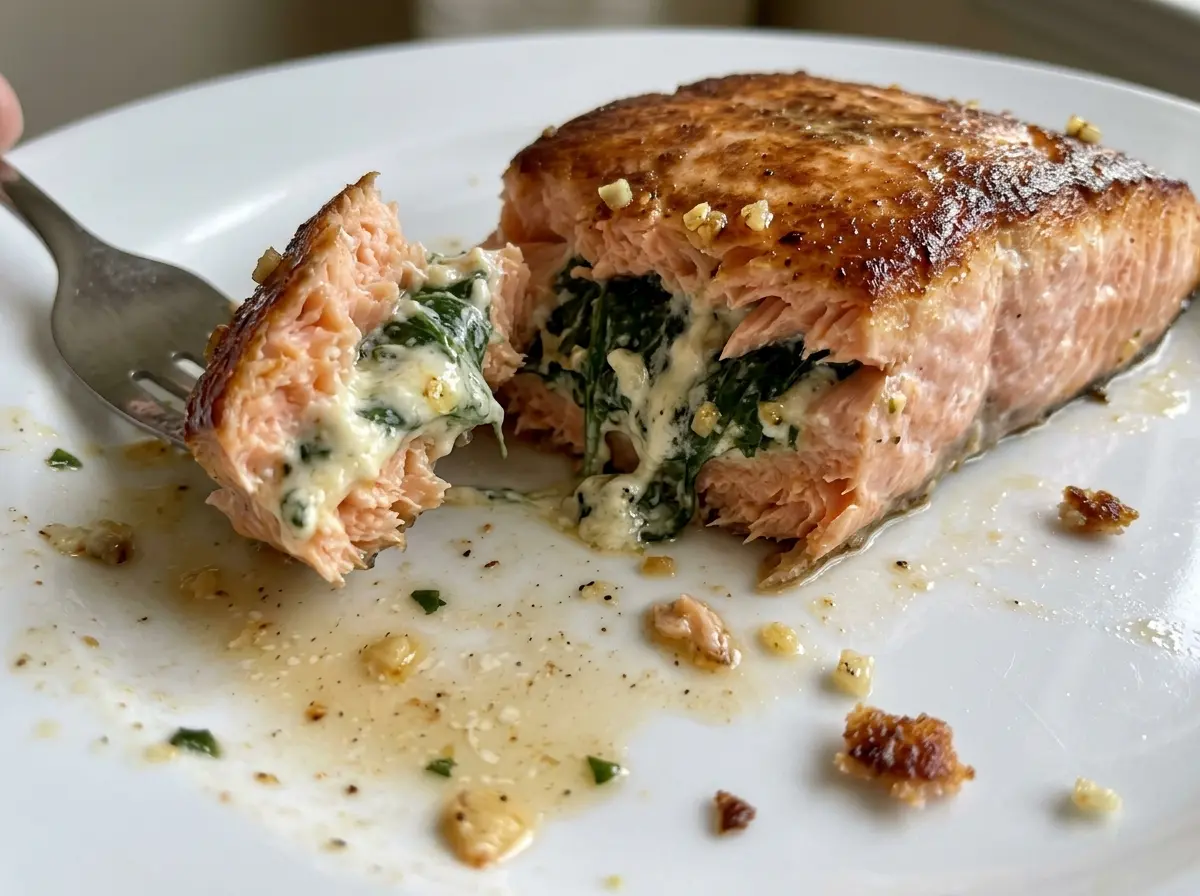
The knife slips into a salmon fillet, then you feel how close the far side is. I slow down there; one cut too deep turns a neat pocket into a split that lets the filling spill out. With skinless pieces about an inch thick, the opening can hold the spinach mixture while the fillet stays intact. That little bit of control makes Spinach Stuffed Salmon feel much less fussy than it looks.
Baby spinach cooks down with butter and garlic, then gets stirred with softened cream cheese and Parmesan. The salmon is seasoned, stuffed, and baked in an oiled 9×13-inch dish, so there isn’t another pan to juggle once the filling is ready. I like the contrast of flaky fish and a soft, savory center, especially when each piece comes out with the filling tucked into its own pocket.
Kitchen Note
I check the thickest part with the thermometer tip entering from the side, so it lands in the center of the fish instead of poking through the fillet. That gives me a useful reading without disturbing the filling.
Save this Spinach Stuffed Salmon for a dinner with flaky fish and a creamy spinach-Parmesan center.
Why the Spinach Has to Look Dry Before It Meets the Cream Cheese
Baby spinach releases moisture as it wilts, and that liquid has nowhere to go once the spinach is folded into a thick filling. If it goes into the cream cheese while the skillet still has water pooled at the bottom, the mixture turns loose instead of holding together. Then it can seep out of the salmon pocket or leave a watery puddle in the baking dish.
Watch the skillet rather than relying on the clock alone. The leaves should be fully wilted, and the visible liquid should have evaporated after cooking over medium heat. That dry finish gives the cream cheese and finely grated Parmesan a chance to coat the spinach instead of thinning out around it.
Garlic goes in only after the spinach has wilted, and it needs just a brief cook. Adding it at the start would leave it in the pan for the full spinach cooking time, which can make the flavor harsher. Keeping the order simple lets the filling taste buttery, gently garlicky, and rich without losing its shape.
Which Ingredients Keep the Filling Creamy Without Making It Loose

- Baby spinach — Tender baby leaves wilt quickly and make a soft filling without tough stems. If you only have mature spinach, remove the thick stems and chop the leaves before cooking; they may take longer to wilt, so use the pan’s appearance as your cue.
- Unsalted butter — Butter rounds out the greens without adding extra salt before the salmon is seasoned. Olive oil can cook the spinach in its place, but the filling will taste less buttery.
- Garlic — Freshly minced garlic gives the spinach a sharper, fresher aroma than jarred minced garlic. Jarred garlic works in a pinch; use the package conversion for one clove and stir it in after the spinach wilts.
- Cream cheese — Softened cream cheese blends evenly with the greens instead of leaving firm lumps. For a dairy-free version, choose a block-style dairy-free cream cheese rather than a whipped spread; the texture of the finished filling will be a little softer.
- Parmesan — Finely grated cheese distributes through the filling instead of forming salty clumps. Pecorino Romano is a useful swap with a sharper, saltier bite, so taste the filling before considering any additional seasoning.
- Skinless salmon fillets — Evenly thick pieces make it easier to cut a pocket and have the fish cook at the same pace. Steelhead trout of a similar thickness can work in the same format, though its flavor is milder than salmon.
The Four Stages That Keep the Filling Inside the Salmon
Wilt the Spinach Until the Pan Is Dry
Melt the butter in a 10-inch skillet over medium heat, then add the baby spinach. Stir for 3 to 5 minutes, until the leaves have collapsed and any liquid in the skillet has evaporated. If you still see liquid collecting under the leaves, keep watching the pan until that moisture is gone. The spinach should look glossy from the butter, not wet from its own liquid.
Cool the Greens Before Mixing the Filling
Stir in the minced garlic and cook for 30 seconds, then take the skillet off the heat. Let the spinach cool for 5 minutes before stirring in the softened cream cheese and Parmesan. Mixing while the greens are hot can loosen the cheese, so give it that short rest first. Stir until the filling looks evenly combined, with the spinach spread throughout.
Cut and Fill Each Fillet
Heat the oven to 400°F and brush the bottom of a 9×13-inch baking dish with olive oil. Pat the salmon dry and set the fillets in the dish, then cut a deep pocket lengthwise into the side of each one without cutting through. Season with kosher salt and black pepper, and divide the spinach mixture among the pockets. If the opening looks small, work the knife carefully rather than widening it through the opposite side.
Bake to the Temperature Cue
Bake for 15 to 20 minutes, checking the thickest part of each fillet for 145°F. Fillets close to an inch thick can vary a little from piece to piece, so use the temperature reading rather than relying only on the timer. The fish should be opaque and flake with gentle pressure, while the filling stays creamy in the center. Take care not to push the thermometer through the bottom of the salmon.
Dairy-Free or Parmesan-Free: Two Changes That Work
Make the Filling Dairy-Free
Use dairy-free butter for cooking the spinach, then use softened block-style dairy-free cream cheese and a dairy-free Parmesan-style alternative in the filling. The center will still be creamy, though plant-based cheeses can taste milder and set more softly than their dairy counterparts.
Leave Out the Parmesan
Skip the Parmesan if you want a milder, simpler filling. The cream cheese still binds the spinach, but the center will be less savory and a little less salty. Keep the rest of the method the same.
Storage and Reheating
- Refrigerator: Store cooked salmon in an airtight container for up to 3 days. The filling firms as it chills.
- Freezer: Freeze tightly wrapped portions for up to 2 months. The fish holds up, but the cream cheese filling may be slightly grainy after thawing; defrost overnight in the refrigerator.
- Reheating: Cover the portions in an oven-safe dish and warm at 325°F until the center reaches 165°F. Gentle heat helps keep the salmon from drying out before the filling warms through.
Questions That Come Up While Stuffing Salmon
Spinach Stuffed Salmon
Ingredients
Equipment
Method
- Melt the butter in a 10-inch skillet over medium heat, add the spinach, and cook for 3 to 5 minutes, stirring, until wilted and any liquid in the skillet has evaporated.
- Stir in the garlic and cook for 30 seconds.
- Remove the skillet from the heat and let the spinach cool for 5 minutes.
- Stir in the cream cheese and Parmesan.
- Heat the oven to 400°F.
- Brush the bottom of a 9x13-inch baking dish with the olive oil.
- Pat the salmon dry and place it in the dish.
- Cut a deep pocket lengthwise into the side of each fillet without cutting through.
- Season the salmon with the salt and pepper.
- Divide the filling among the pockets.
- Bake for 15 to 20 minutes, until the thickest part of each fillet reaches 145°F.