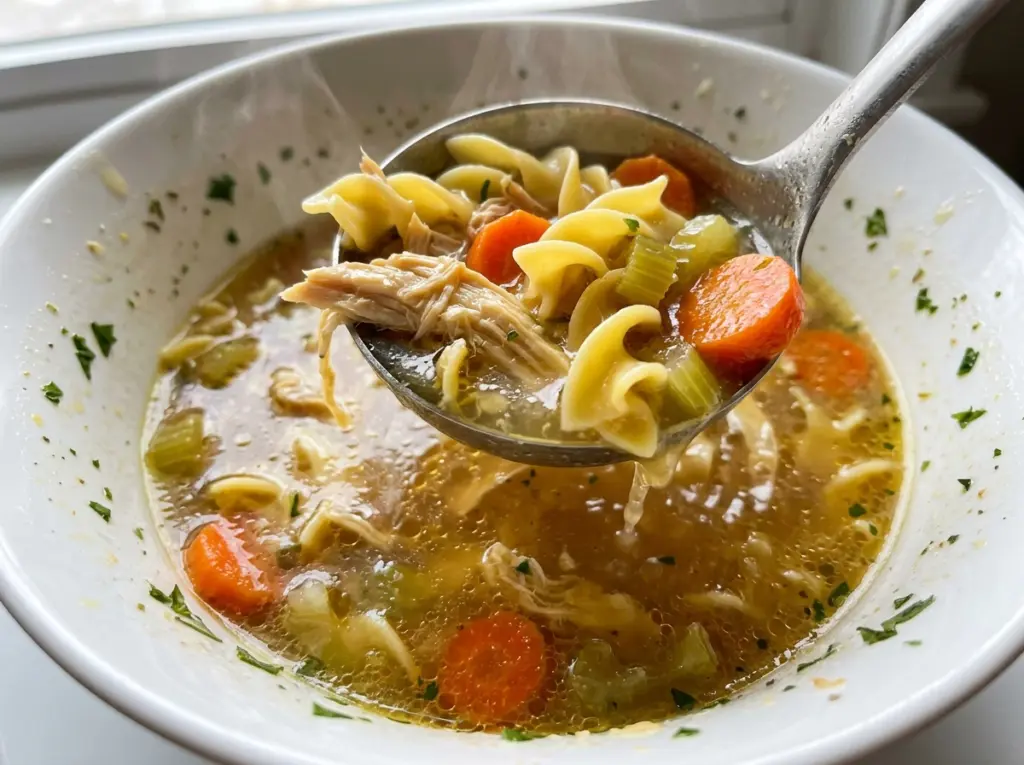
The chicken skin starts to sizzle before the vegetables ever hit the pot, and that first sear leaves a savory layer behind for the broth to pick up. I let the thighs brown, then cook the onion, carrots, and celery in the same pot instead of starting over with a clean one. That little bit of buildup is part of what makes this Stovetop Chicken Noodle Soup taste like it’s been simmering longer than it has.
Bone-in, skin-on thighs do more here than provide the meat. They simmer with the broth and vegetables, then come out easily for shredding once the noodles are ready. I like that the soup gets its chicken flavor from the thighs themselves, while the wide egg noodles make every bowl feel hearty without turning the broth into a heavy stew.
It’s a straightforward pot of soup, but the order matters: brown the chicken, soften the vegetables, simmer the broth, and add the noodles near the end. You’ll get tender shreds of chicken, sweet bites of carrot, and a warm, savory broth in every spoonful.
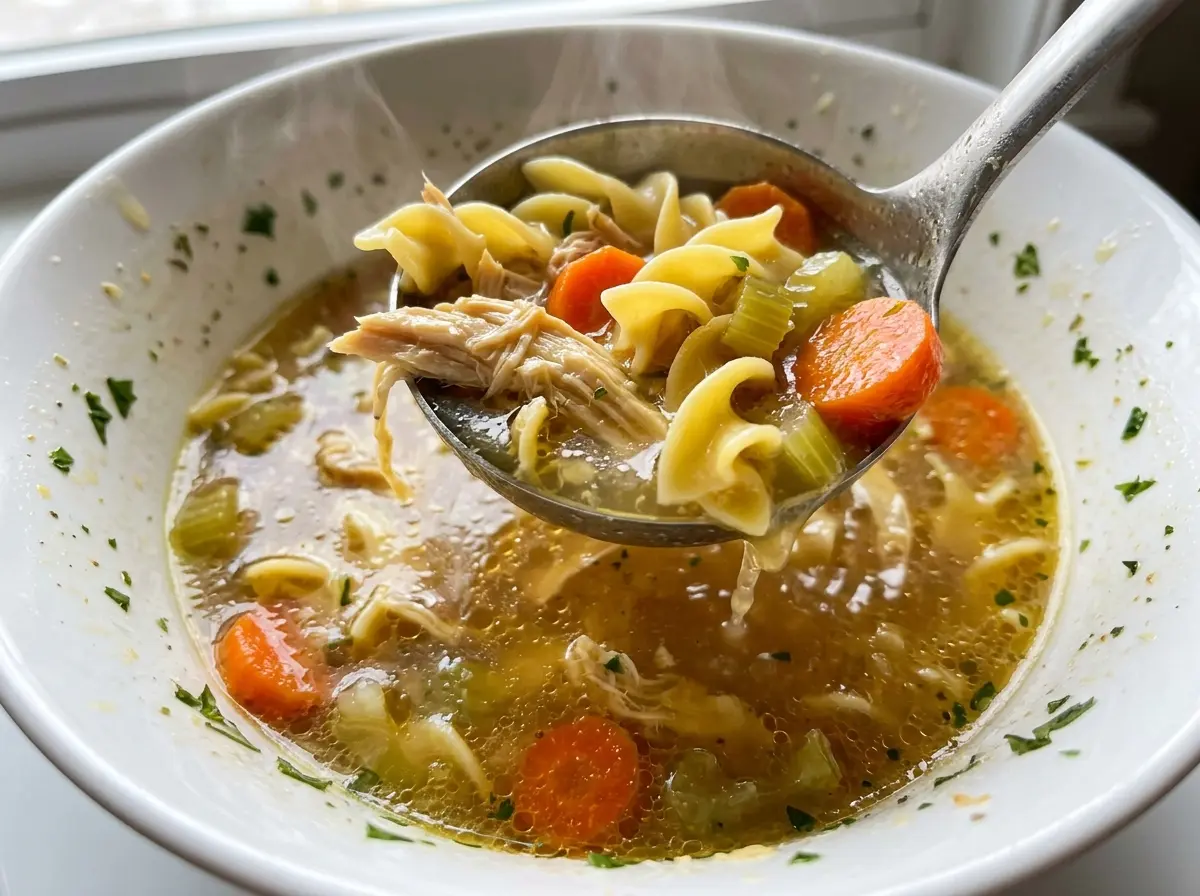
Kitchen Note
A browned outside doesn’t tell you whether a thigh is cooked through. I check the thickest part with a thermometer, keeping the tip clear of the bone; 165°F is the mark I use before pulling the chicken out to shred.
Save this Stovetop Chicken Noodle Soup for its tender chicken, wide noodles, and savory broth made right in the pot.
Why Wide Egg Noodles Cook Right in the Chicken Broth
The noodles go into the simmering broth after the chicken has finished its long cook, so they soften without spending the whole time in the pot. That order also lets the broth carry the thyme, vegetables, and chicken flavor into the noodles as they cook. Wide egg noodles have enough surface to catch broth in each bite, which is why I use them here rather than treating the noodles as a separate side.
Cooking them directly in the soup gives the broth a little more body, too. The noodles release some starch as they soften, but the result should still be a spoonable soup, not a thick sauce. Keep the liquid at a gentle simmer while they cook; a hard boil can knock the noodles around and make them break before they’re tender. Once they’re ready, the shredded chicken goes back in just long enough to heat through.
What the Thighs, Broth, and Wide Noodles Each Bring

- Bone-in, skin-on chicken thighs — The bones and dark meat give the broth a fuller chicken flavor as the thighs simmer. The skin helps the thighs brown in the pot, then it’s discarded with the bones after cooking. Standard grocery-store thighs are fine; the bone-in, skin-on cut is the part worth keeping for this method.
- Low-sodium chicken broth — Starting with lower-sodium broth leaves room for the salt in the soup without making the finished bowl overly salty. A regular broth can work, but it may taste saltier; use less of the added salt and adjust to taste. A basic boxed broth is perfectly suitable here.
- Wide egg noodles — Their broad shape makes a substantial bite and holds onto the broth. The cooking window in this soup is intended for wide egg noodles, so changing to a different pasta shape can change both the texture and how quickly it softens. There isn’t a direct noodle substitute among the other ingredients; leaving them out makes a different, noodle-free soup.
- Onion, carrots, celery, and garlic — These are the savory, sweet base that cooks in the same pot as the chicken. Slice the carrots about a quarter inch thick so they soften during the simmer without disappearing into the broth, and mince the garlic so it can cook briefly without large raw-tasting pieces.
- Dried thyme and bay leaves — Thyme seasons the broth throughout its simmer, while the bay leaves add a quieter background note. Dried thyme is the right fit for the stated method; remove the bay leaves before the noodles go in so they don’t get lost among them.
The Sear-to-Simmer Sequence That Builds the Broth
Sear the thighs in the soup pot
Heat the olive oil in a 6-quart Dutch oven or soup pot over medium-high heat. Set the chicken thighs in skin-side down and sear for 3 to 4 minutes, then turn and sear the second side for 2 minutes. The thighs won’t be cooked through at this point, and that’s expected. Transfer them to a plate so the vegetables can cook in the same pot.
Soften the vegetables before adding garlic
Add the diced onion, sliced carrots, and sliced celery to the pot, then cook over medium heat for 5 to 7 minutes, stirring occasionally. The onion should start to soften, and the carrots and celery will lose some of their raw, firm look. Stir in the minced garlic only after the vegetables have had their cooking time. Give it 30 seconds, just until fragrant, so it doesn’t scorch on the bottom of the pot.
Simmer the chicken gently in the seasoned broth
Pour in the chicken broth, then add the bay leaves, dried thyme, salt, and black pepper. Return the thighs to the pot and bring the liquid to a boil. Cover the pot partially and lower the heat to keep the soup at a gentle simmer for 25 to 30 minutes, until the chicken is cooked through. A quiet, steady simmer is what you want; the broth shouldn’t be boiling hard.
Cook the noodles, then return the shredded chicken
Transfer the chicken to a plate and remove the bay leaves before stirring the wide egg noodles into the simmering broth. Cook the noodles for 6 to 8 minutes, until tender. While they cook, remove and discard the chicken skin and bones, then shred the meat. Return the chicken to the pot and simmer for 1 minute to heat it through.
Two Simple Changes That Keep the Soup on Your Terms
Make it noodle-free
For a lower-carbohydrate bowl, leave out the egg noodles. Continue with the broth and vegetables, shred the chicken after its simmer, return it to the pot, and heat it through for the final minute. The soup will be more broth-forward and less filling than the noodle version.
Leave out the garlic for a gentler broth
Omit the minced garlic and cook the onion, carrots, and celery in the pot as usual. The soup will have a milder aromatic base, with the thyme and chicken coming through more clearly. There’s no need to replace the garlic with another ingredient.
Storage and Reheating
- Refrigerator: Store in an airtight container for 3 to 4 days. The noodles will absorb some broth and soften as the soup sits.
- Freezer: Freeze cooled soup in airtight freezer-safe containers for up to 2 to 3 months. The soup freezes safely, but the noodles will be softer after thawing.
- Reheating: Warm gently in a saucepan, stirring now and then so the chicken and noodles heat evenly. Avoid a hard boil, which can make the noodles break down.
Questions That Come Up While the Soup Simmer
Stovetop Chicken Noodle Soup
Ingredients
Equipment
Method
- Heat the olive oil in a 6-quart Dutch oven or soup pot over medium-high heat.
- Add the chicken thighs skin-side down and sear for 3 to 4 minutes, then turn and sear for 2 minutes.
- Transfer the chicken to a plate.
- Add the onion, carrots, and celery to the pot and cook over medium heat for 5 to 7 minutes, stirring occasionally.
- Stir in the garlic and cook for 30 seconds.
- Pour in the chicken broth, then add the bay leaves, thyme, salt, and pepper.
- Return the chicken to the pot and bring to a boil.
- Cover partially and simmer gently for 25 to 30 minutes, until the chicken reaches 165°F in the thickest part without touching the bone.
- Transfer the chicken to a plate and remove the bay leaves.
- Stir the egg noodles into the simmering broth and cook for 6 to 8 minutes, until tender.
- Remove and discard the chicken skin and bones, then shred the meat.
- Return the chicken to the pot and simmer for 1 minute to heat through.