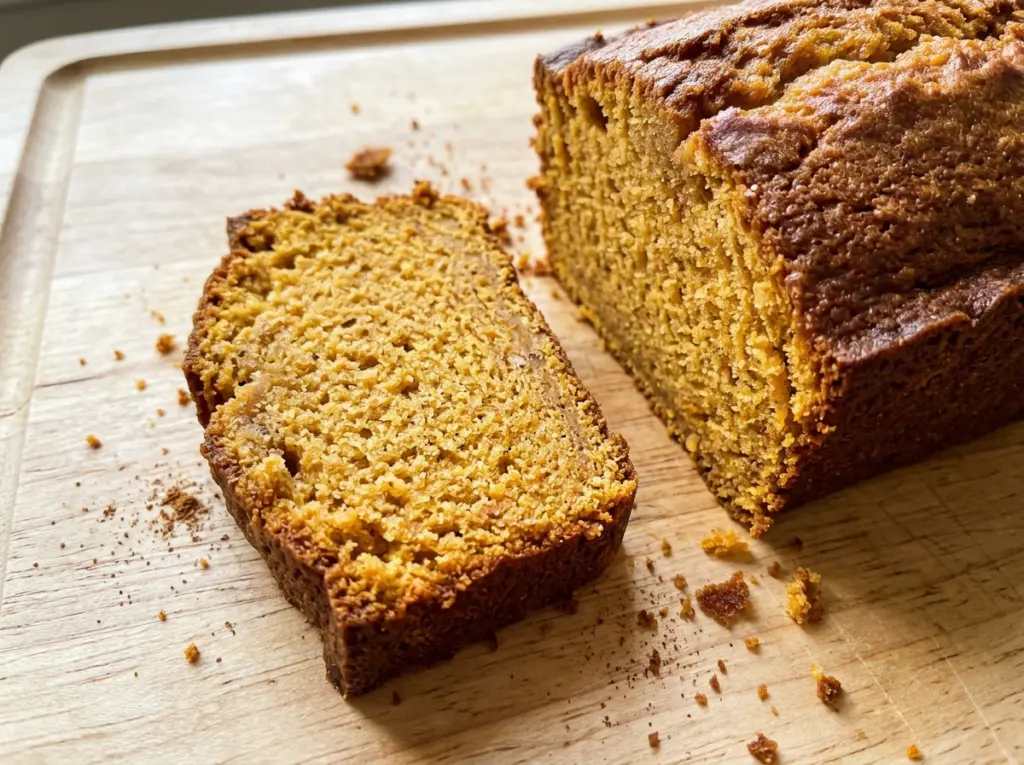
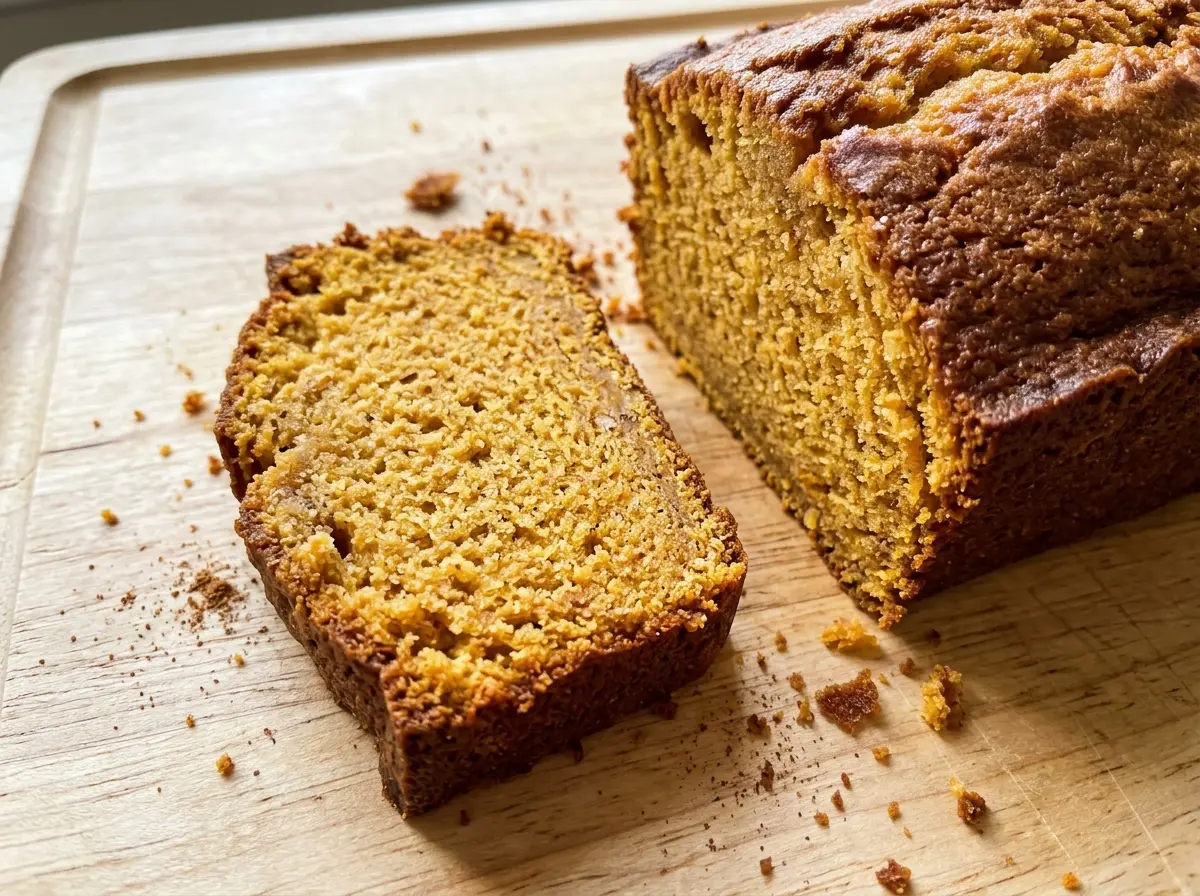
The sweet potatoes come out of the oven with their skins just starting to wrinkle, and the kitchen smells warm before the cake batter is even mixed. Roasting them until they’re very tender gives this Sweet Potato Pound Cake a deep, earthy sweetness that a quick mash can’t quite match. The finished cake is rich and close-crumbed, with cinnamon and nutmeg tucked into every slice.
I learned to pay attention to the sweet potato after mashing, not just to the number of potatoes on the counter. They vary in size and moisture, so measuring the smooth mash keeps the batter balanced. With that handled, patient creaming and a gentle hand once the flour goes in make a Bundt cake that slices cleanly without turning heavy. The crumb stays moist, buttery, and softly spiced.
Kitchen Note
Bundt pans have plenty of curves for batter to cling to, especially around the center tube. Coat every ridge and the tube thoroughly with baking spray that contains flour; a missed patch is often where a beautiful cake tears on the way out.
Save this Sweet Potato Pound Cake for its tender, buttery crumb and the cozy cinnamon-nutmeg flavor in every slice.
Why Measuring the Mashed Sweet Potato Changes the Crumb
Two medium sweet potatoes don’t always produce the same amount of mash. Their size and moisture vary, and extra puree brings extra water into a batter that already has butter, eggs, and milk. Too much can leave the middle heavy or damp even when the outside looks nicely browned. That’s why I roast the potatoes first, mash them smooth, and measure the puree before it goes into the bowl.
The texture of the mash matters, too. A few firm chunks won’t disappear once the flour is mixed in; they can leave streaks and pockets in the baked crumb. Mash until smooth while the flesh is soft, then measure the amount the cake needs. This little bit of care gives the sweet potato room to make the cake moist without overwhelming the structure.
It’s worth treating this as a pound cake, not a sponge cake. The batter should be thick and substantial, and its lift comes from creaming the butter and sugar well along with the baking powder. A measured, smooth puree lets those ingredients do their jobs without asking the cake to support extra moisture.
What the Sweet Potato, Butter, and Spices Bring to This Cake

- Sweet potatoes — The flesh supplies the cake’s earthy sweetness and moist texture, while roasting concentrates its flavor. Choose potatoes that feel firm and roast them whole; peeling before baking would let the flesh dry at the edges before it turns tender.
- All-purpose flour — This gives the cake enough structure to hold its shape in a Bundt pan. Spoon it into the measuring cup and level it rather than packing flour in; a heavy-handed scoop can make the crumb tighter than intended.
- Unsalted butter and granulated sugar — Softened butter can trap air as it’s beaten with sugar, which helps keep this rich cake from feeling dense. Unsalted butter also leaves the recipe’s salt level controlled. It should feel pliable when pressed, not greasy or melted.
- Eggs and whole milk — Room-temperature ingredients blend more smoothly into the creamed butter, helping the batter stay cohesive. Set them out ahead so the cold ingredients don’t firm the butter as they’re mixed in.
- Cinnamon, nutmeg, and vanilla — Cinnamon and nutmeg give the sweet potato a gentle warmth without covering its flavor, while vanilla rounds out the buttery batter. Fresh, fragrant spices make the difference here; if a jar smells faint, the cake will taste flatter.
How to Build the Batter for an Even, Moist Bundt Cake
Roast Until the Sweet Potatoes Give Easily
Heat the oven to 400°F and set the scrubbed potatoes on a rimmed baking sheet. Bake for 45 to 60 minutes, until a knife or skewer slides into the thickest part with very little resistance. If the centers still feel firm, give them more time; a partly cooked potato won’t mash smoothly. Let them cool, peel away the skins, mash until smooth, and measure 1 1/2 cups.
Prepare the Pan and Dry Ingredients
Reduce the oven to 325°F and coat a 12-cup Bundt pan thoroughly with baking spray with flour. Pay attention to the center tube and the grooves, where batter can stick after baking. Whisk the flour, baking powder, cinnamon, nutmeg, and salt together in a medium bowl so the leavener and spices are distributed evenly. Keep this bowl nearby for the alternating additions.
Cream the Butter and Add the Eggs Gradually
Beat the softened butter and sugar with an electric mixer on medium speed for 4 to 5 minutes, until the mixture is pale and fluffy rather than merely blended. Stop to scrape down the bowl if butter is collecting on the sides. Add the room-temperature eggs one at a time, mixing well after each addition. Adding them gradually gives the batter time to incorporate them; scrape the bowl as needed so no dense streaks of butter hide at the bottom.
Alternate the Mixtures, Then Bake to the Crumb Cue
Stir the measured sweet potato, milk, and vanilla together in a separate bowl until smooth. With the mixer on low, add the flour mixture in three additions, alternating with the sweet potato mixture in two additions; start and finish with flour, and mix only until combined. Scrape the batter into the pan and smooth the top. Bake for 75 to 90 minutes, until a toothpick inserted in the center comes out with a few moist crumbs and the cake begins to pull away from the pan; wet batter on the toothpick means it needs more time.
Let the Cake Set Before Turning It Out
Leave the baked cake in its pan for 15 minutes so the crumb can firm up enough to release. Invert it onto a wire rack, then let it cool completely before slicing. Turning it out too soon makes the warm cake more likely to break, while cutting before it cools can leave rough, compressed slices. Once cool, the ridges hold their shape and the inside cuts into even pieces.
Small Changes for a Different Sweet Potato Pound Cake
A cinnamon-only version
Leave out the nutmeg and keep the cinnamon. The spice comes through in a simpler, familiar way, while the sweet potato and vanilla stay easy to notice. The rest of the batter and baking method stays the same.
A gentler, spice-free cake
Leave out both the cinnamon and nutmeg for a more straightforward sweet potato and vanilla flavor. The cake will lose some of its warm spice character, but its buttery crumb and roasted sweet potato still give it plenty of flavor.
Storage and Reheating
- Room temperature: Keep the completely cooled cake covered in an airtight container for up to 3 days. The cut surface may dry a little over time, so cover it well.
- Freezer: Freeze individual slices or the whole cooled cake, wrapped tightly and placed in a freezer-safe container, for up to 2 months. Thaw wrapped at room temperature so condensation collects on the wrapping rather than the cake.
- Reheating: This cake is best at room temperature; if you’d like a warm slice, microwave it briefly, about 10 seconds at a time. Avoid heating it for too long, which can make the crumb tough and dry.
Questions That Come Up When Baking Sweet Potato Pound Cake
Sweet Potato Pound Cake
Ingredients
Equipment
Method
- Heat the oven to 400°F. Place the sweet potatoes on a rimmed baking sheet and bake for 45 to 60 minutes, until very tender when pierced.
- Cool the sweet potatoes, peel, and mash until smooth; measure 1 1/2 cups.
- Reduce the oven temperature to 325°F. Coat a 12-cup Bundt pan thoroughly with baking spray with flour.
- Whisk the flour, baking powder, cinnamon, nutmeg, and salt in a medium bowl.
- In a large bowl, beat the butter and sugar with an electric mixer on medium speed for 4 to 5 minutes, until pale and fluffy.
- Beat in the eggs one at a time, mixing well after each addition and scraping down the bowl as needed.
- Stir the mashed sweet potato, milk, and vanilla together in a separate bowl until smooth.
- With the mixer on low, add the flour mixture in 3 additions, alternating with the sweet potato mixture in 2 additions; begin and end with the flour mixture, mixing just until combined.
- Scrape the batter into the prepared pan and smooth the top.
- Bake for 75 to 90 minutes, until a toothpick inserted in the center comes out with a few moist crumbs and the cake begins to pull away from the pan.
- Cool the cake in the pan for 15 minutes.
- Invert it onto a wire rack and cool completely.