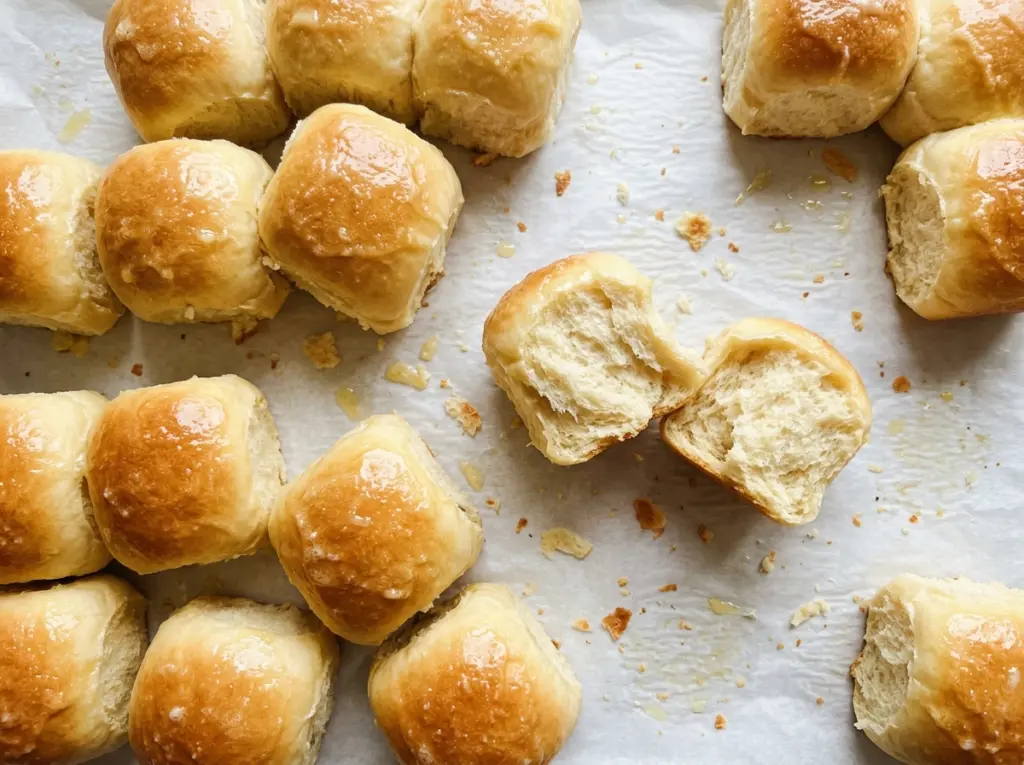
The dough should feel soft and a little springy after kneading, not stiff or dry. That’s the first sign these Texas Roadhouse Rolls are headed in the right direction. I make them with two rises, which gives the dough time to turn into tender, fluffy rolls instead of dense little squares.
The warm milk, butter, and egg enrich the dough, while active dry yeast gives it lift. I add the flour gradually and pay attention to the feel of the dough rather than rushing to make it firm. A lightly floured counter is all you need for kneading and shaping.
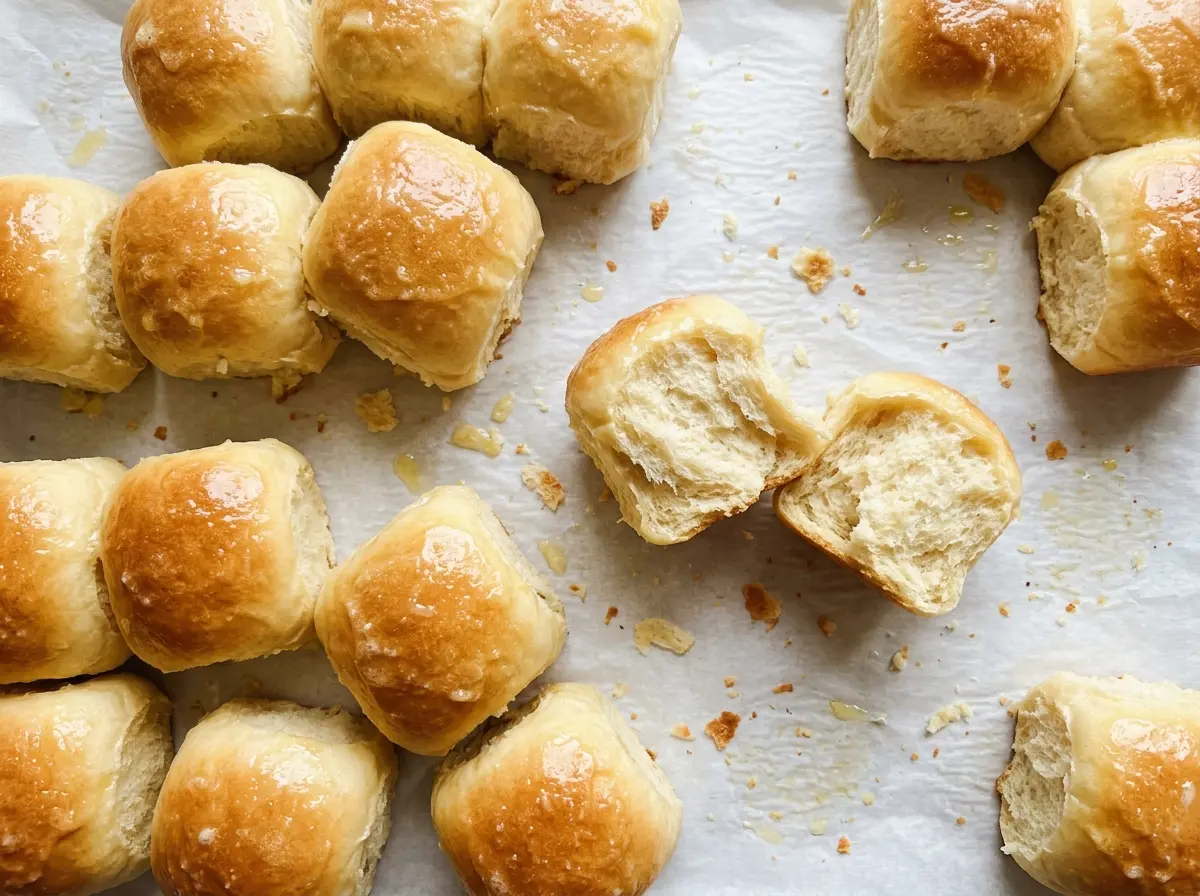
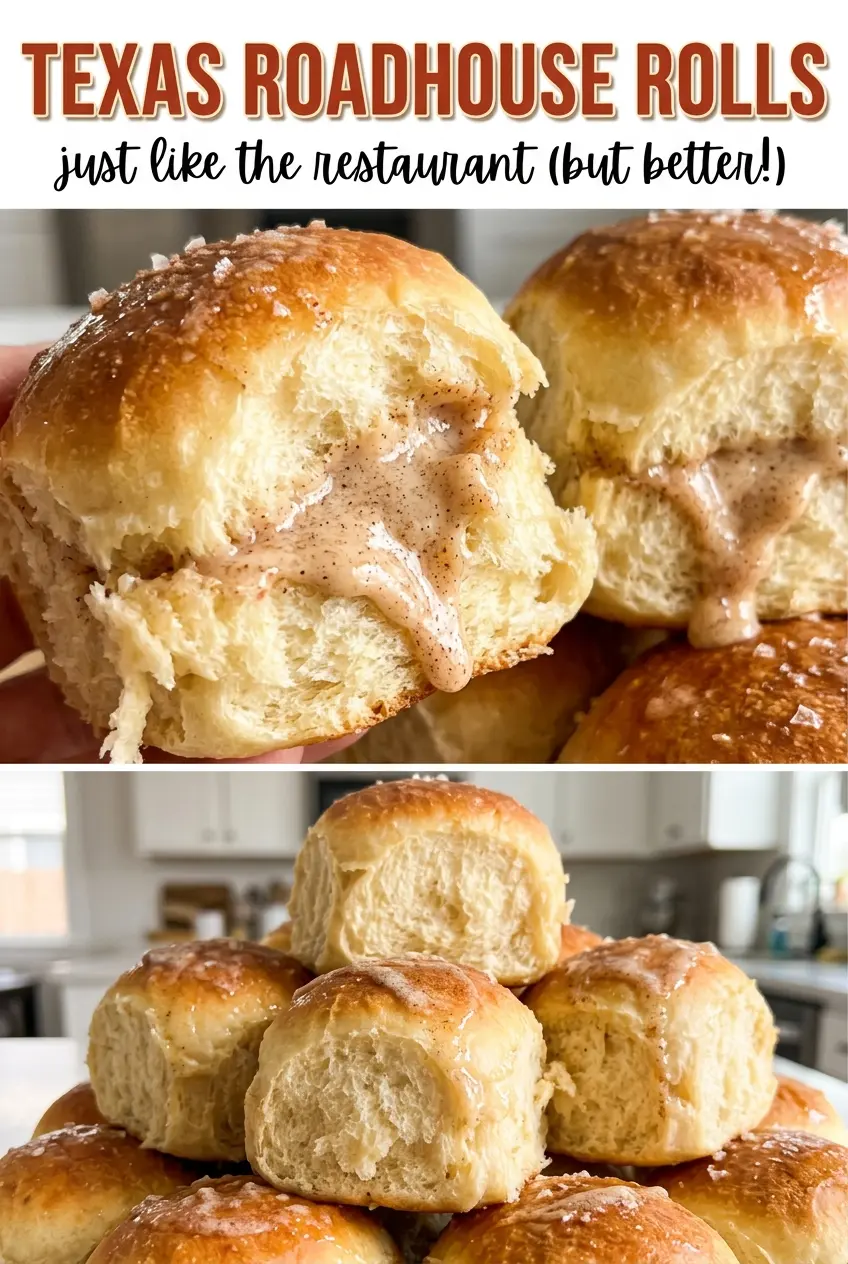
Once the rolls come out golden, a brush of melted butter gives the tops a soft sheen. Set them out warm with the cinnamon-honey butter, and you’ll have a basket of pillowy rolls with a sweet, spiced spread alongside.
Kitchen Note
Wait for the yeast mixture to look foamy before adding it to the milk mixture. If it stays flat after 10 minutes, pause there rather than mixing it into the dough; active yeast should show visible bubbles and foam.
Save these Texas Roadhouse Rolls for soft, golden bread and cinnamon-honey butter you can serve warm at the table.
Why Adding Extra Flour Can Make These Rolls Tough
Enriched dough often feels stickier than a plain bread dough, and that can make it tempting to keep dusting the counter and kneading in more flour. Resist that urge. The dough should become smooth and elastic after kneading, but it should still feel soft; too much flour can make the baked rolls firm instead of fluffy.
Start with flour that’s spooned into the measuring cup and leveled, then mix it in gradually until a soft dough forms. The amount you need for dusting is separate from the measured flour, and a light coating on the counter is enough to keep the dough manageable. If it clings a little as you knead, keep working it rather than burying it in flour. The dough will become more cohesive as you knead for the full 8–10 minutes.
That soft texture is worth protecting when you shape the rolls, too. Use just enough flour to keep the rectangle from sticking, and avoid pressing the dough thinner than the specified 1/2 inch. Starting with a supple dough gives the rolls room to rise without baking up heavy.
What Gives These Rolls Their Soft, Enriched Texture
- Active dry yeast — This is what gives the rolls their rise and light crumb. Check that the packet is fresh; there’s no need to buy a specialty brand. The warm water and small amount of sugar help you see that the yeast is active before it goes into the dough.
- Whole milk — Milk contributes richness that water alone won’t give these rolls. Warm it to 105–110°F, just as you do the water, so it’s ready to combine with the yeast mixture. Whole milk is the best match for the soft, rich result; a plain unsweetened oat milk works for a dairy-free variation.
- Egg — The egg adds richness and helps bind the dough. Bring it to room temperature so it blends more easily into the warm milk mixture instead of cooling it down. There isn’t a straightforward egg-free swap that keeps the same tender texture.
- Unsalted butter — Melted butter enriches the dough, and a separate portion is brushed over the baked rolls. Use unsalted butter so the salt level stays predictable. For the cinnamon-honey butter, softened butter blends smoothly with the honey and powdered sugar; cold butter will leave firm bits in the spread.
- All-purpose flour — Its balance of structure and tenderness suits soft dinner rolls. A standard grocery-store bag is fine; spoon and level it rather than packing it into the cup. Bread flour is not the best choice here if you want the same tender bite.
- Honey and powdered sugar — Together, they make the cinnamon butter sweet and smooth enough to spread. Use a honey you enjoy the taste of, but an everyday honey works well; powdered sugar is the right choice for a creamy spread rather than granulated sugar, which can feel gritty.
From Foamy Yeast to Golden Rolls: The Stages That Matter
Wake Up the Yeast
Stir the warm water, yeast, and 1 teaspoon of the sugar together in a large bowl. Leave the mixture for 5–10 minutes, until it looks foamy. While it stands, whisk the warm milk with the remaining sugar, melted and cooled butter, room-temperature egg, and salt. Stir the foamy yeast mixture into the milk mixture.
Mix and Knead a Soft Dough
Add the flour gradually, mixing until a soft dough forms. Turn it onto a lightly floured counter and knead for 8–10 minutes, until the surface looks smooth and the dough stretches with an elastic feel. If it turns stiff before it becomes smooth, the counter may be too heavily dusted with flour. Return the dough to the bowl and cover it.
Give the Dough Two Rises
Leave the covered dough in a warm place for 1–1 1/2 hours, until it has doubled in size. Spray two 9×13-inch baking pans with nonstick cooking spray. Roll the dough on a lightly floured counter into a 1/2-inch-thick rectangle and cut it into 24 pieces, then arrange 12 pieces in each pan. Cover the pans and let the pieces rise for 30–45 minutes, until they look puffy.
Bake, Butter, and Mix the Spread
Heat the oven to 350°F and bake the rolls for 15–20 minutes, until golden brown. Brush the hot rolls with the melted butter and let them rest for 5 minutes. While they rest, beat the softened butter, honey, powdered sugar, and cinnamon together until the mixture looks smooth and fluffy. Serve the rolls warm with the cinnamon-honey butter.
Simple Ways to Adapt the Rolls and Their Sweet Butter
Make the Rolls Dairy-Free
Replace the whole milk with the same amount of plain, unsweetened oat milk, and use dairy-free butter in the dough and for brushing. Use dairy-free butter in the cinnamon-honey spread as well. The rolls will be a little less rich, and they still contain egg.
Make a Cinnamon-Free Honey Butter
Leave the ground cinnamon out of the butter mixture and beat the softened butter with the honey and powdered sugar until smooth and fluffy. You’ll get a milder, honey-forward spread that still pairs well with the warm rolls.
Storage and Reheating
- Refrigerator: Store the rolls in an airtight container for up to 4 days; refrigeration will make them firm sooner than room-temperature storage. Keep the cinnamon-honey butter covered in the refrigerator for up to 1 week.
- Freezer: Freeze cooled rolls in an airtight freezer bag for up to 2 months. Thaw them before reheating for the most even, soft result; the butter is best stored separately in the refrigerator.
- Reheating: Cover the rolls loosely with foil and warm them in a 300°F oven until heated through, about 8–10 minutes. Leaving them uncovered can dry the tops before the centers are warm.
Questions That Come Up When Making These Rolls
Texas Roadhouse Rolls
Ingredients
Equipment
Method
- Stir the warm water, yeast, and 1 teaspoon of the sugar together in a large bowl.
- Let stand for 5–10 minutes, until foamy.
- Whisk the milk warmed to 105–110°F, remaining sugar, melted butter, egg, and salt together.
- Stir in the yeast mixture.
- Gradually mix in the flour until a soft dough forms.
- Knead on a lightly floured counter for 8–10 minutes, until smooth and elastic.
- Return the dough to the bowl and cover it.
- Let rise in a warm place for 1–1 1/2 hours, until doubled in size.
- Spray two 9x13-inch baking pans with nonstick cooking spray.
- Roll the dough on a lightly floured counter into a 1/2-inch-thick rectangle.
- Cut the dough into 24 pieces.
- Arrange 12 pieces in each pan and cover them.
- Let rise for 30–45 minutes, until puffy.
- Heat the oven to 350°F.
- Bake the rolls for 15–20 minutes, until golden brown.
- Brush the hot rolls with the melted butter.
- Let the rolls rest for 5 minutes.
- Beat the softened butter, honey, powdered sugar, and cinnamon together until smooth and fluffy.
- Serve with the warm rolls.