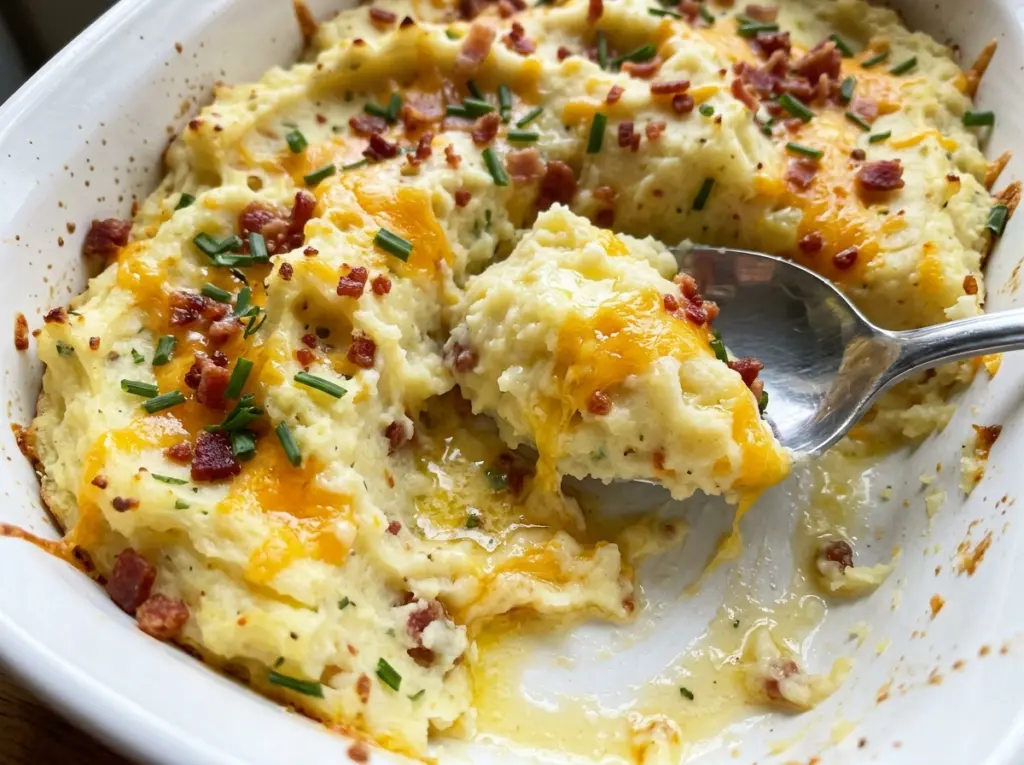
A baked russet can feel sturdy in your hands and still split if the skin gets scooped too thin. I leave a little potato attached, which gives each half enough structure to hold a generous mound of filling and all that melted cheddar. These twice baked mashed potatoes bring the comfort of a bowl of mashed potatoes together with the crisp-edged potato skins that make a twice-baked potato worth the extra oven time.
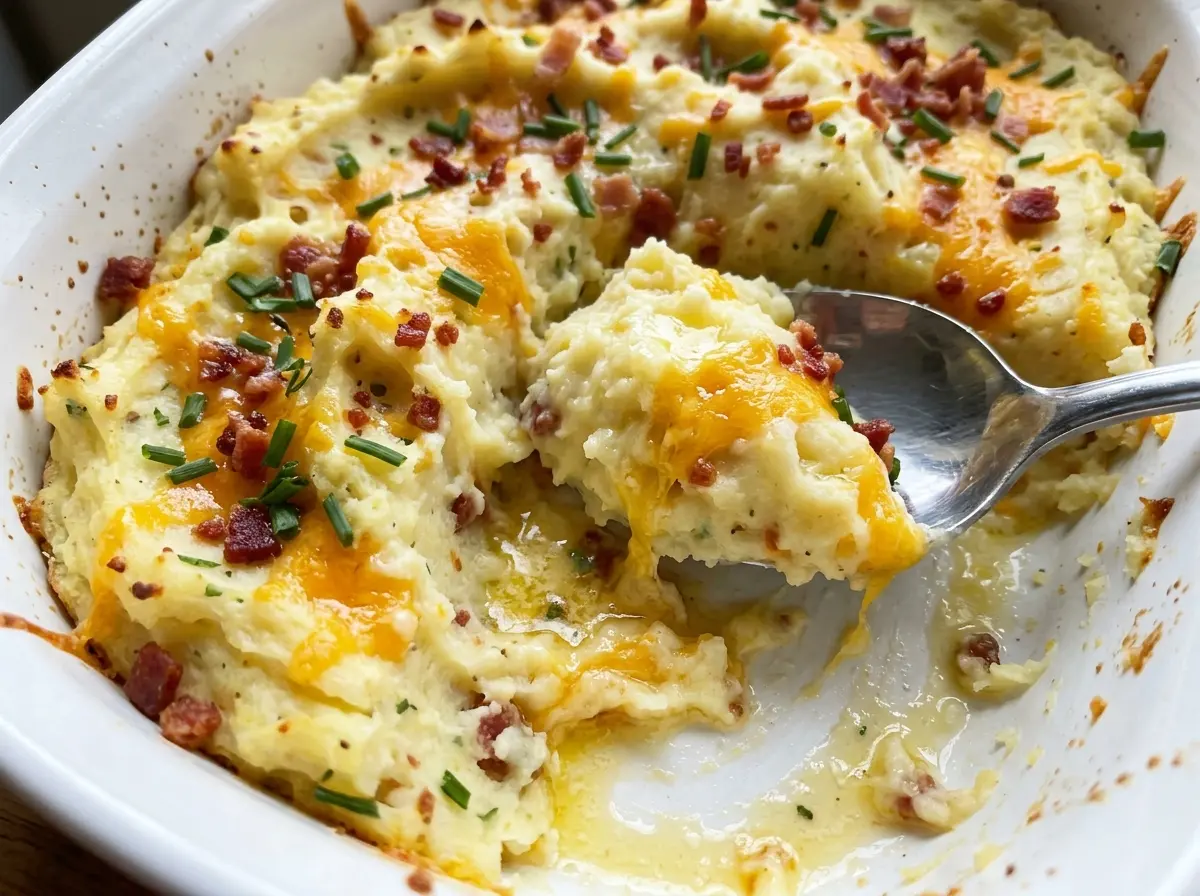
The texture comes from mashing the potato flesh with butter, sour cream, and milk while it’s still warm. It turns mostly smooth but stays substantial enough to spoon back into the shells, rather than becoming a loose purée. Then bacon, cheddar, and green onions go over the top for the second bake, where the filling heats through and the cheese gets lightly browned. Each half comes out creamy in the middle, with a salty, crisp topping and a tender potato skin.
Kitchen Note
Let the bacon cool on the paper towels until it’s easy to handle before crumbling it. Warm bacon tends to bend and smear; cooled bacon breaks into crisp bits that stay distinct on top.
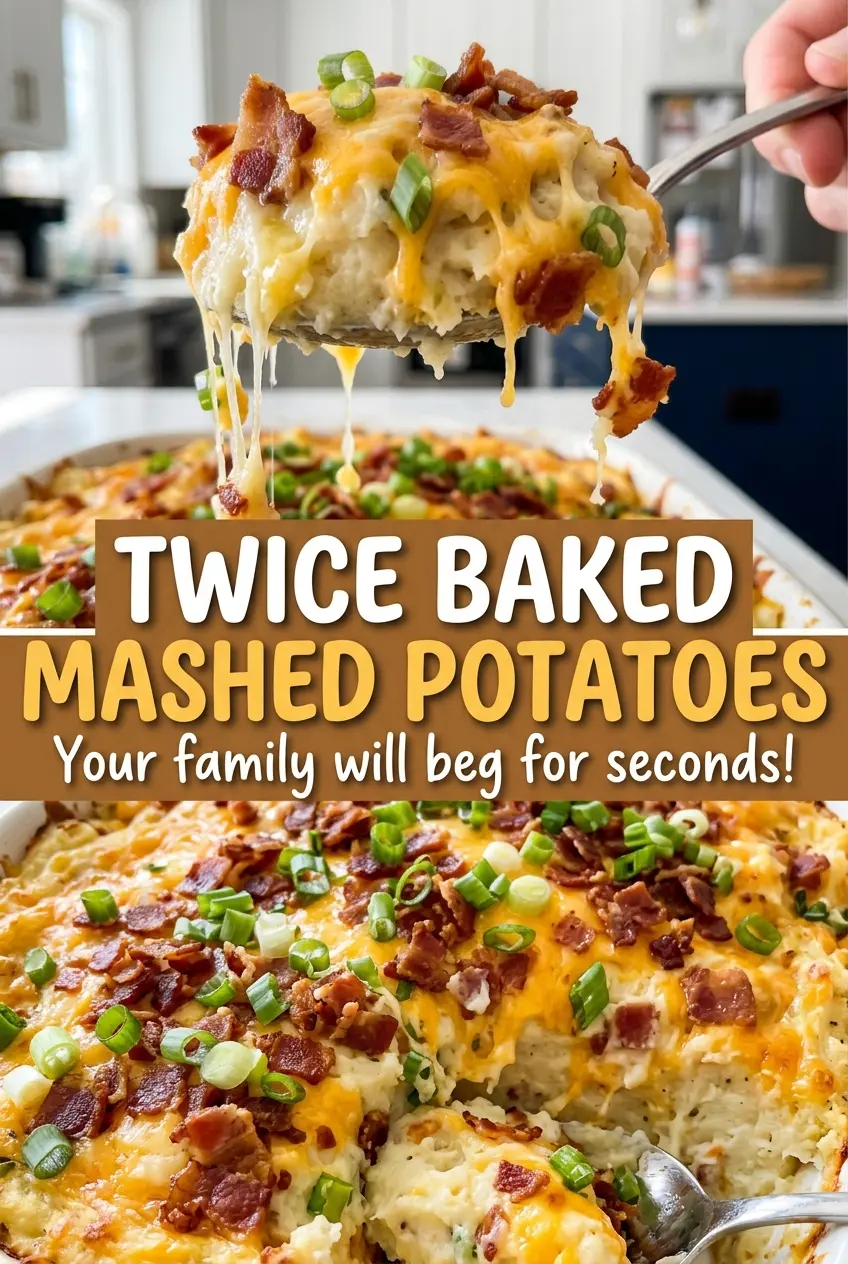
Save these twice baked mashed potatoes for a cozy dinner or holiday table: creamy mashed russets under crisp bacon and bubbly cheddar.
Why These Russets Need to Be Fully Tender Before You Mash Them
The first oven bake does more than soften the potatoes enough to scoop. It gives the russet flesh time to turn tender all the way through, so it breaks down readily when you mash it with the butter, sour cream, and milk. If the centers are still firm, you’ll end up chasing stubborn lumps in the bowl, and the second bake isn’t meant to cook those lumps away.
Think of the second trip to the oven as the finish, not a rescue. The filling is already mashed and tucked into the skins; that final 20 to 25 minutes heats it through while the cheddar melts and picks up a little color. A knife that slides easily into the center of each potato after the first bake is the cue that the flesh is ready for the bowl. Give the whole potatoes the time they need there, and the filling will be easy to mash without working it into a gluey paste.
What Keeps the Mash Creamy and the Topping Distinct
- Russet potatoes — Their fluffy flesh mashes easily, and their skins make practical little serving shells. Choose potatoes that are close in size so they bake at a similar pace; waxier varieties tend to make a denser mash and less sturdy shells.
- Unsalted butter — Butter brings richness and helps the hot potato flesh mash smoothly. Unsalted butter also lets you control the salt in the finished filling; use a fresh package, but there’s no need to seek out a specialty brand.
- Sour cream and milk — Sour cream gives the filling a mild tang, while milk loosens it enough to spoon back into the skins. Plain, full-fat Greek yogurt can stand in for the sour cream in the same amount; expect a slightly tangier, thicker filling.
- Sharp cheddar — Sharp cheese gives the topping a clear, savory cheddar flavor after baking. A block you shred yourself melts smoothly; pre-shredded cheddar is convenient, though its coating can leave the melted layer a little less silky.
- Bacon — The smoky, salty crunch balances the soft potato and rich cheese. Any bacon you enjoy eating on its own works here, and draining it on paper towels keeps excess grease off the topping.
- Green onions — Their fresh, mild bite cuts through the richness and adds color. Slice them thinly so they scatter evenly across the filled skins.
From Whole Russets to a Bubbly Cheddar Top
Roast the potatoes until the centers give easily
Heat the oven to 400°F and arrange the scrubbed, fork-pierced russets on an 18×13-inch rimmed baking sheet. Bake for 55 to 70 minutes, until a knife slides easily into the center of each potato. Check the largest one rather than judging by the skins, which can look ready before the middle is tender. Let the potatoes rest on the sheet for about 10 minutes, until they’re cool enough to handle.
Scoop the flesh and keep the skins intact
Cut each potato in half lengthwise, then scoop the flesh into a large bowl. Leave about 1/4 inch of potato attached to each skin so the shells have enough body to support the filling. If you scrape right down to the skin, it can tear when you spoon the mash back in. Set the empty halves on the baking sheet as you work.
Mash while the potato is warm
Add the butter, sour cream, milk, kosher salt, and black pepper to the potato flesh. Mash until mostly smooth; a few small soft pieces are fine, but stop before the mixture turns pasty. The filling should hold its shape on a spoon while remaining soft enough to mound into the skins. Taste a little and check that the salt and pepper are balanced before filling the shells.
Top the shells and bake until the cheese colors
Cook the bacon in a 10-inch skillet over medium heat for 8 to 10 minutes, turning it as needed, until crisp. Drain it on paper towels and crumble once it’s cool enough to handle. Spoon the mash into the potato skins, then top with cheddar, bacon, and thinly sliced green onions. Bake at 400°F for 20 to 25 minutes, until the filling is hot throughout and the cheese is melted and lightly browned.
Simple Changes That Still Hold Together in the Potato Skins
Make a vegetarian topping
Replace the bacon with crisped store-bought plant-based bacon, cooked according to its package directions and crumbled over the potatoes. You’ll keep a savory, crunchy topping, though the flavor will be less smoky and porky than the original.
Use pepper Jack for a gentle kick
Swap the sharp cheddar for shredded pepper Jack. It melts over the filling in the same way, with a little warmth and a milder cheese flavor; keep the bacon and green onions for contrast.
Make a half batch
Use half of each ingredient for a smaller dinner, and bake the potatoes on the same size sheet so they have room around them. Keep the oven temperature the same and use the knife-tenderness cue for the first bake; the time can vary with the size of the potatoes.
Storage and Reheating
- Refrigerator: Store covered in an airtight container for 3 to 4 days. The skins soften and the topping won’t stay crisp.
- Freezer: Freeze cooled halves in a single layer until firm, then transfer them to an airtight freezer container for up to 2 months. Thaw overnight in the refrigerator; the potato texture may be a little softer after freezing.
- Reheating: Warm in a 350°F oven until hot throughout, reheating leftovers to 165°F. A microwave works for an individual half, but it softens the skin; avoid using high heat to rush the oven reheating, which can dry the edges before the center warms.
Questions That Come Up Before the Second Bake
Twice Baked Mashed Potatoes
Ingredients
Equipment
Method
- Heat the oven to 400°F and place the potatoes on an 18x13-inch rimmed baking sheet. Bake for 55-70 minutes, until a knife slides easily into the center of each potato.
- Let the potatoes rest on the baking sheet for about 10 minutes, until cool enough to handle.
- Cut each potato in half lengthwise and scoop the flesh into a large bowl, leaving about 1/4 inch of potato attached to each skin.
- Mash the potato flesh with the butter, sour cream, milk, salt, and pepper until mostly smooth.
- Cook the bacon in a 10-inch skillet over medium heat for 8-10 minutes, turning as needed, until crisp; drain on paper towels and crumble.
- Spoon the mashed potatoes back into the potato skins and arrange them on the baking sheet. Top with the cheddar, bacon, and green onions.
- Bake at 400°F for 20-25 minutes, until the filling is hot throughout and the cheese is melted and lightly browned.