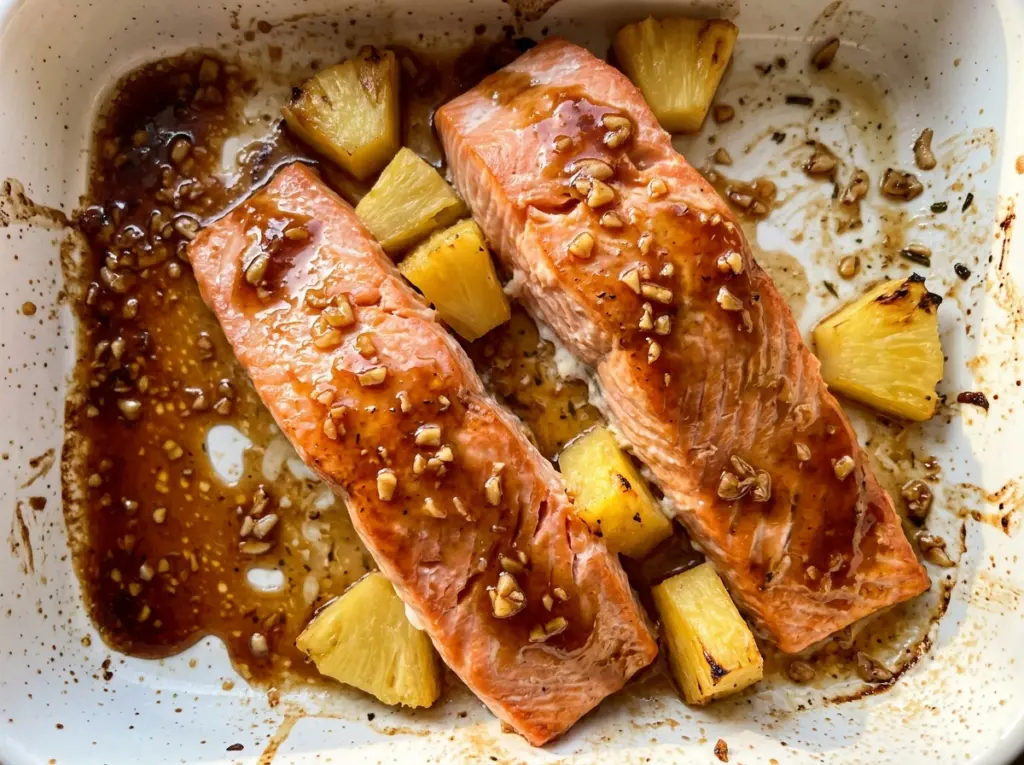
When pineapple juice, soy sauce, and brown sugar meet in a bowl, the glaze looks much thinner than the sticky coating people often expect on salmon. That’s exactly how it should look here. In the oven, the juice runs around the fish and pineapple, while the brown sugar softens the savory edge of the soy sauce. The result is a bright, lightly sweet pan glaze rather than a thick lacquer.
I bake the salmon skin-side down and scatter fresh pineapple around the fillets, so the fruit gets tender without covering the fish. Minced garlic gives the glaze a savory backbone, and the short bake keeps the salmon moist. Keep an eye on each fillet near the end; thickness makes a bigger difference than the clock. You’ll get tender salmon with flakes that separate easily and warm pineapple tucked around it.
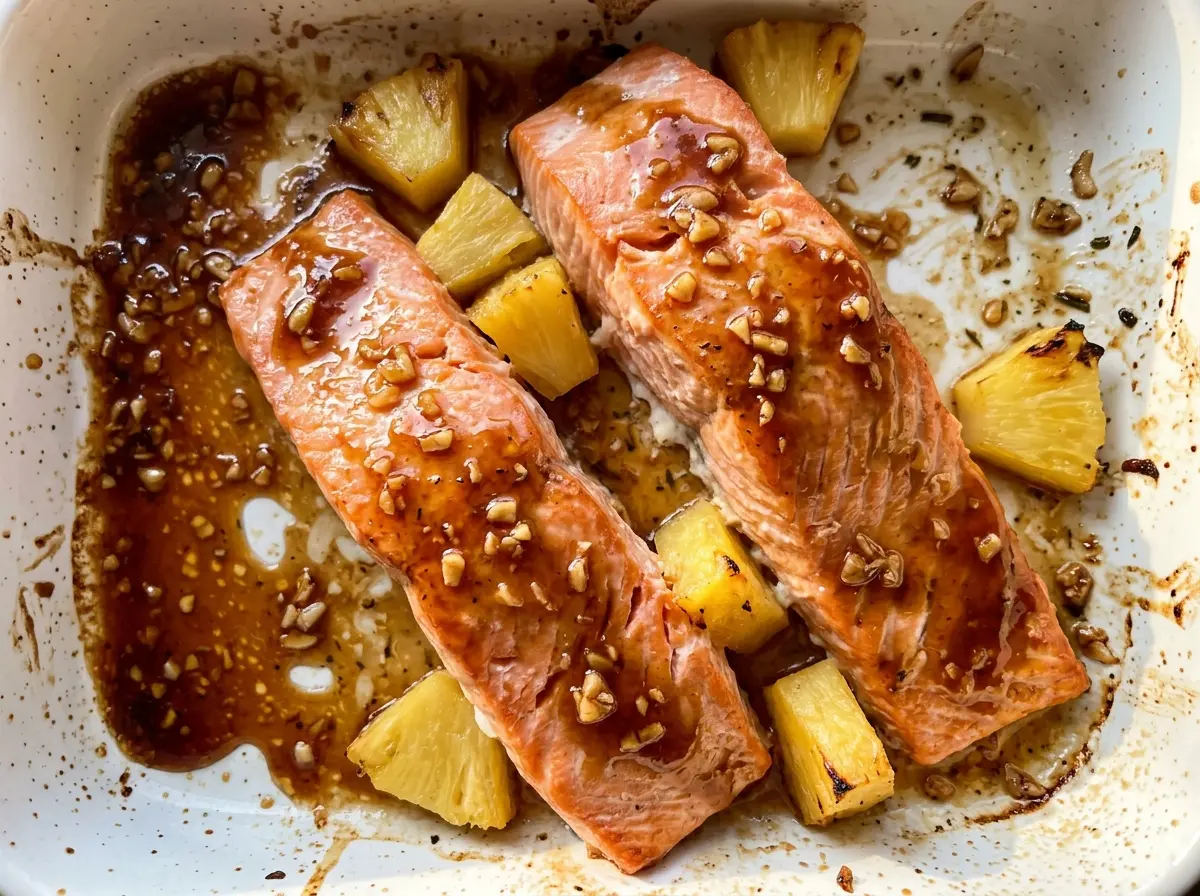
Kitchen Note
Give the salmon its short rest before you lift it from the dish. The fillets hold together better on the way to the plate, especially when they’re tender and flaky.
Save this Baked Pineapple Salmon for a bright, savory-sweet dinner with tender fish and juicy pineapple.
Why This Pineapple Glaze Stays Light Instead of Turning Sticky
A glazed salmon dinner often brings to mind a thick, shiny coating that clings to the fish. This one takes a lighter route. The glaze is whisked together and poured over the fillets before baking, not simmered down in a saucepan, so it stays loose enough to mingle with the pineapple in the dish. Expect a delicate coating and flavorful juices around the salmon, not a candy-like crust.
That balance suits the fish. Pineapple juice brings fruit acidity and sweetness, soy sauce adds savory depth, and a little brown sugar rounds out the sharper notes. Because the glaze bakes with the salmon, its flavor settles into the top of each fillet while the pineapple softens nearby. Don’t judge it by how thick it looks in the bowl; adding extra sugar to chase a sticky texture would make the finished dish sweeter without giving this method the same reduced, lacquered finish. The contrast between flaky salmon and juicy fruit is the point.
Fresh Pineapple, Pineapple Juice, and the Glaze’s Savory Backbone
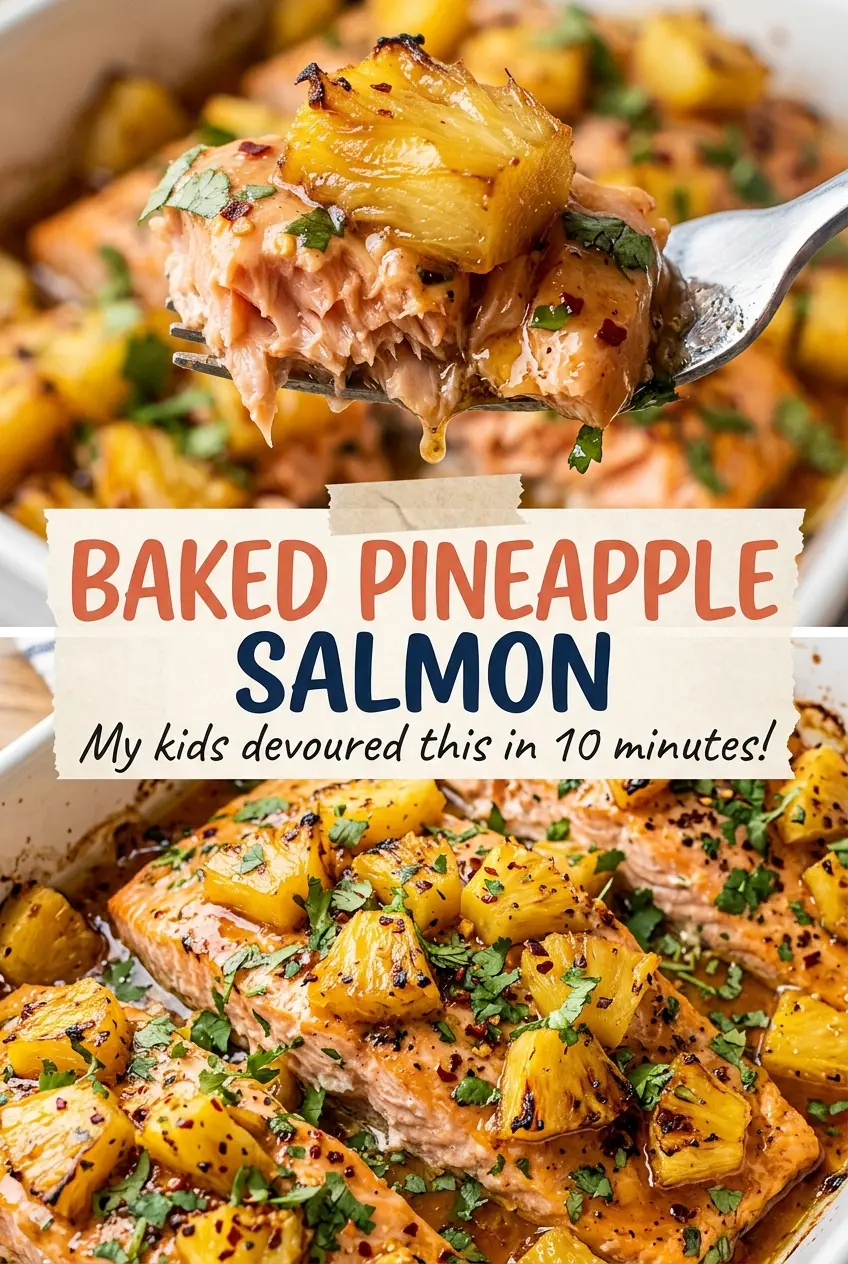
- Salmon fillets — Skin-on fillets are a good fit for baking in a dish because the skin helps the fish stay intact as you serve it. Choose pieces of similar thickness when you can; that makes it easier for them to finish at about the same time. Have the pin bones removed before seasoning.
- Fresh pineapple — Fresh chunks keep a little more shape as they bake, giving you tender fruit rather than a uniform sauce. If fresh pineapple isn’t available, use canned pineapple chunks and drain them well first; they’ll be softer and can release more liquid into the dish.
- Pineapple juice — Juice carries the fruit flavor through the glaze, so use actual pineapple juice rather than a thick pineapple drink or nectar, which can make the glaze sweeter and heavier. No special juicing step is needed.
- Low-sodium soy sauce — This brings the salty, savory note without crowding out the pineapple. Regular soy sauce will make the glaze saltier, so keep the specified low-sodium version for the most balanced result; gluten-free tamari is an option described below.
- Brown sugar and garlic — Packed light brown sugar adds mellow sweetness, while minced garlic keeps the glaze from tasting one-note. Mince the clove finely so its flavor spreads through the liquid instead of leaving a large, sharp bite.
Getting the Glaze Around the Salmon Without Overbaking It
Set Up the Dish and Arrange the Fruit
Heat the oven to 400°F and lightly grease a 9×13-inch baking dish with the olive oil. Set the four skin-on salmon fillets in the dish skin-side down, then season with the kosher salt and black pepper. Scatter the fresh pineapple chunks around the fillets rather than piling them on top. Keeping the fish in a single layer lets the glaze reach each piece.
Whisk the Quick Pineapple-Soy Glaze
In a small bowl, whisk together the pineapple juice, low-sodium soy sauce, packed light brown sugar, and minced garlic until the sugar is dispersed. The mixture will be fluid; it doesn’t need to look syrupy before it goes into the oven. Pour it over the salmon and pineapple, taking care to distribute the garlic through the dish. Don’t hold back the liquid because it will season the fruit and fish as they bake.
Bake to Flaky, Then Let the Fish Rest
Bake for 12 to 16 minutes, checking the thickest part of each fillet rather than relying only on the surface color. The salmon is ready when each thickest section reaches 145°F and flakes easily with a fork. Thicker pieces may need the longer end of the range, while thinner ones can finish earlier. Let the fillets rest for 3 minutes before serving.
Two Easy Ways to Adapt the Glaze, Plus Keeping Leftovers
Make the Glaze Gluten-Free with Tamari
Replace the low-sodium soy sauce with the same amount of gluten-free tamari. The glaze will keep its savory depth, though regular tamari can taste saltier, so choose a lower-sodium version when you want to stay closer to the original balance.
Leave Out the Brown Sugar for a Brighter Finish
Omit the brown sugar and keep the other glaze ingredients unchanged. The pineapple and soy will taste sharper and less rounded, and the glaze won’t have the same gentle sweetness. This is a simple option if you prefer your salmon more savory.
Storage and Reheating
- Refrigerator: Refrigerate leftovers within 2 hours and eat them within 3 to 4 days. The salmon will firm up as it chills, and the pineapple will soften further.
- Freezer: Freeze cooled portions in an airtight freezer-safe container for up to 2 months for best quality. Thaw overnight in the refrigerator; the pineapple will be softer after freezing.
- Reheating: Warm covered in a low oven or in the microwave in short bursts, just until the center reaches 165°F. High heat or a long reheating stretch can dry out the salmon.
Questions That Come Up When Baking Pineapple Salmon
Baked Pineapple Salmon
Ingredients
Equipment
Method
- Heat the oven to 400°F.
- Lightly grease a 9x13-inch baking dish with the olive oil.
- Arrange the salmon skin-side down in the dish.
- Season the salmon with the salt and pepper.
- Scatter the pineapple chunks around the fillets.
- Whisk the pineapple juice, soy sauce, brown sugar, and garlic in a small bowl.
- Pour the glaze over the salmon and pineapple.
- Bake for 12 to 16 minutes, until the thickest part of each fillet reaches 145°F and flakes easily with a fork.
- Rest for 3 minutes before serving.